Pesse canoe: an early Mesolithic dugout Pesse canoe A small dugout canoe from the Netherlands dated to the early Mesolithic (c. 8000–7500 BCE). Preserved in peat, it is among the oldest known watercraft and is exhibited at the Drent…
Petrie Museum of Egyptian Archaeology UCL's Petrie Museum in London holds over 80,000 Egyptian and Sudanese objects. Founded on Flinders Petrie's excavations, it supports research, teaching and public display of everyd…
Phaistos Disc A unique Bronze Age clay disc from Crete bearing stamped pictorial signs in a spiral; undeciphered and notable as an early example of stamped inscription from the Minoan world.
Phoenician alphabet: origin, features, and legacy Phoenician alphabet Consonantal writing system developed by the Phoenicians (c.12th–5th century BCE). Right-to-left abjad that influenced Greek, Latin and many modern scripts; used for trade, inscript…
Pinax (pinakes): Ancient Greek and Roman tablets and plaques Pinax Pinax (pl. pinakes) — flat boards or tablets from ancient Greece and Rome used as votive images, grave plaques, writing tablets and mechanical components, made in wood, clay, stone…
Proto-Sinaitic script Early alphabetic script from the Sinai and Egypt (Middle Bronze Age). Known from a small number of inscriptions, it is widely considered a likely ancestor of the Phoenician alphabe…
Puerto Escondido (Honduras) — Archaeological site on the Ulúa River Puerto Escondido Pre-Columbian archaeological site on the Ulúa River, Honduras. Occupied from about 1600 BC to 450 AD, important for studying early complex societies, trade, pottery and riverine-co…
Purbeck marble A decorative, fossil-rich limestone from the Isle of Purbeck, Dorset, historically quarried and widely used in medieval and later English architecture.
Ring of Brodgar: Neolithic stone circle and ritual landscape in Orkney Ring of Brodgar The Ring of Brodgar is a large Neolithic stone circle and circular ditch on Mainland, Orkney, forming part of the Heart of Neolithic Orkney World Heritage Site.
Rock art of the Iberian Mediterranean Basin (Levantine art) Rock art of the Iberian Mediterranean Basin A major corpus of prehistoric painted panels and rock-shelter scenes in eastern Spain, noted for small narrative human and animal figures and inscribed as a UNESCO World Heritage e…
Rosetta Stone: Bilingual Hellenistic decree that enabled Egyptian hieroglyph decipherment Rosetta Stone Rosetta Stone: a Hellenistic granodiorite decree inscribed in hieroglyphs, Demotic and Ancient Greek. Found in 1799, its trilingual text let scholars decipher Egyptian scripts and…
Ruins: remains of buildings and settlements Ruins Physical remains of structures created by destruction, abandonment, or decay; covers causes, types, archaeological methods, conservation, and the cultural value of ruins worldwide.
Runes: The Early Germanic Alphabets and Their Legacy Runes An overview of runes: origins, main runic alphabets (Elder Futhark, Younger Futhark, Anglo-Saxon Futhorc), inscriptions, uses, and their cultural legacy and study.
Runestone A runestone is a carved stone monument from the Viking Age and early Middle Ages in northern Europe, bearing runic inscriptions that often commemorate the dead, record travels, cla…
San Lorenzo Tenochtitlan Major Olmec urban center in the Coatzacoalcos floodplain, active c.1500–400 BC; known for monumental sculpture, engineered earthworks, long-distance trade, and influence on later M…
Santana Formation — Early Cretaceous Lagerstätte of the Araripe Basin Santana Formation A renowned Early Cretaceous Lagerstätte in Brazil's Araripe Basin, the Santana Formation preserves exceptionally complete fossils—fish, pterosaurs, reptiles, insects and plants—oft…
Saqqara: Ancient Egyptian Necropolis and the Step Pyramid Complex Saqqara Saqqara is the vast funerary precinct of ancient Memphis in Egypt, home to the Step Pyramid of Djoser, numerous mastabas and later burials, and a continuing focus of archaeological…
Saqqara Tablet (Saqqara King List) Saqqara Tablet An inscribed stone from the reign of Ramesses II listing selected Egyptian pharaohs in reverse order. Damaged and selective, it is a valuable but partial New Kingdom source used al…
Saurexallopus: an ichnogenus of enigmatic footprints Saurexallopus Saurexallopus is an ichnogenus of trace fossil footprints known from Cretaceous sediments. Its maker is uncertain; features of the tracks have prompted debate over avian versus non…
Scalping: removal of the scalp as trophy, bounty practice, and historical phenomenon Scalping Scalping is the removal of the scalp, historically practiced as trophy-taking, proof of victory, or for paid bounties in different regions. This article outlines definitions, histo…
Serekh: royal name device and palace façade symbol in ancient Egypt Serekh A serekh is an ancient Egyptian royal emblem showing a stylized palace façade containing a king's Horus-name, often topped by the Horus falcon; used from the predynastic and Early…
Shipwreck: causes, types, archaeology and cultural significance Shipwreck An overview of shipwrecks — remains of vessels found beached or sunken, their causes, preservation, archaeological importance, uses in tourism and ecology, and legal protection.
Sigillography: the study of seals and their use in historical documents Sigillography Sigillography examines the seals, matrices, and impressions used to authenticate and decorate documents and objects; it intersects with diplomatics, heraldry, art history and socia…
Skara Brae — Neolithic settlement on Mainland, Orkney Skara Brae Skara Brae is a well‑preserved stone-built Neolithic village on the Bay of Skaill, Orkney. Occupied c. 3100–2500 BC, it reveals domestic life, architecture and community organisati…
Soanian: Lower Paleolithic stone tool tradition of the Soan Valley Soanian Soanian refers to a Lower Paleolithic archaeological tradition centred on the Soan Valley (Sivalik Hills, Pakistan), known for pebble tools, choppers and occasional handaxes and fo…
South Saqqara Stone Inscribed Old Kingdom stone listing events and regnal years of Sixth Dynasty pharaohs; later reused as a sarcophagus lid and now a fragmentary but valuable source for chronology an…
Spear-thrower (atlatl, woomera): a leverage weapon and its history Spear-thrower A spear-thrower is a handheld device that increases the range and speed of a thrown spear. Also called an atlatl or woomera, it appears in many cultures and shaped hunting and warf…
Spiro Mounds: Mississippian archaeological complex in Oklahoma Spiro Mounds Spiro Mounds is a major Mississippian archaeological site in eastern Oklahoma, known for platform mounds, rich burial offerings, long-distance trade connections, and an on-site mus…
Stone Age: the prehistoric era of stone tools, art and early farming Stone Age The Stone Age is the long prehistoric period when humans made tools from stone. It spans early hominin tool use to the rise of farming and metallurgy, and is divided into Paleolith…
Stone tools: origins, types, and archaeological importance Stone tool Overview of stone tools: manufacture, major early finds including the 3.3 Ma Lomekwian material, key technologies, methods of analysis and why stone artifacts matter for human preh…
Suseok: Korean Viewing Stones Suseok Suseok are Korean viewing stones—naturally shaped or modestly shaped rocks valued for form, color and texture, used indoors and in gardens as objects of contemplation and aesthetic…
Sutton Hoo: Anglo-Saxon Burial Site and Ship Burial near Woodbridge Sutton Hoo Sutton Hoo, near Woodbridge in Suffolk, is the site of early medieval burial mounds including a remarkable undisturbed Anglo‑Saxon ship burial whose rich grave goods transformed un…
Talgai — site of an early human skull discovery in Queensland, Australia Talgai Talgai is an archaeological locality on the Darling Downs, Queensland, famed for a late Pleistocene human skull found in Dalrymple Creek that became important in studies of early A…
Taxila: Ancient Gandharan City and Archaeological Complex Taxila Taxila is a major archaeological site in Punjab, Pakistan, famed for its Gandharan ruins, Buddhist heritage, museum collections and links to Indo-Greek, Mauryan and Kushan periods.
Tayasal (Noh Petén): Island Capital of the Itzá Maya Tayasal Tayasal (Noh Petén) was the island capital of the Itzá Maya on Lake Petén Itzá, Guatemala. A Postclassic city and the last independent Maya polity until its conquest in 1697; today…
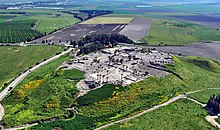
Tel Megiddo: archaeological mound, history, and religious significance Tel Megiddo Tel Megiddo (Megiddo) is a layered archaeological mound in northern Israel notable for its long occupation, important Bronze and Iron Age remains, and its role in Biblical and hist…
Terracotta Army of Qin Shi Huang Terracotta Army A detailed overview of the Terracotta Army: its creation, discovery, composition, historical context, conservation challenges and its significance for archaeology and culture.
Corinne Mamane Museum of Philistine Culture, Ashdod The Museum of Philistine Culture An overview of the Corinne Mamane Museum of Philistine Culture in Ashdod, Israel: its history, collections, exhibitions, research and educational role focused on the Philistines an…
Thetford Hoard: late Roman Romano-British treasure from Norfolk Thetford Hoard Late 4th-century Romano-British hoard found at Gallows Hill near Thetford in 1979: gold jewellery, silver spoons and buckle. Now in the British Museum and significant for study of…
Tikal: Major Ancient Maya City in Guatemala Tikal Tikal is a principal ancient Maya city in northern Guatemala, noted for its monumental pyramids, plazas and carved monuments. The site illustrates Classic‑period Maya urbanism, pol…
Tiryns: Ancient Mycenaean Acropolis in the Peloponnese Tiryns Tiryns is a prominent Late Bronze Age acropolis near Nauplion in the Peloponnese, noted for its massive 'Cyclopean' walls, Mycenaean palace remains, and designation as a UNESCO Wor…
Tōhoku History Museum (Tagajō, Miyagi Prefecture) Tōhoku History Museum Regional museum in Tagajō presenting the archaeology, material culture and living traditions of Japan's Tōhoku region, including notable Jōmon-period jade and research on regional…
Tollund Man: Iron Age bog body from Denmark Tollund Man Preserved human remains discovered in a Danish peat bog in 1950. The Tollund Man dates to the 4th century BC and is notable for exceptional soft‑tissue preservation, forensic study…
Tombs: Forms, Cultural Significance, and Archaeological Preservation Tomb Overview of tomb types, cultural meanings, and preservation: from rock-cut chambers and mausoleums to catacombs, plus archaeological approaches to conserving burial sites and their…
Tomb of Benei Hezir A rock-cut Second Temple period family tomb on the Mount of Olives in Jerusalem, noted for its carved façade and an ancient Hebrew inscription identifying the buried priestly famil…
True Cross — relics and tradition of the cross on which Jesus was crucified True Cross Fragments venerated as the True Cross are an enduring Christian relic tradition. This article reviews the Helena narrative, relic veneration, distribution, liturgical role and deba…
Tumulus (burial mound) Tumulus Earthen or stone mounds constructed over graves from prehistory to historic periods; covers types, regional variations, archaeology, construction, and conservation.
Type site (archaeology) — definition, use, and related concepts Type site A type site is an archaeological location considered representative of a particular culture, period, or formation. This article explains its meaning, history, examples, and related…