
Sutton Hoo: Anglo-Saxon Burial Site and Ship Burial near Woodbridge
Sutton Hoo, near Woodbridge in Suffolk, is the site of early medieval burial mounds including a remarkable undisturbed Anglo‑Saxon ship burial whose rich grave goods transformed understanding of early England.
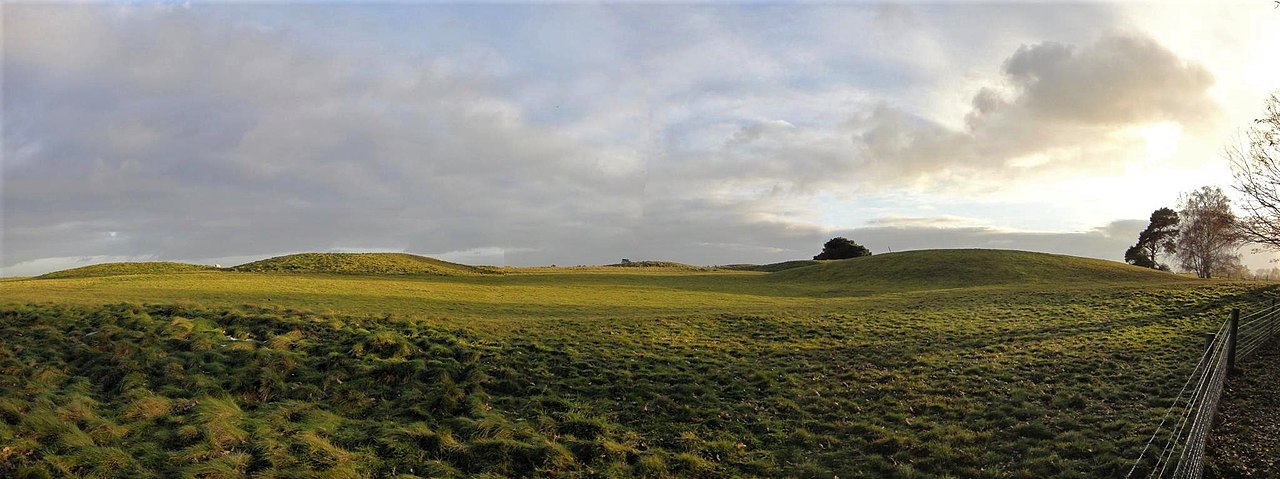
Sutton Hoo is the name given to a complex of early medieval burial mounds and archaeological remains including two primary Anglo‑Saxon cemeteries. The site lies close to Woodbridge in Suffolk, England. Archaeologists classify the graves as part of the broader corpus of Anglo‑Saxon burial practice; one mound contained a virtually intact ship burial whose contents provide unusually vivid evidence of elite life and ritual in the 6th–7th centuries CE.
Image gallery
10 Images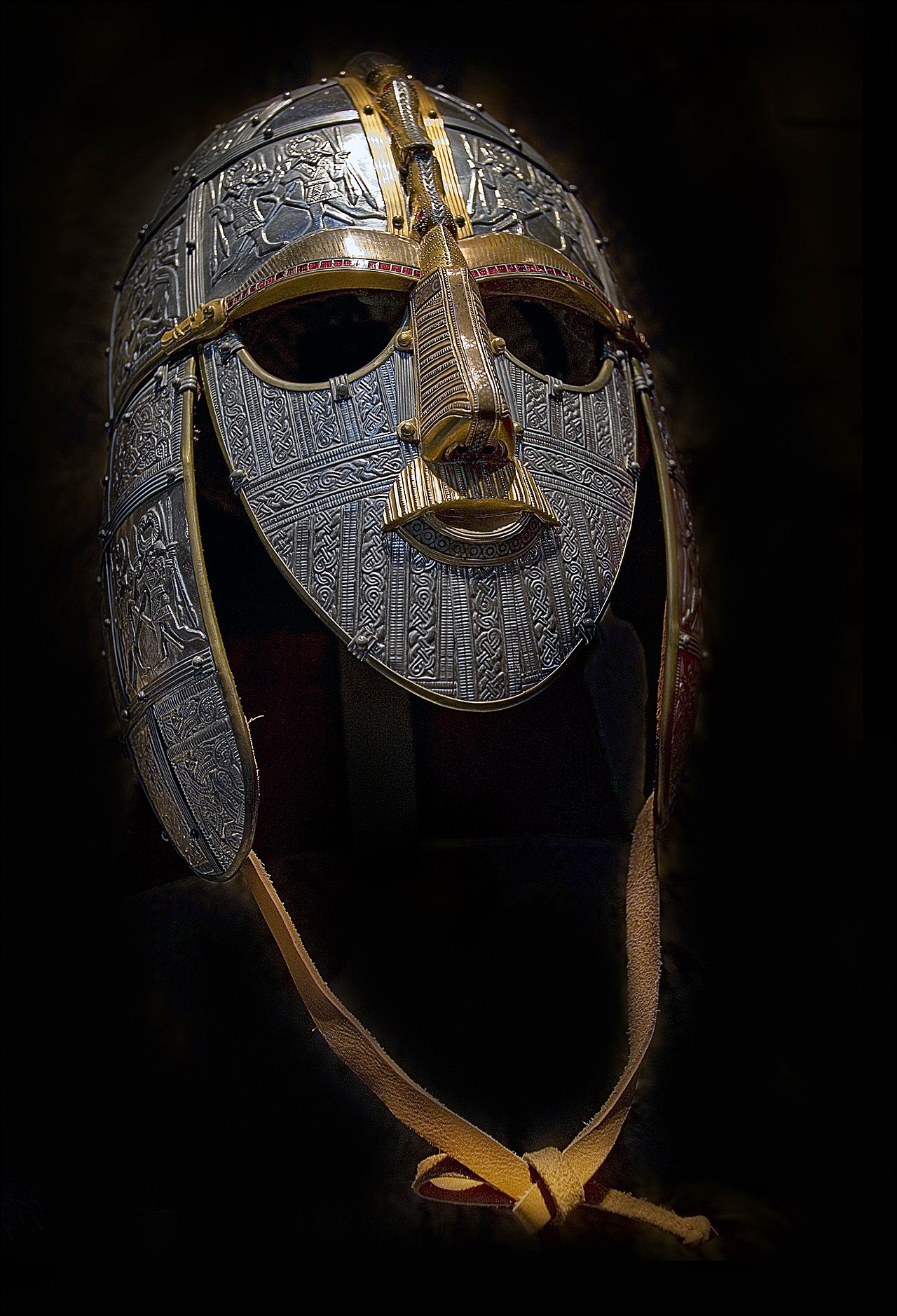




Discovery and excavation
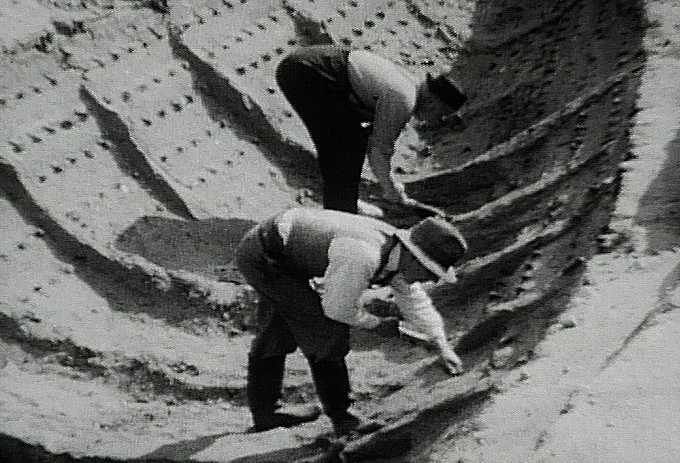
The principal ship burial was uncovered in 1939 during excavations carried out for the landowner by local archaeologist Basil Brown. Earlier and later mounds at Sutton Hoo had produced artefacts but many had been disturbed or looted before modern study. The 1939 work revealed the outline of a large timber ship preserved only as a pattern of iron rivets and soil discoloration; within that impression were rich metal grave goods and ceremonial objects. The excavation and subsequent study have been central to British archaeology and spurred further scientific and public interest.
Contents of the ship burial
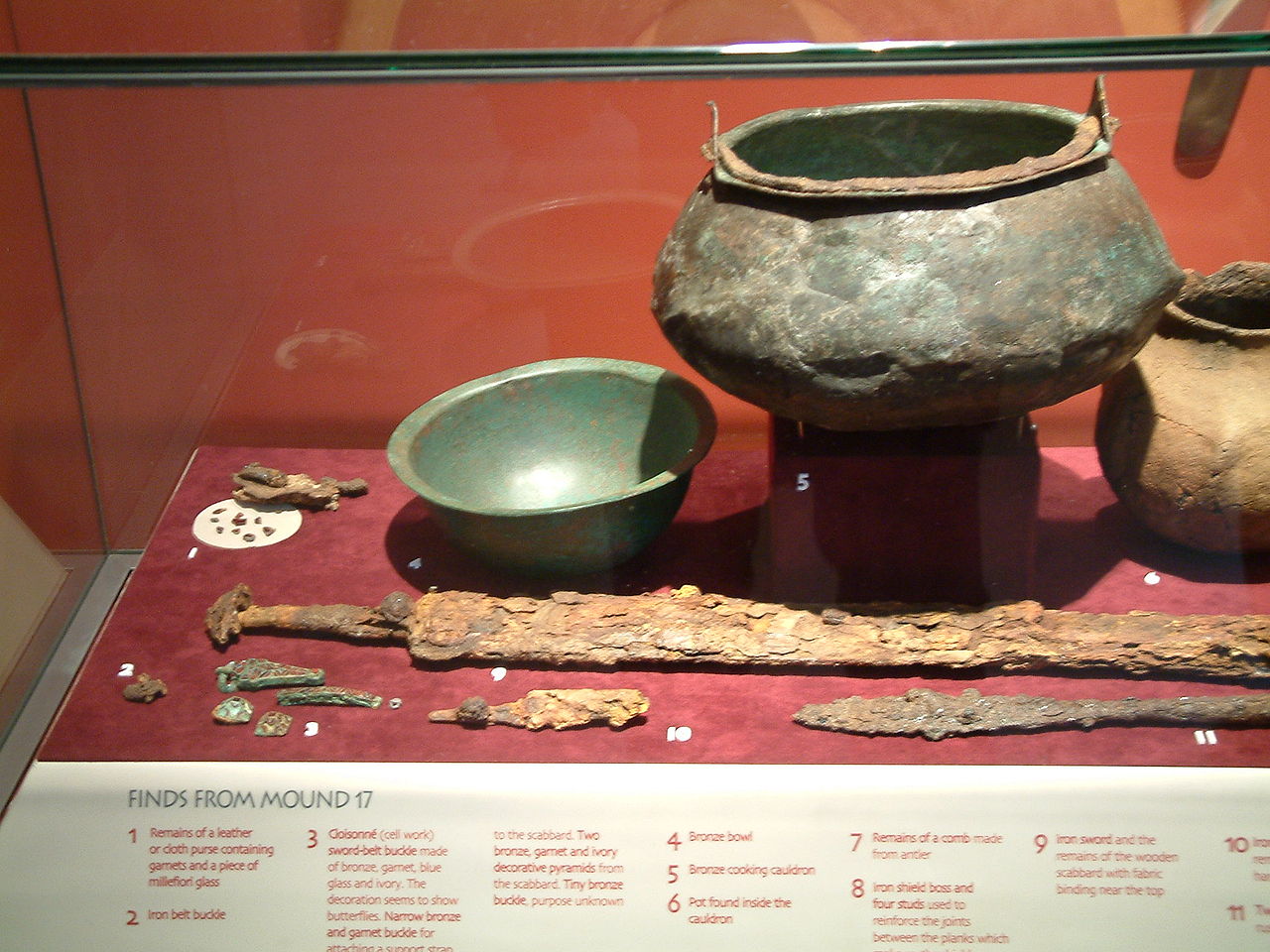
The vessel contained a carefully arranged assemblage of high‑status items that demonstrate exceptional craftsmanship and wide cultural connections. Surviving objects include:
- a decorated ceremonial helmet and fragments of other armour;
- ornamental metalwork such as belt fittings, shoulder clasps and cloisonné jewellery;
- weapons and shields indicating warrior status;
- fine silverware, cups and spoons used in feasting or ritual;
- an elaborately decorated purse lid and other luxury items suggesting contacts with continental Europe.
These finds were conserved and are now publicly displayed, with many of the principal objects housed at the British Museum.
Interpretation, date and significance
Scholars generally date the principal burial to the early 7th century CE. Its combination of seafaring symbolism, grave goods and monumental arrangement has led many to associate the tomb with a powerful regional ruler of East Anglia—often suggested as King Rædwald—though definitive identification remains cautious. Sutton Hoo transformed understandings of the period by showing how sophisticated material culture, international trade links and syncretic belief systems coexisted in early medieval England.
Legacy, conservation and public access
Since the initial discoveries, Sutton Hoo has been the subject of ongoing research, conservation and public presentation. The site is protected and interpreted for visitors, and archaeological study continues to refine chronologies and contextual understanding. Museum displays, publications and outreach ensure the finds remain a focal point for the study of migration‑period Europe and the emergence of early English kingdoms.
For visiting information, scholarly resources and images consult national and regional heritage organisations as well as museum catalogues and research literature. Additional contextual resources are available through archaeological summaries and museum pages that detail the excavation history and artifact conservation (Anglo‑Saxon cemeteries overview, Woodbridge context, Suffolk heritage, England archaeological sites, archaeology resources, museum collections).
Questions and answers
Q: What is Sutton Hoo?
A: Sutton Hoo is the location of two Anglo-Saxon cemeteries that date back to the 6th and early 7th centuries in Suffolk, England.
Q: What was discovered at one of the cemeteries at Sutton Hoo?
A: An undisturbed ship burial containing valuable and significant Anglo-Saxon artefacts was discovered at one of the cemeteries at Sutton Hoo.
Q: Where are the artefacts from Sutton Hoo held today?
A: The artefacts from Sutton Hoo are held at the British Museum in London.
Q: What is the significance of the Anglo-Saxon artefacts found at Sutton Hoo?
A: The Anglo-Saxon artefacts found at Sutton Hoo are significant both in terms of their art-historical and archaeological significance.
Q: When was the ship-burial at Sutton Hoo excavated?
A: The ship-burial at Sutton Hoo was excavated in 1939.
Q: What is the significance of the ship-burial at Sutton Hoo?
A: The ship-burial at Sutton Hoo is one of the most important archaeological finds in England for its size, completeness, and the quality and beauty of its contents.
Q: When did the ship-burial at Sutton Hoo likely date back to?
A: The ship-burial at Sutton Hoo likely dates back to the early 7th century.
Related articles
Author
AlegsaOnline.com Sutton Hoo: Anglo-Saxon Burial Site and Ship Burial near Woodbridge Leandro Alegsa
URL: https://en.alegsaonline.com/art/95322