
Proto-Sinaitic script
Early alphabetic script from the Sinai and Egypt (Middle Bronze Age). Known from a small number of inscriptions, it is widely considered a likely ancestor of the Phoenician alphabet and later alphabets.
The Proto-Sinaitic script is an early set of alphabetic signs first identified in inscriptions from the Sinai and nearby parts of Egypt. It is generally placed in the Middle Bronze Age and is preserved only in a small corpus of carved texts. The term covers a family of related signs that appear to combine pictorial elements with a simplified phonetic function, and scholars treat it as a possible intermediate stage between Egyptian hieroglyphs and later true alphabets.
Image gallery
2 Images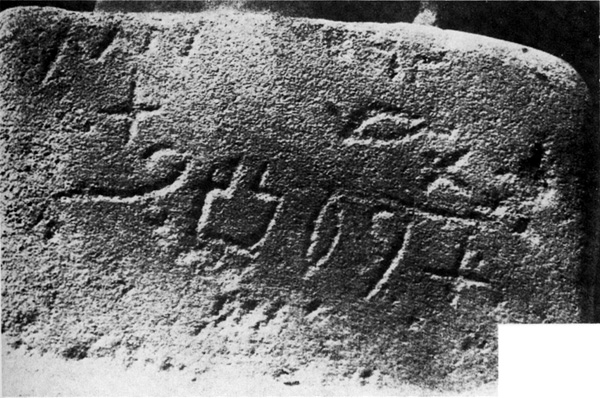

Characteristics and structure
Only a few dozen distinct signs are securely attested in the surviving inscriptions. These signs are often pictorially derived — for example, shapes that resemble an ox head, a house, or a hand — but they appear to have been used in a largely consonantal way, representing single consonant sounds rather than whole words or syllables. Many researchers argue that the script was used according to an acrophonic principle: a picture of an object stood for the initial sound of that object’s name. Because the set of signs is small and the texts are short, details of grammar and orthography remain uncertain.
Major finds and chronology
The best-known inscriptions come from the temple and turquoise mines at Serabit el-Khadim in the Sinai Peninsula, where workers and pilgrims left short graffiti and dedications carved into rock and statuary. These were first reported in the early 20th century by archaeologists such as Hilda and Flinders Petrie. Another important discovery was made in Middle Egypt by John and Deborah Darnell late in the 20th century; their finds extended the geographic range of similar inscriptions and contributed to debates about the date and origin of the script. Individual texts are typically short and fragmentary, so absolute dating rests on archaeological context and comparisons with Egyptian material culture.
Significance and relationship to other scripts
Proto-Sinaitic is widely proposed to be an ancestor of the Phoenician alphabet. If this lineage is correct, the script represents a crucial step in the development of writing systems that ultimately led to the Greek, Latin and many modern alphabets. The proposed model imagines a borrowing of pictorial signs from contemporary Egyptian hieroglyphs and a new assignment of those signs to consonantal values — a shift from logographic and syllabic writing toward a simple sequence of letters.
Scholarly debate and open questions
- Extent of literacy: Because inscriptions are scarce, it is debated how widely the script was used and whether it represented full literacy or limited notational practice.
- Origin and dating: Precise dating varies; some proposals place the origin in the 19th–16th centuries BCE depending on archaeological association and stratigraphy.
- Decipherment: While many sign-values are tentatively proposed, the brief and fragmentary nature of the texts prevents a comprehensive decipherment similar to that of later alphabets.
Notable inscriptions and resources
Key localities and reports include the Serabit el-Khadim inscriptions and the Middle Egyptian finds often linked to sites in the Wadi region. Important primary publications and field reports can be consulted for facsimiles and photographs of the original carvings. For general background on the culture and period, see introductions to Bronze Age Sinai and Egyptian mining expeditions.
Further reading and online resources may be found through general overviews of early alphabetic writing and archaeological reports: script surveys, regional studies of the Sinai Peninsula, discussions about what constitutes true writing, technical explanations of the alphabetic principle, comparisons with the Phoenician alphabet, and publications describing the discoveries in Middle Egypt.
Questions and answers
Q: What is Proto-Sinaitic?
A: Proto-Sinaitic is a Middle Bronze Age script known from a few inscriptions at Serabit el-Khadim in the Sinai Peninsula.
Q: What is known about the nature of the Proto-Sinaitic script?
A: Because there are so few Proto-Sinaitic signs, little is known with certainty about the nature of the script.
Q: Did Proto-Sinaitic script represent true writing?
A: Proto-Sinaitic script likely represented true writing since it co-existed with Egyptian hieroglyphs, but this is not certain.
Q: What alphabet might Proto-Sinaitic be an ancestor of?
A: Proto-Sinaitic may be an alphabet and the ancestor of the Phoenician alphabet, from which nearly all modern alphabets descend.
Q: When were the two major discoveries of inscriptions of the Proto-Sinaitic script?
A: The first major discovery was in the winter of 1904–1905 in Sinai by Hilda and Flinders Petrie, dated to circa 1700–1400 BC. The second major discovery was more recently in 1999 in Middle Egypt by John and Deborah Darnell, dated to the 18th century BC.
Q: Where were the inscriptions of Proto-Sinaitic found?
A: The inscriptions of Proto-Sinaitic were found at Serabit el-Khadim in the Sinai Peninsula and in Middle Egypt.
Q: Who made the first discovery of inscriptions of Proto-Sinaitic?
A: The first discovery of inscriptions of Proto-Sinaitic was made by Hilda and Flinders Petrie.
Related articles
Author
AlegsaOnline.com Proto-Sinaitic script Leandro Alegsa
URL: https://en.alegsaonline.com/art/79535
Sources
- members.bib-arch.org : "How the alphabet was born from hieroglyphs"
- worldcat.org : 0098-9444