
Terracotta Army of Qin Shi Huang
A detailed overview of the Terracotta Army: its creation, discovery, composition, historical context, conservation challenges and its significance for archaeology and culture.
Overview
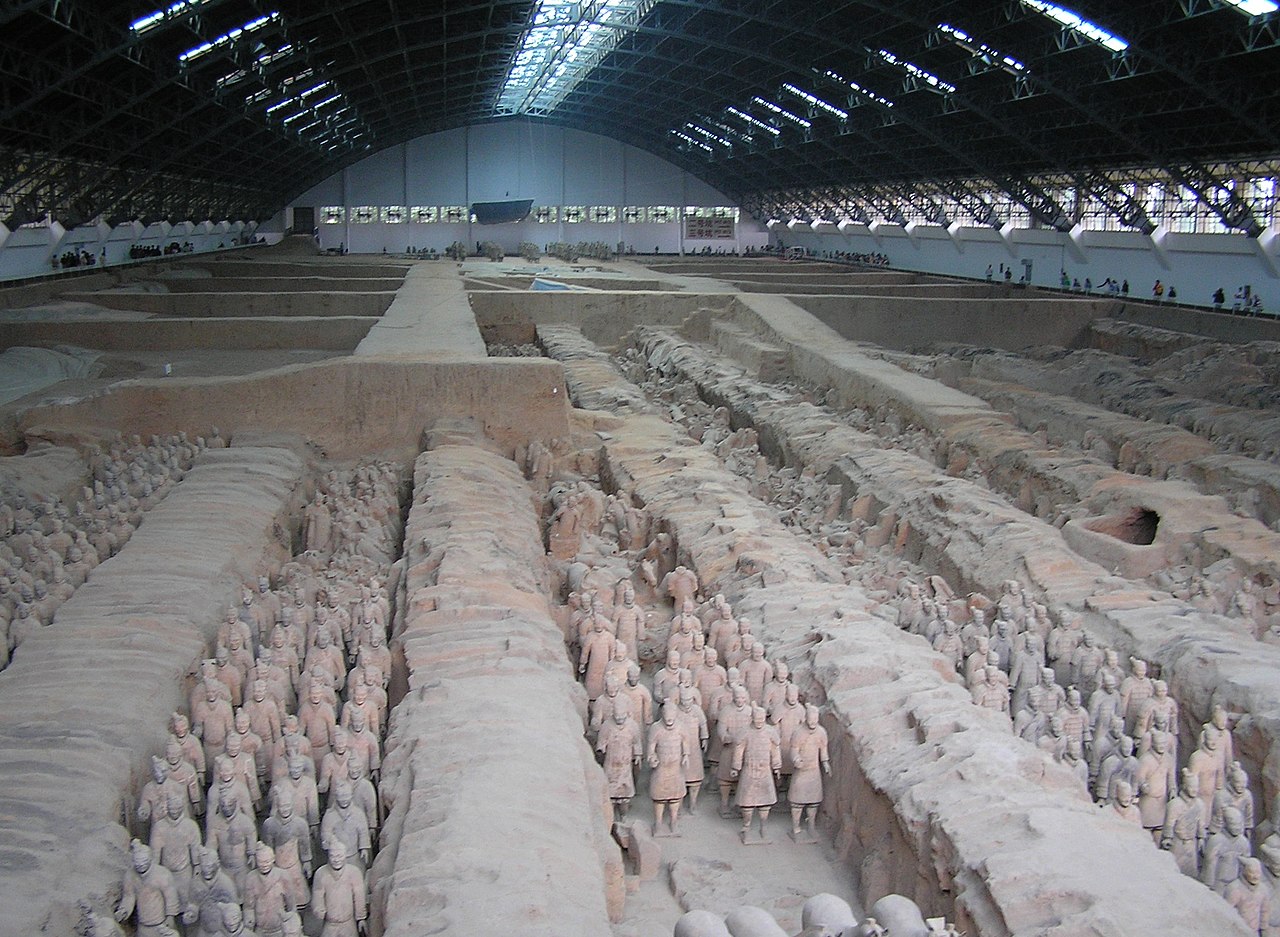
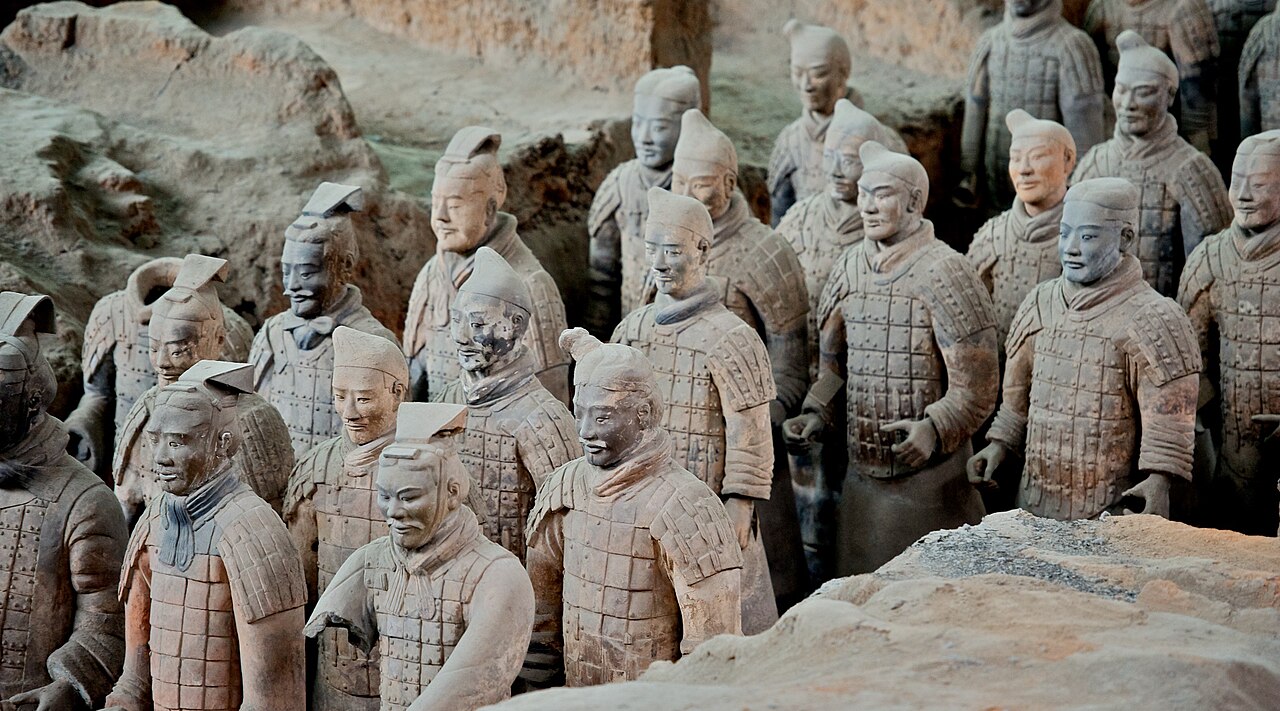
The Terracotta Army is a vast collection of life-size clay figures buried near the burial mound of China's first imperial ruler to serve as his guard after death. Commissioned by Qin Shi Huang, the statues stand close to the modern city of Xi'an and form part of an elaborate funerary complex. Created more than two thousand years ago, the figures are celebrated both for their artistic detail and for the light they shed on early imperial administration, military organization and ritual beliefs. The site has become a major research focus and a prominent cultural attraction.
Image gallery
10 Images




Description and construction
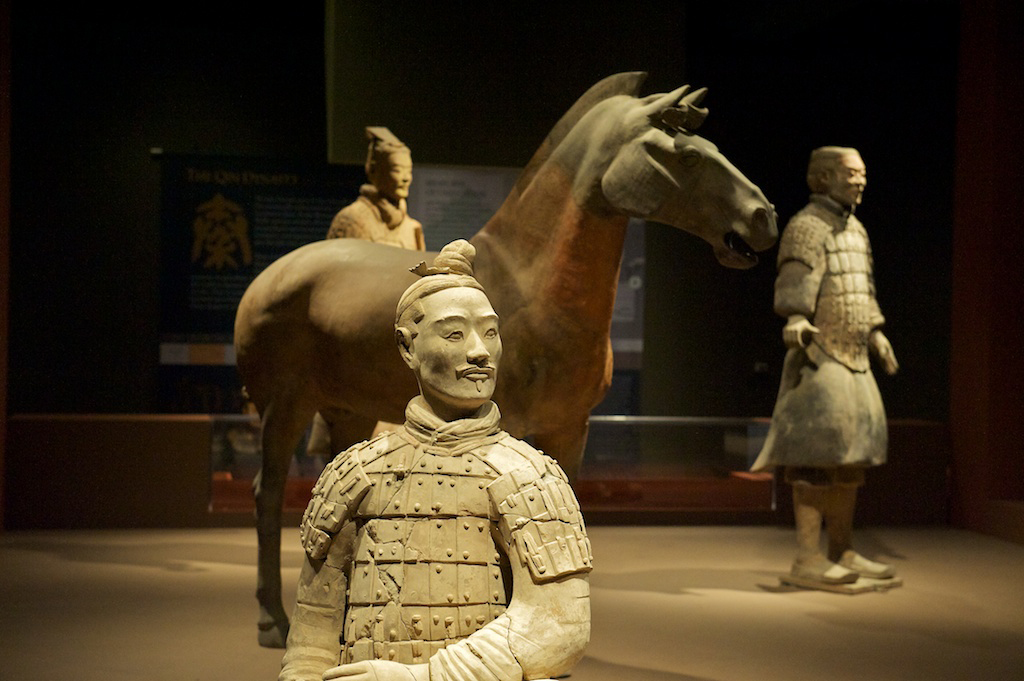
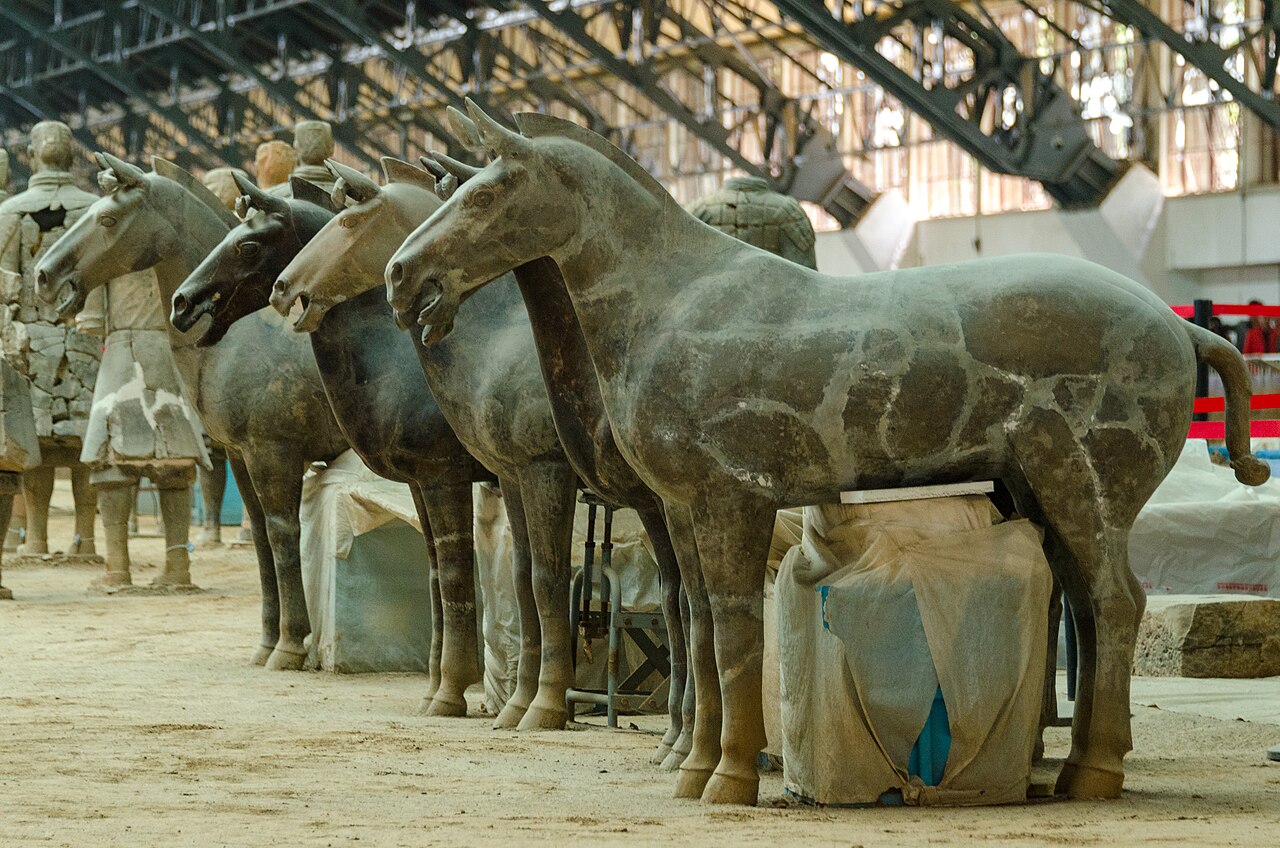
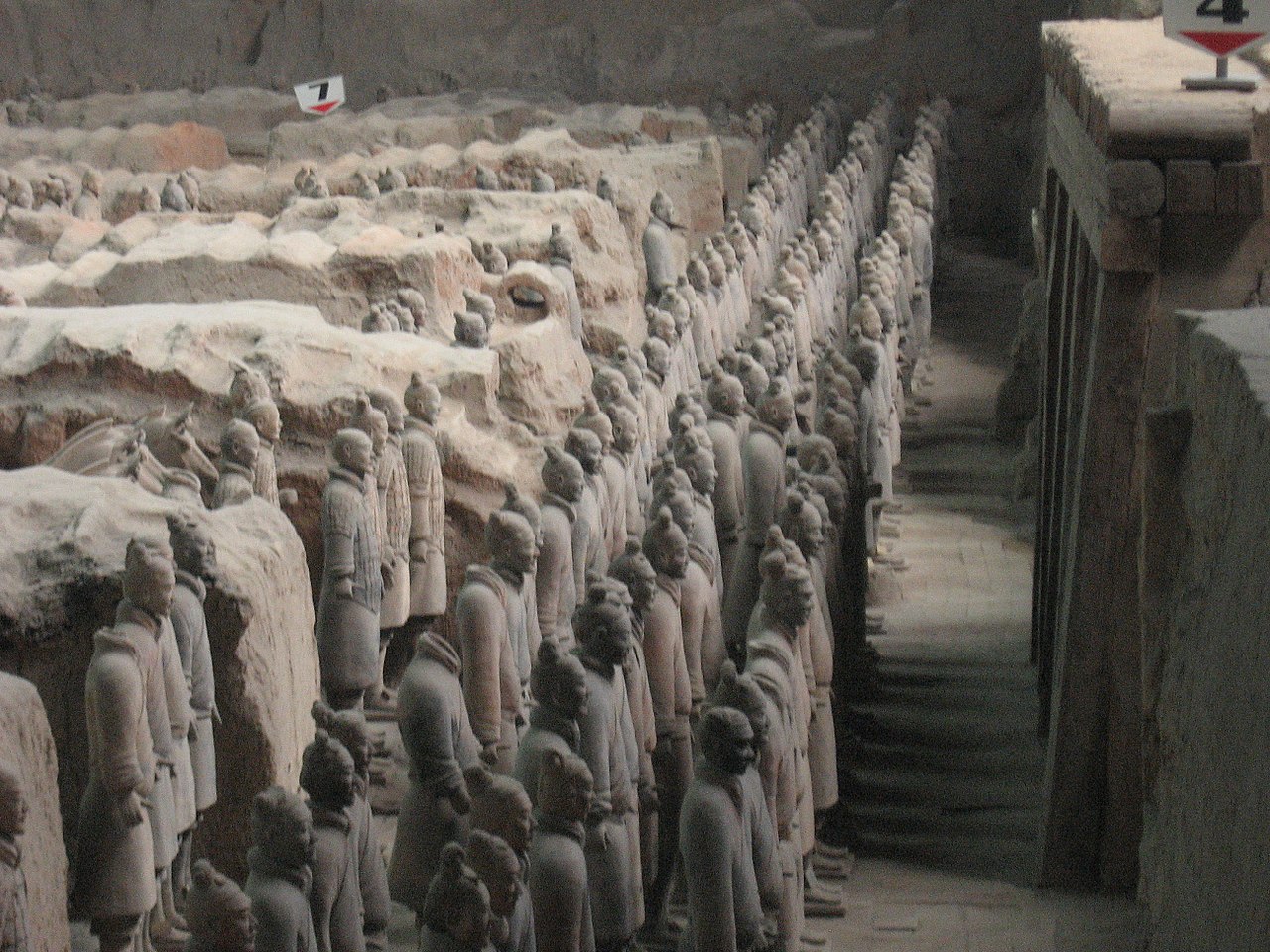
The sculptures are made primarily from fired clay and show a range of ranks and roles. Typical soldier figures are nearly two metres tall, while commanders are slightly taller and depicted with richer dress and armor. The ensemble includes infantry, archers, cavalrymen, chariot teams and specialized attendants. Craftsmen used a combination of molded parts and hand-finishing: bodies and limbs were often formed from molds, while faces, hairstyles and details were added individually, producing a remarkable degree of individualization. Traces of original pigments and metal fittings have been recovered, although exposure to air and light has damaged many original finishes.
History and discovery
Ancient historians such as Sima Qian link the army to the mausoleum project of Qin Shi Huang, begun while he was ruler of Qin and continued into his reign as emperor. The warrior figures and related structures were intended to accompany and protect the emperor in the afterlife, according to those records and later interpretation. The burial complex lay hidden until 1974, when local farmers discovered fragments while digging a well; that chance find triggered organized excavations that have exposed multiple pits containing thousands of figures, horses and chariots, while many parts of the complex remain unexcavated for preservation and research reasons.
Significance and conservation
The Terracotta Army is significant for its scale, artistic achievement and the information it offers about production techniques, military equipment and imperial ideology. Conservation poses ongoing challenges: pigments flake and change color on exposure, metal elements corrode, and ancient adhesives and lacquers are unstable. Modern conservation employs climate control, laboratory analysis and careful in-situ stabilization to limit further damage. The principal excavation pits are housed within a museum complex that supports research, conservation and public display, and the site continues to attract international scholars and visitors.
Types, interpretation and notable facts
- Varied roles: The army includes foot soldiers, archers, officers, chariot drivers and horses, as well as non-combatant figures associated with logistics and command.
- Individualization: Distinct facial features, hair arrangements and clothing elements suggest efforts to portray individuals rather than uniform copies.
- Production methods: A mix of standardized molds and individualized hand finishing indicates an organized workshop system with skilled artisans.
- Ongoing research: Excavation, scientific analysis and interpretation continue to evolve; large parts of the mausoleum complex remain closed to preserve fragile materials.
For further context, readers may consult works on the emperor and early imperial China, studies of the figures as archaeological artifacts, regional ceramic traditions linked to terracotta practice, and scholarship addressing the historical meaning of the imperial title and office. The site remains a nexus of public interest, scholarly inquiry and conservation effort, illustrating how material culture can illuminate large questions about power, belief and technological skill in the ancient world.
Questions and answers
Q: What is the Terracotta Army?
A: The Terracotta Army is the buried army of Qin Shi Huang, an ancient Chinese emperor, consisting of over a thousand terracotta warriors and horses.
Q: When were the Terracotta Warriors built and buried?
A: The Terracotta Warriors were built and buried over two thousand years ago, during the reign of Qin Shi Huang in 247-210 BC.
Q: How were the Terracotta Warriors discovered?
A: The Terracotta Warriors were discovered in 1974 by farmers who were digging a well looking for underground water.
Q: Why were the Terracotta Warriors built?
A: According to the Chinese historian Sima Qian, the Terracotta Warriors were built to protect Qin Shi Huang in the afterlife.
Q: How many workers were needed to build the underground city where Qin Shi Huang was buried?
A: Over 700,000 workers were needed to build the underground city where Qin Shi Huang was buried.
Q: What are the Terracotta Warriors made of?
A: The Terracotta Warriors are made of clay.
Q: How detailed are the Terracotta Warriors?
A: The Terracotta Warriors are so detailed that it is possible to guess the age, rank and personality of each one, and none of the soldiers are the same.
Related articles
Author
AlegsaOnline.com Terracotta Army of Qin Shi Huang Leandro Alegsa
URL: https://en.alegsaonline.com/art/97108
Sources
- whc.unesco.org : whc.unesco.org/pg.cfm?cid=31&id_site=441
- upf.edu : "A Magic army for the Emperor"