
Ruins: remains of buildings and settlements
Physical remains of structures created by destruction, abandonment, or decay; covers causes, types, archaeological methods, conservation, and the cultural value of ruins worldwide.
Overview
Ruins are the surviving fragments of buildings, monuments, or entire settlements that no longer serve their original functions. They range from partially standing walls and foundations to scattered masonry or buried footprints. As material traces of the past, ruins are studied to learn about former architecture, technologies, social organisation and historical events.
Image gallery
10 Images


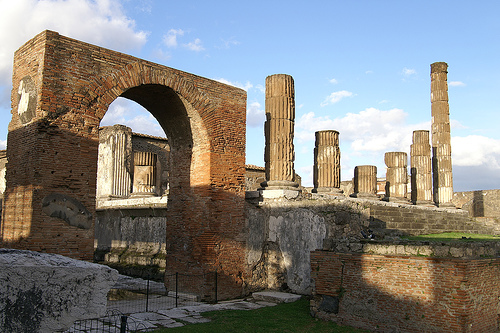

Causes and processes
Structures become ruins through many processes. Rapid destruction can follow armed conflict, deliberate demolition, or sudden natural disasters such as earthquakes. Gradual decay occurs when maintenance stops and weathering, erosion, biological growth and freeze–thaw cycles take their toll. Fires often consume roofs and timber elements, leaving stone shells behind (fires), while volcanic activity can bury or preserve sites beneath ash and debris (volcanic eruptions). Human abandonment — when inhabitants relocate for economic, environmental, or social reasons — also produces ruins over time.
Characteristics and types
Ruins vary by material, scale and visibility. Stone and brick structures commonly leave durable fragments; timber buildings may disappear unless conditions, such as waterlogging, preserve organic material. Some ruins are obvious landmarks on the surface; others survive only as sub‑surface deposits identified by archaeology. Typical categories include ruined temples and sanctuaries, fortifications and castles, domestic quarters, industrial complexes and entire ghost towns.
Notable examples and cultural value
Certain ruins have high historical and cultural prominence and attract scholarship and tourism. Fragments of the Roman Forum remain widely recognised as emblematic remnants of ancient urban life and governance (Forum of Ancient Rome). Coastal medieval sites such as Tintagel Castle draw interest for their architecture and legends; Tintagel stands on the rugged shore of Cornwall. Other famous ruined landscapes, from classical cities to recently abandoned industrial sites, function as touchstones for identity, literature and collective memory.
Archaeological methods and research
Archaeologists use a mix of survey, excavation and non‑invasive technologies to record and interpret ruins. Methods include mapping, measured drawing, stratigraphic excavation, and remote sensing such as aerial photography and ground‑penetrating radar. Finds from ruins — potteries, tools, environmental remains — help reconstruct chronologies, diets, trade and everyday life. Conservation‑led research aims to document vulnerable structures before further loss.
Conservation, management and law
Preserving ruins requires balancing access, interpretation and protection. Typical approaches include documentation through drawings and photographs, structural consolidation to prevent collapse, environmental control to limit water and vegetation damage, and visitor management to reduce wear. Legal protection, listing systems and heritage agencies play a role in many countries, providing frameworks for care, funding and restrictions on development.
Uses, reuse and threats
Ruins serve educational, scientific and recreational purposes. They are popular sites for tourism, artistic inspiration and community remembrance. Some ruined structures are adapted for new uses while retaining historic fabric. Threats include uncontrolled tourism, urban development, looting, pollution and climate change impacts such as sea level rise and increased storm intensity.
Conclusion
Whether treated as archaeological sites, picturesque relics or active cultural symbols, ruins continue to inform our understanding of the past and raise practical questions about stewardship. Studying and managing ruins involves interdisciplinary work across archaeology, conservation science, planning and public engagement, seeking to preserve evidence while allowing people to learn from and experience these tangible links to earlier times.
Questions and answers
Q: What are ruins?
A: Ruins are parts of buildings that are left after they have been destroyed and can no longer be used properly.
Q: What are some famous examples of ruins?
A: Some famous examples of ruins include the ruins of the forum of Ancient Rome and the ruins of Tintagel Castle on the coast of Cornwall.
Q: What are some causes of ruins?
A: Ruins can be caused by wars, natural disasters like earthquakes, fires, and volcanos, or when people leave a house or village to stand empty and move somewhere else.
Q: Can ruins be ancient?
A: Yes, ruins can be ancient.
Q: Can ruins become famous?
A: Yes, ruins can become famous such as the ruins of the forum of Ancient Rome.
Q: Once a building is ruined, can it be used again?
A: No, once a building is ruined, it cannot be used properly anymore.
Q: Do people have to intentionally destroy a building for it to become a ruin?
A: No, natural disasters like earthquakes, fires, and volcanos can also cause buildings to become ruins.
Related articles
Author
AlegsaOnline.com Ruins: remains of buildings and settlements Leandro Alegsa
URL: https://en.alegsaonline.com/art/84681