
Ring of Brodgar: Neolithic stone circle and ritual landscape in Orkney
The Ring of Brodgar is a large Neolithic stone circle and circular ditch on Mainland, Orkney, forming part of the Heart of Neolithic Orkney World Heritage Site.
Overview
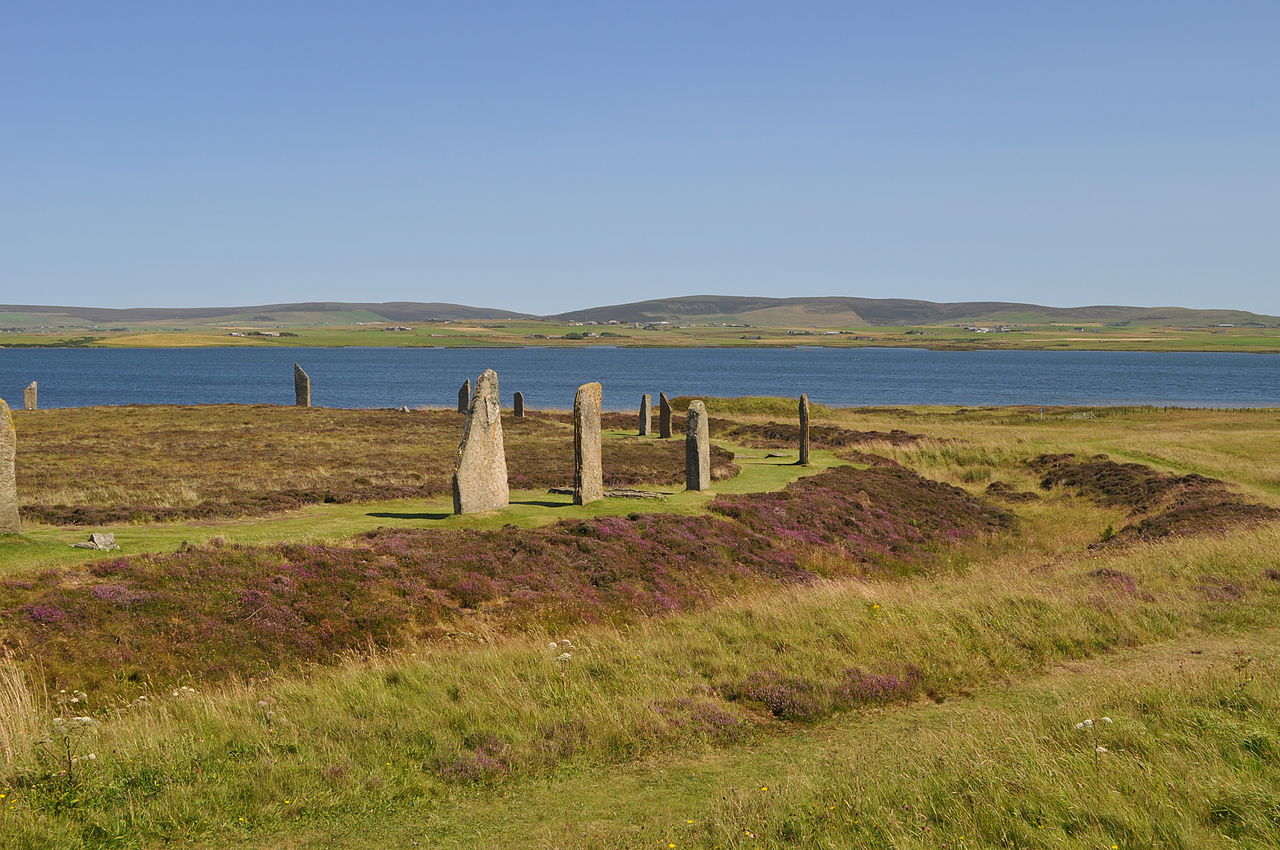
The Ring of Brodgar is a major prehistoric monument on the Mainland of Orkney, Scotland. Constructed during the late Neolithic, it combines a broad circular setting of standing stones with a substantial ring-shaped cut in the bedrock. The site is one element of the Heart of Neolithic Orkney ensemble and is included within the World Heritage Site recognized by UNESCO. Visitors and researchers commonly describe the Ring as both a stone circle and a henge, reflecting its mixed architectural character.
Image gallery
10 Images






Structure and layout
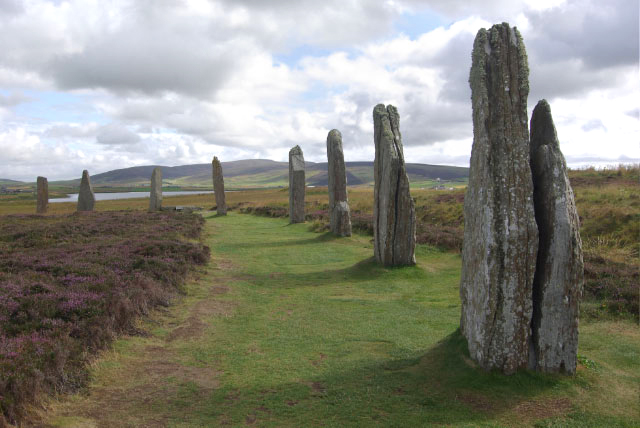
The circle measures about 104 metres in diameter, making it one of the largest rings in the British Isles. Early surveys estimated the original complement of standing stones at roughly sixty; by the late 20th century fewer than half remained upright. The tallest surviving stones are grouped to the south and west. Encircling the stones is a circular ditch cut directly into the sandstone bedrock, reported to be as much as three metres deep and around nine metres wide. This ditch was dug by prehistoric builders rather than formed by piled earth, so some scholars distinguish the monument from classic bank-and-ditch henges while others accept the broader henge label.
Archaeological context
The Ring sits within a dense prehistoric landscape in which ritual, funerary and domestic features occur close together. Within a few square kilometres are other major monuments including the Maeshowe chambered tomb and the Standing Stones of Stenness. Excavations and surface finds in the area have produced worked flint and stone tools as well as bronze-age artefacts, indicating long-term use and modification of the landscape from the Neolithic through the Bronze Age.
Dating, function and interpretation
Absolute dates for the Ring of Brodgar remain debated, but most assessments place its construction in the late fourth to third millennia BCE. Like many prehistoric monuments, its purpose is not recorded and must be inferred from context: the scale of labour invested and its relationship to other ceremonial sites suggest communal ritual activity, gatherings, or astronomical observation. Some researchers highlight alignments and entrances that may have framed solar or lunar events; others emphasize social and territorial meanings.
Notable features and nearby sites
- Large stone ring with originally c.60 megaliths, many now reduced in height or missing.
- Cut circular ditch excavated from bedrock rather than formed by bank construction.
- Two principal opposing entrances noted by researchers, often described as northwest and southeast approaches.
- Close relationship to other monuments that form a coherent ritual landscape, including chambered tombs, barrows and single standing stones.
Conservation, research and visiting
Because of its archaeological importance the Ring is managed as part of the larger heritage area. Ongoing research uses survey, environmental sampling and non-invasive techniques to refine understanding without large-scale disturbance. Conservation focuses on protecting remaining stones and the fragile ditch profile from erosion and visitor impact. Practical visitor information and interpretive material are provided on-site and through official channels; authoritative summaries and further reading can be found by following resources listed by heritage organizations and scholarly work on the Neolithic British Isles.
Readers interested in comparative studies can consult classifications of henge monuments by authors such as Aubrey Burl, who used a typology that places this ring within a class characterized by paired entrances. For a concise exploration of the wider context and artifacts recovered nearby, see published accounts of excavations and surveys of Orkney's prehistoric monuments ritual use and regional development Bronze Age activity.
Selected external resources and background material are commonly presented by local heritage bodies and academic projects; an introduction to the stone circle tradition and detailed site reports are available through curated portals and collections provided by museums and research institutions henge, stone circle, UNESCO.
For further reading on surviving remains, site plans and artifact finds consult specialized monographs and regional guides that document the Ring of Brodgar within Orkney's complex prehistoric tapestry World Heritage Site, highlighting its role among the archipelago's many standing stones and tombs.
Questions and answers
Q: What is the Ring of Brodgar?
A: The Ring of Brodgar is a Neolithic henge and stone circle on Mainland, the largest island in Orkney, Scotland. It is part of the UNESCO World Heritage Site known as the Heart of Neolithic Orkney.
Q: How large is the ring?
A: The stone circle is 104 metres (341 ft) in diameter, and it is the third largest in the British Isles.
Q: How many stones were originally part of the ring?
A: The ring originally comprised 60 stones, of which only 27 remained standing at the end of the 20th century.
Q: What type of henge does it constitute?
A: Technically, this ditch does not constitute a true henge as there is no sign of an encircling bank of earth and rock. However, many archaeologists refer to this structure as a henge. Aubrey Burl classifies it as a Class II henge; one that has two opposing entrances, in this case on the north-west and south-east.
Q: What other features are located nearby?
A: Within 2 square miles (5.2 km2) there are two circle-henges, four chambered tombs, groups of standing stones, single stones, barrows, cairns, and mounds. A number of flint arrowheads and broken stone mace-heads were found nearby which seem to date from Bronze Age times.
Q: What makes Ring Of Brodgar so important?
A: The Ring Of Brodgar's importance comes from its location within such an important ritual landscape with all these features nearby along with Standing Stones Of Stenness and its Maeshowe tomb making it even more significant than before.
Related articles
Author
AlegsaOnline.com Ring of Brodgar: Neolithic stone circle and ritual landscape in Orkney Leandro Alegsa
URL: https://en.alegsaonline.com/art/82959
Sources
- orkneyjar.com : The Ring of Brodgar Excavation 2008