
Sigillography: the study of seals and their use in historical documents
Sigillography examines the seals, matrices, and impressions used to authenticate and decorate documents and objects; it intersects with diplomatics, heraldry, art history and social history.
Overview
Sigillography is the scholarly study of seals — the physical devices and impressions used to authenticate, secure, or symbolize documents, packages and objects. As one of the auxiliary sciences of history, it supports the analysis of documents and material culture and helps establish authenticity, date and social context. For its relationship with broader documentary study see auxiliary sciences.
Image gallery
4 Images
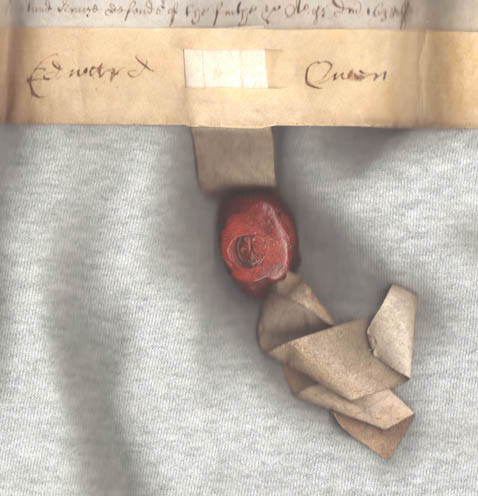


Components and technique
Key terms include the seal matrix (the carved or engraved die), the seal impression (the image left on wax, clay or other media), and the seal’s suspension or attachment. Matrices can be rings, stamps, or engraved blocks; impressions are often made in wax, lead, clay or resin. Study of the iconography, lettering and technique can show where and when a seal was made and how it was used.
Types, imagery and functions
Seals served multiple functions: authenticating a message, securing a closure, advertising authority, and displaying personal or institutional identity. Types include pendant seals that hang from documents, applied seals pressed onto the surface, signet rings used for personal sealing, and official lead or metal seals used by governments or the church. Iconography commonly includes portraits, saints, coats of arms and inscriptions; this iconography links sigillography to fields such as heraldry and the history of art.
History and development of the discipline
Seals themselves have ancient origins, visible in cylinder seals and stamp seals from the ancient Near East and later in Roman and medieval signet traditions. The formal study of seals began to take shape among collectors and antiquarians in the late medieval and early modern period; students of artifacts in the 15th century started cataloguing and describing seals, an interest that grew through the 16th and 17th centuries. Over time sigillography came to be recognized as a distinct specialty, related to but separate from diplomatics, which focuses on documents and their formulae. Early scholars and collectors contributed to museums and archives that form today’s major collections.
Methods of study and practical uses
Researchers compare impressions and matrices to identify makers, date documents and detect forgeries. Techniques include visual analysis, die-link studies (tracing impressions made from the same die), and material examination to determine composition and provenance. Conservators and archivists also use sigillographic knowledge when preserving seals or rehousing documents.
Importance and related fields
Sigillography informs legal, political and social history by revealing how authority and identity were represented materially. It overlaps with diplomatics for document authentication, with heraldry for identification of arms and devices, and with art history for style and iconography—connections emphasized in standard reference works and collections. For historical introduction aimed at general readers and researchers see materials assembled by antiquarian societies and specialist libraries dedicated to seals and artifacts (antiquarian studies).
- Common research aims: dating documents, attributing authorship, mapping administrative networks.
- Materials studied: wax, lead, clay, metal matrices and impressions.
- Why it matters: seals provide direct evidence of authority, literacy, and visual culture.
Modern sigillography continues to evolve as imaging, conservation science and digitization expand access to collections and permit new comparative studies.
Related articles
Author
AlegsaOnline.com Sigillography: the study of seals and their use in historical documents Leandro Alegsa
URL: https://en.alegsaonline.com/art/90305
Sources
- jw.org : "Ancient Seals—What Were They?"
- wikidata.org : wikidata.org/wiki/Q379838
- d-nb.info : 4181228-1
- id.loc.gov : sh85119320
- aleph.nkp.cz : ph125518