
Serekh: royal name device and palace façade symbol in ancient Egypt
A serekh is an ancient Egyptian royal emblem showing a stylized palace façade containing a king's Horus-name, often topped by the Horus falcon; used from the predynastic and Early Dynastic periods onward.
Overview
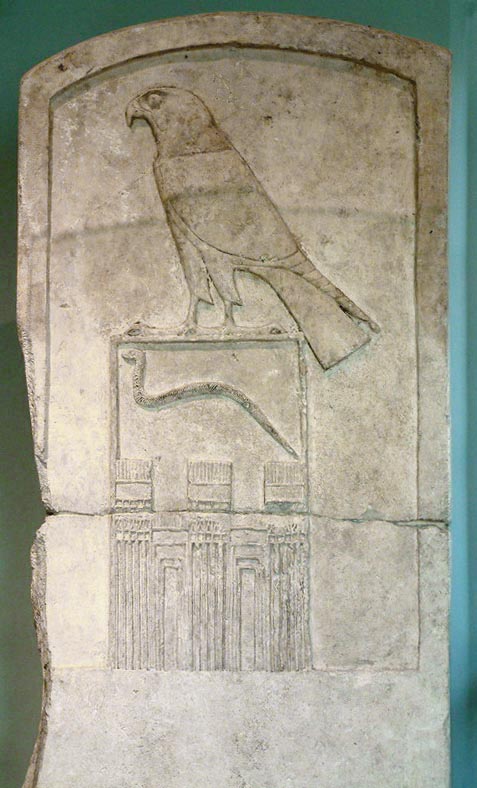
A serekh is a rectangular emblem used in Ancient Egypt to display a ruler's royal name. Functioning as a kind of royal crest, it combines an architectural motif that represents a palace façade with a name sign placed on a ground line. In many examples a bird — usually the god Horus — perches on top, linking the king with divine protection.
Image gallery
10 Images



Design and components
The basic elements of a serekh are consistent and symbolic. Typical features include:
- a niched or crenellated rectangle representing the front of a royal residence;
- a horizontal baseline that suggests the ground or the palace platform;
- the royal name written within the rectangle, commonly the king's Horus-name;
- a figure of a falcon or, less commonly, another deity placed above the rectangle to indicate divine patronage.
History and development
Serekhs appear in late predynastic and Early Dynastic contexts, inscribed on pottery, sealings, palettes and stone artifacts. They became a standard way to present the king's Horus-name in inscriptions and official objects. Over time other formats for royal names — most notably the cartouche — developed and coexisted with the serekh, but the serekh remained an important emblem of kingship for many centuries.
Uses and significance
Serekhs served administrative, religious and propagandistic functions: they identified ownership on goods and monuments, asserted royal authority in conquered regions, and reinforced the theological link between king and deity. Archaeologists find serekhs on tags, seal impressions and public works, where they help identify rulers and sequence early dynastic history.
Distinctions and notable facts
Unlike a cartouche, which later enclosed the throne or birth names, the serekh specifically frames the Horus-name and evokes the palace. Variations exist: some serekhs lack a bird, others show different gods or stylistic differences reflecting local workshops or artistic periods. For further general context on emblematic royal signs see a discussion of heraldic devices at heraldic crests.
Note: Serekhs are a key tool for understanding early Egyptian kingship and chronological ordering of rulers in the predynastic and Early Dynastic periods.
Related articles
Author
AlegsaOnline.com Serekh: royal name device and palace façade symbol in ancient Egypt Leandro Alegsa
URL: https://en.alegsaonline.com/art/88992
Sources
- commons.wikimedia.org : Serekhs