
Lierneux — municipality in Liège Province, Belgium
Lierneux is a small French-speaking municipality in the Ardennes within Liège province, Belgium. Rural area of villages and forests; population 3,337 (2007); coordinates 50°17′N 05°47′E.
Overview
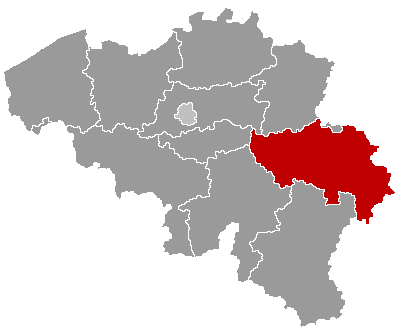
Lierneux is a small, predominantly French-speaking municipality (municipality) located in eastern Belgium, within the hilly, forested region commonly called the Ardennes. Administratively it belongs to the Liège province. The locality is rural in character: in 2007 its population was recorded as 3,337 inhabitants. Its geographic coordinates are 50°17′ North, 05°47′ East, placing it in a landscape of valleys, mixed woodlands and small settlements.
Image gallery
2 Images
Geography and administration
Lierneux comprises a collection of villages and hamlets rather than a single dense urban center. The municipality is typical of the High Ardennes: rolling hills, areas of managed forest and farmland, and a low population density. Local government is organised as a Belgian commune, with a municipal council responsible for services, planning and local roads.
History and development
The settlement history of the Lierneux area follows patterns common in the Ardennes: small agrarian communities established in the medieval period that developed around parish churches and lanes. The wider region was affected by major twentieth‑century events, including troop movements and fighting in the world wars, which left both physical and social traces that shaped postwar reconstruction and memory.
Economy, culture and attractions
Today the local economy blends agriculture, forestry and small businesses. Tourism and outdoor recreation are important: visitors come for hiking, cycling and the quiet countryside. Local cultural life centres on community festivals, village churches and traditional architecture. Services are typical for a rural commune: schools, a town hall and local shops serving residents and nearby visitors.
Notable facts and distinctions
- Lierneux exemplifies the sparsely populated, nature‑rich communes of the Ardennes, valued for outdoor activities and scenic landscapes.
- The municipality’s small size and dispersed settlements contribute to a rural character distinct from Belgium’s urban centres.
- Population figures change over time; the 2007 census figure gives a snapshot rather than a current total.
Community Partnership
The partner community is Val-de-Meuse in the Département Haute-Marne, Region Grand Est (France).
Notes and evidence
- ↑ Status 2018

Municipalities in the Belgian province of Liège
Amay | Amel | Ans | Anthisnes | Aubel | Awans | Aywaille | Baelen | Bassenge | Berloz | Beyne-Heusay | Blegny | Braives | Büllingen | Burdinne | Burg-Reuland | Bütgenbach | Chaudfontaine | Clavier | Comblain-au-Pont | Crisnée | Dalhem | Dison | Donceel | Engis | Esneux | Eupen | Faimes | Ferrières | Fexhe-le-Haut-Clocher | Flémalle | Fléron | Geer | Grâce-Hollogne | Hamoir | Hannut | Héron | Herstal | Herve | Huy | Jalhay | Juprelle | Kelmis | Liège | Lierneux | Limbourg | Lincent | Lontzen | Malmedy | Marchin | Modave | Nandrin | Neupré | Olne | Oreye | Ouffet | Oupeye | Pepinster | Plombières | Raeren | Remicourt | Saint-Georges-sur-Meuse | Saint-Nicolas | Saint Vith | Seraing | Soumagne | Spa | Sprimont | Stavelot | Stoumont | Theux | Thimister-Clermont | Tinlot | Trois-Ponts | Trooz | Verlaine | Verviers | Villers-le-Bouillet | Visé | Wanze | Waremme | Wasseiges | Weismes | Welkenraedt
Related articles
Author
AlegsaOnline.com Lierneux — municipality in Liège Province, Belgium Leandro Alegsa
URL: https://en.alegsaonline.com/art/57846
Sources
- statbel.fgov.be : Werkelijke bevolking per gemeente op 1 januari 2007 / Population de droit par commune au 1 janvier 2007 (.xls)
- statbel.fgov.be : Geografische coördinaten van de gemeenten (.xls)