
Liège–Bastogne–Liège
Liège–Bastogne–Liège, nicknamed La Doyenne, is a one‑day professional cycling Monument held each spring in the Ardennes. It features a long, hilly route and steep short climbs that decide the race.
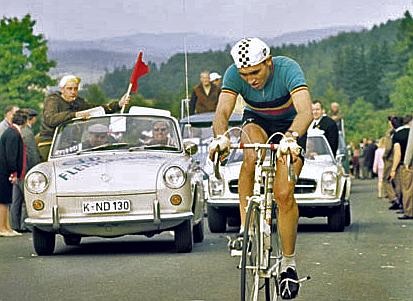
Liège–Bastogne–Liège is a one‑day professional road cycling race held in the Ardennes region of Belgium. Commonly called La Doyenne ("the oldest"), it is one of the five cycling "Monuments" on the European professional road cycling calendar. The traditional course runs from Liège to Bastogne and back to Liège, using the Ardennes' rolling, wooded terrain to create a selective and often unpredictable contest.
Image gallery
7 Images


Route and characteristics
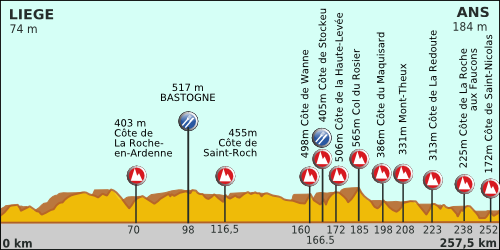
The race is notable for its length and succession of short, steep climbs rather than long alpine ascents. Riders face numerous uphill ramps with gradients that can exceed double digits, making the final 100 kilometres particularly decisive. Weather in spring—cool temperatures, rain, or wind—can add to the difficulty and contribute to dramatic racing.
- Terrain: hilly Ardennes countryside with narrow, twisting roads.
- Key features: repeated short, sharp climbs and technical descents.
- Typical length: a long one‑day classic, often well over 200 km.
History and significance
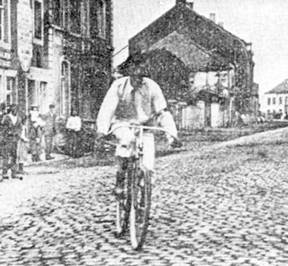
First run in the late 19th or early 20th century, the race earned its reputation as one of cycling's oldest classics and so gained the La Doyenne nickname. Over decades it developed prestige equal to other Monuments, attracting the sport's top riders and serving as a highlight of the spring classics season. It is frequently paired in the calendar with the Ardennes Classics and the midweek hillier event La Flèche Wallonne.
Tactics, winners and importance
Tactically the race favors strong climbers and punchy classics specialists who can attack on steep ramps and sustain long solo efforts or small group moves. Team strategy, timing of attacks on late climbs, and ability to handle bad weather all influence outcomes. Because it is a Monument, a victory here is a career-defining achievement and often cited among a rider's most prestigious results.
Notable facts
Over the years the race has produced memorable solo victories, dramatic late attacks and repeat winners who became legends of the sport. Its place in cycling lore is reinforced by its continuity, challenging profile and cultural importance in Belgian cycling. For route details, historical lists of winners and organisational information see sources linked from the official race pages and major cycling archives (route summary, race calendar, regional context, Ardennes classics).
Questions and answers
Q: What is Liège–Bastogne–Liège?
A: Liège–Bastogne–Liège is a professional road cycling race, which is also known as one of the five 'Monuments' of the European professional road cycling calendar.
Q: What does La Doyenne mean?
A: La Doyenne means "the oldest" in French, and it is oftentimes used to refer to Liège–Bastogne–Liège.
Q: Where is Liège–Bastogne–Liège held?
A: Liège–Bastogne–Liège is held in the Ardennes region of Belgium.
Q: What is the route of the race?
A: The route of the race starts from Liège, goes to Bastogne, and then returns back to Liège.
Q: When did the first Liège–Bastogne–Liège race take place?
A: The first Liège–Bastogne–Liège race took place in the year 1892.
Q: How long is the Liège–Bastogne–Liège race?
A: The total distance of the Liège–Bastogne–Liège race is approximately 256 kilometers, which is broken down into two parts - Liège to Bastogne and then Bastogne back to Liège.
Q: Who participates in Liège–Bastogne–Liège?
A: Professional riders from all over the world participate in Liège–Bastogne–Liège, which is considered one of the most challenging cycling races in the world.
Related articles
Author
AlegsaOnline.com Liège–Bastogne–Liège Leandro Alegsa
URL: https://en.alegsaonline.com/art/57831
Sources
- letour.fr : "Site officiel du Tour de France 2019"