
Liège
Liège is a major city in Wallonia, Belgium, historically a medieval bishopric and 19th‑century industrial centre. Today it is a cultural, educational and logistics hub with a large inland port and busy cargo airport.
Overview
Liège is a city in eastern Belgium that serves as the principal urban centre of the French‑speaking Walloon region. In local speech the city appears under several names and pronunciations: Walloon Lidje, Dutch Luik, German Lüttich. It functions as the cultural centre of Wallonia and is the capital of the province of Liège. Geographically it lies on the river Meuse and occupies an important position between the greater industrial and transport corridors of western Europe. 

Image gallery
10 Images


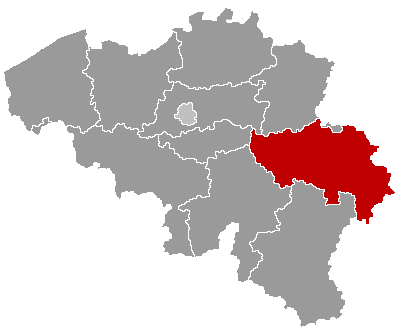


Administrative role and geography
The municipality is one of Belgium's larger cities by population and remains the seat of a Roman Catholic bishopric. As a regional capital it hosts provincial government services and is an anchor for surrounding towns and suburbs. Its location in the Walloon region places Liège at the crossroads of Belgian, French and German cultural influences, and it is commonly described as a major crossing point in Europe.
History and development
Liège has early medieval origins: records name the settlement in late antiquity and it became an established bishopric from the 8th century, developing into a religious and intellectual centre during the Middle Ages. For many centuries the city was governed by prince‑bishops who combined ecclesiastical and secular authority. The upheavals of the late 18th century, including the French Revolution, damaged ecclesiastical buildings and altered local institutions; several churches and the former cathedral complex suffered destruction or rebuilding in that era (cathedral references).
Industrial era and economic change
From the 19th century onward Liège became an industrial powerhouse: coal mining and related sectors drove rapid expansion in the 19th century. Local resources and investment supported coal and mining, large steel works and diversified industry, while river and rail links fostered domestic and international trade. The late 20th century brought decline in traditional heavy industry, but the city reinvented parts of its economy by developing logistics, high‑technology niches and research‑driven firms.
Transport, logistics and modern economy
Liège's inland harbour is one of Europe's larger river ports for bulk and container traffic, and the adjacent airport has become a major European freight gateway. Liège Airport (Liège Airport) handles a significant volume of cargo flights and supports express freight networks. The city's recovery has depended on logistics, freight distribution, and new technology clusters rather than a return to large‑scale coal or steel production.
Culture, education and notable features
Liège hosts a prominent university (University of Liège) and numerous secondary schools, which sustain its role as an educational hub and a research centre. The urban fabric mixes medieval streets, 19th‑century industrial architecture and contemporary developments. Local food and cultural life—ranging from markets and museums to well‑known specialties such as the Liège waffle—reflect the city's hybrid Franco‑Belgian heritage. Visitors and residents encounter museums, theatres and festivals that underline Liège's continued cultural vitality.
Quick facts and context
- Status: City and municipality within Belgium.
- Region: Part of Wallonia's economic and cultural area.
- Historic governance: ruled by prince‑bishops until the modern era.
- Industrial legacy: built on coal, mining and steel; now diversified.
Liège illustrates how an historic European city can evolve from medieval bishopric through industrial prominence to a contemporary mix of education, culture and logistics activity, while retaining distinct local languages and traditions.
Questions and answers
Q: What is the name of the city in Belgium?
A: The city in Belgium is called Liège.
Q: What is the cultural centre of the Walloon region of Belgium?
A: Liège is the cultural centre of the Walloon region of Belgium.
Q: When was the first written trace found for this city?
A: The first written trace for this city was found in 558 as Leodicum or Vicus Leodicus.
Q: How did Liege become a cultural centre in the Middle Ages?
A: In 717, Liege was made the seat of a bishopric and became a cultural centre in the Middle Ages.
Q: How did French Revolution affect Liege's cathedral?
A: During French Revolution, Liege's cathedral was damaged, partially burned down and then completely destroyed.
Q: What were some major industries that drove economic growth during 19th century?
A: During 19th century, coal-mining, steel industry and trade drove economic growth in Liège.
Q: What are some industries that are driving economy today?
A: Today, logistics and high tech industry (biotechnology, space industry, IT) are driving economy in Liège.
Related articles
Author
AlegsaOnline.com Liège Leandro Alegsa
URL: https://en.alegsaonline.com/art/57833
Sources
- statbel.fgov.be : Werkelijke bevolking per gemeente op 1 januari 2007 / Population de droit par commune au 1 janvier 2007 (.xls)
- statbel.fgov.be : Geografische coördinaten van de gemeenten (.xls)