
Liège (province) — Wallonia, Belgium
Liège is the easternmost province of Wallonia in Belgium: a region of river valleys, industry and bilingual communities, with a complex history linking Roman, medieval and industrial eras.
Overview
The province of Liège occupies the easternmost portion of the Walloon Region in Belgium and takes its name from its capital city, Liège. It is a diverse territory of urban centers, river valleys and upland plateaus that connects the Low Countries with neighbouring Germany and Luxembourg. The province functions as an administrative unit within Belgium and plays an important role in cross‑border economic and cultural exchanges. For more on the language contexts see French and German.
Image gallery
7 Images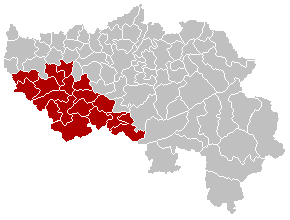




Geography and administrative divisions
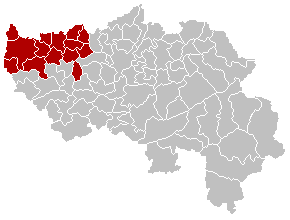
Liège province stretches from the Meuse valley in the west into the highlands and Ardennes to the southeast. It is subdivided into arrondissements and many municipalities; larger urban areas include the capital Liège, Verviers, Seraing and Huy. Key natural features are the Meuse and Vesdre rivers, forested hills and limestone plateaus. Major towns and sites include:
- Liège (administrative and cultural centre)
- Verviers (textile history and water resources)
- Seraing and Huy (industrial and riverine towns)
History and development
The region has a layered history: Roman presence, medieval principalities and the Prince‑Bishopric of Liège shaped its institutions and architecture. From the 19th century onwards the province became a core area of Belgium’s early industrialization, driven by coal, steel and glassmaking. Twentieth‑century economic shifts brought deindustrialization in some areas and efforts at economic diversification and heritage preservation.
Economy, culture and uses
Liège hosts a mix of manufacturing, services, logistics and research; its location makes it a hub for freight and cross‑border commerce. Cultural life is rich: museums, university institutions, stage arts and regional festivals reflect francophone Walloon traditions alongside Germanic influences. The province also contains important transport nodes and brownfield redevelopment projects that aim to convert former industrial sites into cultural and business parks.
Demographics and languages
Population patterns are uneven, with denser settlements along the Meuse and sparser communities in the Ardennes. The dominant language is French, while a recognized German‑speaking minority lives in the eastern municipalities and is linked administratively to the German‑speaking Community of Belgium — see German. Traditional regional languages and dialects (Dutch variants, Luxembourgish, Walloon) remain part of local identity: Dutch, Luxembourgish and Walloon are historically present in border zones.
Notable facts and distinctions
Liège is often described as a crossroads between cultures and economies. It is the easternmost province in the Walloon Region (Walloon Region) of Belgium and officially classed as a province. The area’s mixed heritage means discussions of identity sometimes reference varied ethnic and linguistic legacies. Visitors encounter industrial heritage sites, riverside promenades and a regional cuisine that blends Walloon and continental influences.
Questions and answers
Q: What is Liège?
A: Liège is the easternmost province of the Walloon Region, in Belgium.
Q: What are the different names of Liège in different languages?
A: Liège is known by different names in different languages: French: Liège, German: Lüttich, Dutch: Luik, Kölsch: Lüttish, Limburgish: Luuk, Luxembourgish: Léck, Walloon: Lidje.
Q: What is the capital of Liège?
A: The capital of Liège is the city of Liège.
Q: What is the ethnicity of the people in Liège?
A: Liège is an area of French and German ethnic groups.
Q: What language do most of the inhabitants of Liège speak?
A: Most of the inhabitants of Liège speak French.
Q: Which language is spoken by the minority of the inhabitants of Liège?
A: A minority of the inhabitants of Liège speak German.
Q: Which region is Liège part of?
A: Liège is part of the Walloon Region.
Related articles
Author
AlegsaOnline.com Liège (province) — Wallonia, Belgium Leandro Alegsa
URL: https://en.alegsaonline.com/art/57832
Sources
- statbel.fgov.be : Population per municipality as of 1 January 2016
- provincedeliege.be : "Histoire"
- provincedeliege.be : "Géographie"
- peakbagger.com : "Signal de Botrange"
- provincedeliege.be : "84 communes"
- statbel.fgov.be : Institut National de Statistique - Direction générale Statistique et Information économique