
Antelope: overview, characteristics, distribution, and relationship with humans
Antelope is a common name for many even-toed bovids, primarily African and Asian, known for their horns, grazing habits, migrations, and varied adaptations across grassland, woodland, and forest habitats.
Antelope is a general English name applied to numerous species of even-toed ungulates that belong to the family Bovidae. The term is not a formal taxonomic category and has been used as a convenient label for a diverse set of bovids that are neither cattle nor sheep, goats, or buffalo. Because it groups species by habit and appearance rather than strict ancestry, some authors call it a wastebasket taxon. Nonetheless, the name is widely used in ecology, field guides, and common speech to describe slender, horned grazers and browsers across Africa and parts of Asia.
Image gallery
10 Images


Characteristics
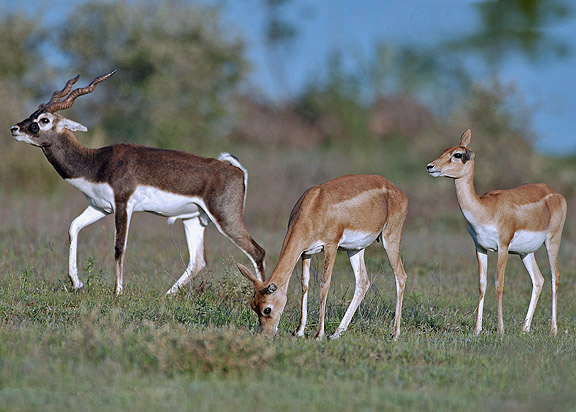
Antelopes display a range of body sizes, shapes, and adaptations, but they share several basic features of bovids. They are even-toed ungulates, with cloven hooves and a ruminant digestive system. Their simple, unbranched bony cores are covered by a sheath to form permanent horns in most species; unlike deer antlers, these horns are not shed seasonally. Many species show sexual dimorphism, with males typically larger and having more prominent horns. Typical bovine traits include even-toed hooves, often horizontally elongated pupils (a feature sometimes referred to as horizontal pupils), and a multi-chambered stomach for ruminating. Locomotion ranges from rapid sprinting and high leaping to slower, powerful movement in heavier species.
- Body form: from small, agile gazelles to large, heavy elands.
- Horns: permanent, unbranched sheaths in true antelopes; vary by sex and species.
- Diet: mainly grasses and forbs, though some browse leaves and shrubs.
- Senses and eyes: adaptations for open habitats include wide fields of view and keen hearing.
Distribution, habitats and migrations
Most antelope species occur in sub-Saharan Africa, with a smaller number found across parts of Asia. Their ecological role often parallels that of true deer in temperate regions: occupying grazing niches and shaping grassland ecosystems. They inhabit a wide range of environments — from dense forest and woodland to open bush and savanna — and some species are highly sedentary while others perform long-distance migrations to follow seasonal growth of grass and water. Famous large-scale movements include the mass circuits of gnus and gazelles across East Africa.
Behavior, social structure and reproduction
Many antelopes form social groups commonly described as a herd, although social organization ranges from solitary territorial males with harem-forming behavior to large mixed herds. Reproductive strategies differ: some species have fixed breeding seasons timed to resource availability, while others breed opportunistically. Courtship and dominance displays often involve horn use and visual signals such as stotting or pronking. Younger antelopes rely on hiding strategies or maternal care to avoid predators, and survival strategies vary with habitat and body size.
Notable species and distinctions
Common and well-known antelopes include small, fleet-footed gazelles and springbok recognized for speed and acrobatic jumps; the graceful kudu and massive grazing elands which may demonstrate surprising leaping ability despite bulk. Although North America has a superficially similar species, the pronghorn belongs to a different family (Antilocapridae) and differs in horn structure and shedding pattern. Antelopes are distinguished from deer by their permanent horns and from domestic bovids such as cattle and bison by differences in behavior, form, and often habitat use.
Humans, uses and conservation
Antelopes have long been integral to human economies and cultures: they are hunted for meat and hides, kept in captivity for agriculture or game, and feature in traditional symbolism. Some species remain abundant; others face threats from habitat loss, hunting pressure, and fragmentation. Conservation responses range from protected areas and regulated hunting to translocations and captive breeding. Scientific and public interest in antelopes extends to research on ruminant digestion, grazing impacts on grassland dynamics, and the ecological consequences of large migrations.
Further reading and links
- Even-toed ungulates overview
- Taxonomy and naming conventions
- Wastebasket taxa explained
- Cattle (comparative note)
- Bison and related bovids
- Ecological niche concepts
- Deer comparison
- Sahara region and zoogeography
- African biomes
- Asian antelope populations
- North American ungulates
- Pronghorn distinctions
- Horn structure
- Herd and social grouping
- Forest-dwelling species
- Woodland species
- Bush and scrub habitats
- Migration patterns
- Grassland ecology
- Gnus and migrations
- Gazelles and their ecology
- East African ecosystems
- Hoof morphology
- Eye and pupil adaptations
- Ruminant digestion
- Sexual dimorphism in bovids
- Springbok behavior
- Eland biology
- Kudu and large forest antelope
Questions and answers
Q: What is an antelope?
A: An antelope is a term for many even-toed ungulate species which are not cattle, sheep, buffalo, bison, or goats. They occupy the ecological niche which deer occupy north of the Sahara and are found mostly in Africa below the Sahara, and parts of Asia.
Q: How many species of antelope exist?
A: There are 91 species of antelope, most of which are native to Africa and grouped into about 30 genera.
Q: What distinguishes true antelopes from pronghorns?
A: True antelopes have horns which are unbranched and never shed while pronghorns have branching horns that shed annually.
Q: Are all bovids similar in some ways?
A: Yes, all bovids have even-toed hooves, horizontal pupils, ruminating guts, and (in at least the males) bony horns.
Q: Is there sexual dimorphism among antelopes?
A: Yes, in most species both sexes have horns but those of males tend to be larger than females'. Horns are not shed and are not made of bone which distinguishes them from antlers.
Q: Are gazelles known for their speed and leaping abilities?
A: Yes, gazelles as well as springbok are known for their speed and leaping abilities. Even larger antelope such as elands and kudus can jump 8 feet (2.4 m) or greater although their running speed is restricted by their greater mass.
Q: Do some species undertake huge migrations? A:Yes , some plains species undertake huge migrations to follow the rains and therefore their food supply . The gnus and gazelles of East Africa perform some of the most impressive mass migratory circuits of all mammals .
Tags
Related articles
Author
AlegsaOnline.com Antelope: overview, characteristics, distribution, and relationship with humans Leandro Alegsa
URL: https://en.alegsaonline.com/art/4559
Sources
- hintsandthings.co.uk : Hints and things