
Eland: overview of Africa’s largest antelope
Eland are two closely related African antelope species (common and giant). This article covers their appearance, behavior, habitat, diet, reproduction, human interactions and notable traits.
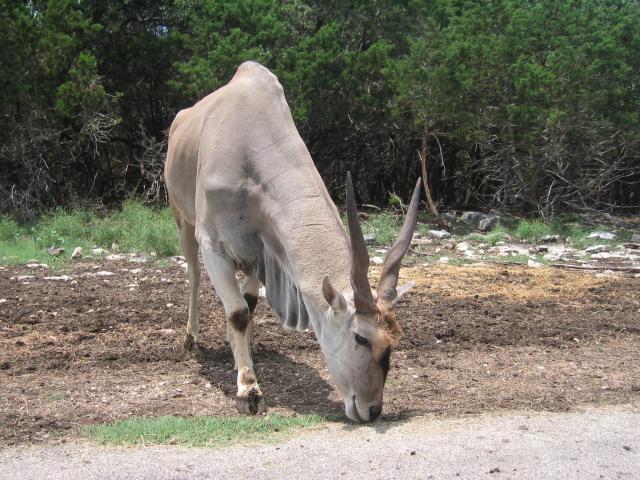
The eland is widely recognized as the largest species of antelope in Africa. Two closely related species compose the genus: the common eland and the giant eland. Both species are native to sub-Saharan Africa and share many habits and physical features while differing in range, coat pattern and aspects of behavior. For a concise introduction to their taxonomic status see largest antelope, the classification of the two species, and their broadly African distribution.
Image gallery
8 Images




Distribution and species
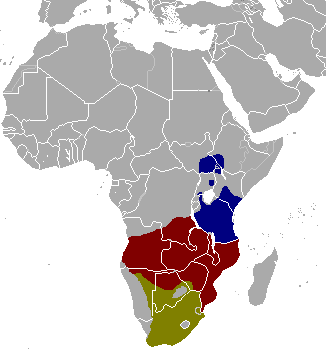
The common eland (Taurotragus oryx) is widespread across eastern and southern parts of the continent, occurring in regions of East Africa and parts of southern Africa. The giant eland (Taurotragus derbianus) occupies more northerly and westerly ranges: populations are found in areas of Sudan, the Central African Republic, Cameroon, Senegal and other locations across West Africa. Local densities vary with habitat quality, human pressure and seasonal water availability.
Physical characteristics
Elands are massive, long-legged antelopes with a characteristic dewlap and tightly spiraled horns that occur in both sexes (males’ horns are typically thicker). Adult males are substantially heavier than females: typical male weights generally fall in a high range and females are noticeably lighter. Mature males often weigh several hundred kilograms, and exceptionally large individuals have been reported to approach a metric ton. Coat color ranges from tawny to gray-brown; the giant eland commonly shows more distinct vertical striping than the common eland. Sexual dimorphism is apparent in size, horn thickness and behavioral dominance displays.
Habitat and feeding
Elands occupy a mix of open savanna, woodland and parkland. The giant eland prefers more wooded or forest-edge environments, while the common eland is adaptable across open grassland and mixed bush. They are primarily browsers and mixed feeders: their diet includes grass, leaves, shoots and branches, and they will take advantage of seasonal fruit, seeds or cultivated crops when available. Some populations undertake seasonal movements or localized migrations and often form herds that vary in size with the season and local conditions; observers have described the giant eland forming small herds as well as larger aggregations.
Behavior, locomotion and communication
Elands are social but show a range of group structures from loose, mixed herds to small bachelor groups. They are generally alert and can be wary of humans. Reports of their running speed vary: some observers describe impressive bursts of speed and jumping ability—individuals have been said to clear substantial heights—while others note a plodding gait at slower paces. One unusual and well-documented trait is an audible clicking noise produced by tendons or joints in the foreleg when the animal walks; the sound travels a surprising distance and researchers suspect it may serve as a form of communication within a herd.
Reproduction, lifespan and human interactions
Females typically produce a single calf after a gestation period common to large bovids. Calves remain hidden for a period before joining the herd. Elands can live for more than a decade in the wild and longer under human care. They have been hunted for meat and trophies, and in some regions are managed as game livestock because they adapt well to enclosure and can provide meat, leather and income. Conservation concern varies by region and species: habitat loss, hunting pressure and competition with livestock have reduced some populations, especially of the giant eland, prompting local protection measures and management programs.
Notable facts and distinctions
- Both sexes bear horns; horns are conical and gently spiral.
- Giant elands tend to show more prominent striping and a slightly different habitat preference than common elands.
- The distinctive foreleg clicking sound remains an intriguing subject for behavioral study.
For further reading on anatomy, behavior and conservation initiatives consult specialist sources and regional wildlife authorities. Useful starting points include general references on African ungulates and species-specific accounts accessible through regional conservation organizations and zoological compilations.
Questions and answers
Q: What are the two species of eland?
A: The two species of eland are the common eland (Taurotragus oryx) and the giant eland (Taurotragus derbianus).
Q: Where can each species be found?
A: The common eland is found in East Africa and South Africa, while the giant eland is found in Sudan, Central African Republic, Cameroon, Senegal and West Africa.
Q: How much do males weigh?
A: Males range in size from 600 to 800 kilograms (1,300 to 1,800 lb), although they may reach a ton on rare occasions.
Q: How much do females weigh?
A: Females range from 400 to 600 kilograms (880 to 1,320 lb).
Q: Are they fast runners?
A: Observers have had difficulty measuring their speed of running; some claim they move quickly at over 70 kilometres per hour (43 mph), while others claim they are one of the slowest antelopes.
Q: Are they good jumpers?
A: Despite their size, elands are exceptional jumpers and can easily clear heights of 1.5 metres (4 ft 11 in) or more. Some have even been known to jump 2.5 metres (8 ft 2 in) or more.
Q: What sound do tendon or joints make when walking?
A:When walking, tendon or joints in the eland's foreleg produce a sharp clicking sound which carries some distance and is thought by naturalists to be a form of communication among them.
Related articles
Author
AlegsaOnline.com Eland: overview of Africa’s largest antelope Leandro Alegsa
URL: https://en.alegsaonline.com/art/30595
Sources
- bio.davidson.edu : "General Information"
- arkive.org : "Common eland at Arkive"
- library.thinkquest.org : "Common eland: Tragelaphus (Taurotragus) oryx"
- ultimateungulate.com : "Common Eland at"
- seaworld.org : "Animal bytes - Common eland"