
Apatosaurus — Large sauropod of the Late Jurassic
Apatosaurus, a long-necked sauropod from the Late Jurassic, is known for its immense size, robust build, and a complicated taxonomic history that once involved Brontosaurus.
Overview
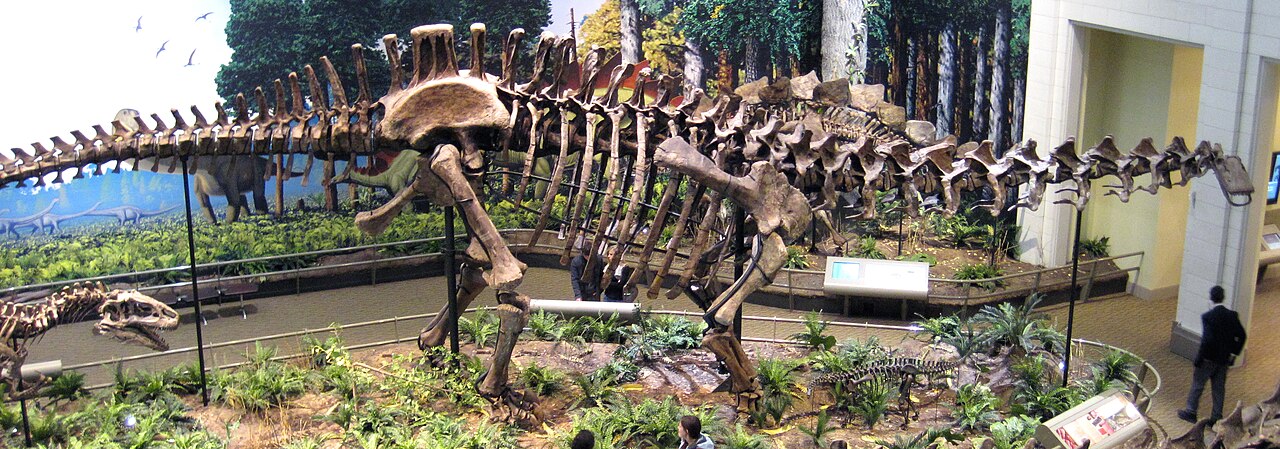
Apatosaurus was a genus of giant, long‑necked sauropod dinosaur that lived during the Upper Jurassic period. It is closely related to other diplodocid sauropods such as Diplodocus and was among the largest land animals of its time. Apatosaurus is best known from well‑preserved skeletons recovered in western North America and has become an iconic example of sauropod anatomy and paleobiology.
Image gallery
10 Images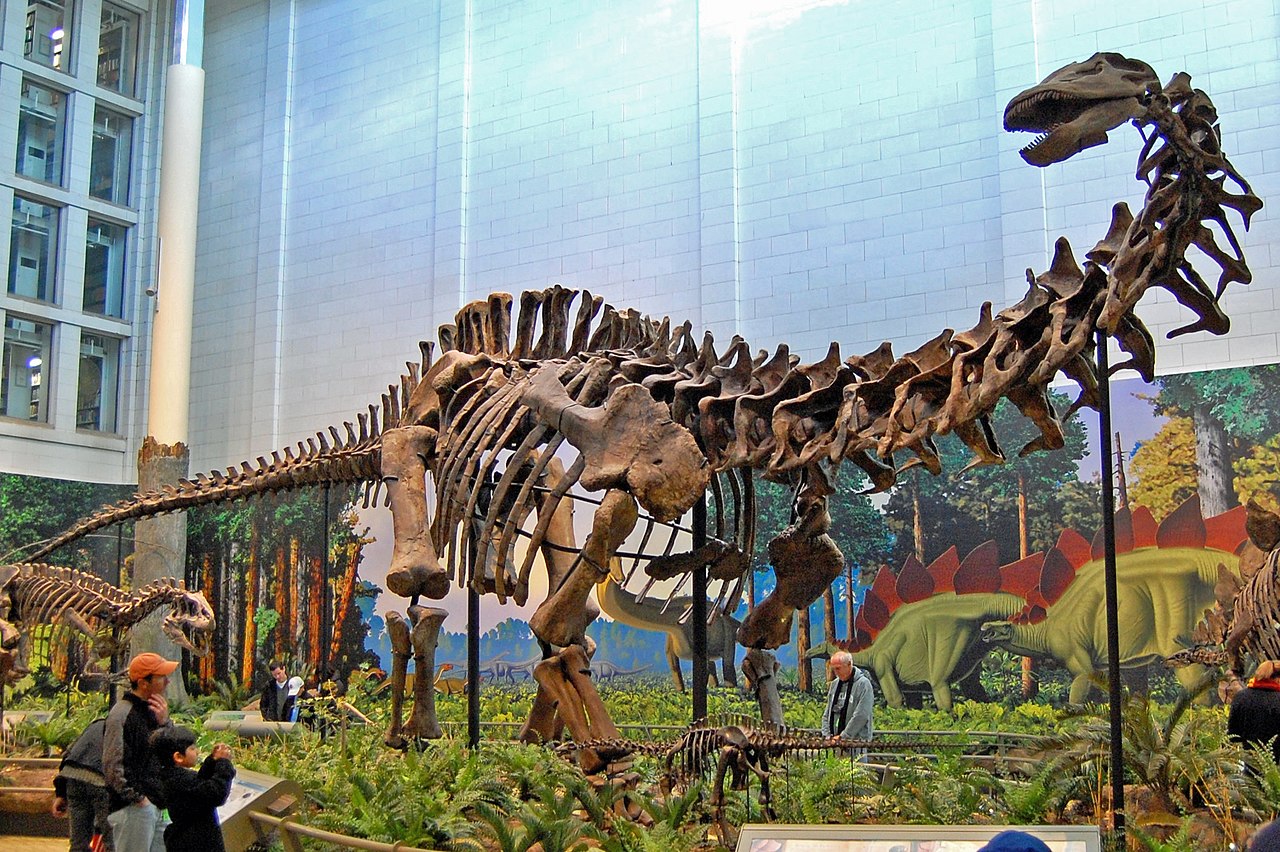



Anatomy and size
Apatosaurus combined extreme length with a notably robust build. Adults reached lengths around 20–22 meters, stood roughly 4–5 meters tall at the hips, and have been estimated to weigh on the order of many tonnes. Compared with some relatives, its neck vertebrae were less elongated and more heavily built, and its limb bones were stout, indicating stronger support for a heavy body. Like most diplodocids it had a long whip‑like tail held above the ground in normal posture, a single large claw on each forelimb, and multiple clawed toes on the hindlimbs.
Discovery and taxonomy
Apatosaurus was first named and described in the late 19th century during the period of active fossil collecting in North America. Early taxonomy was confused: for many decades one set of names and skeleton reconstructions were mixed, and the name Brontosaurus was widely used by the public. Later study clarified the relationships: Apatosaurus is recognized as its own genus and separate from Brontosaurus, though historical debate and reappraisal of specimens have kept the story notable. The genus belongs to a group commonly treated as the family Diplodocidae or a closely related clade within the sauropods (genus level distinctions are important in these discussions).
Paleobiology and behavior
Apatosaurus was herbivorous, feeding on plant material available in floodplains and open forests of the Late Jurassic. Earlier ideas that these animals spent most of their time submerged to support their weight have been abandoned; modern interpretations favor a fully terrestrial lifestyle, with limbs and vertebrae capable of supporting large masses on land. Herding or at least social grouping has been suggested by the discovery of multiple individuals in similar horizons and by comparisons with other sauropods (herds).
Fossil distribution
Fossils are primarily known from the Morrison Formation and equivalent rocks across several U.S. states, including finds in Wyoming, Colorado, Oklahoma, and Utah. The preserved material ranges from partial skeletons to relatively complete mounts, allowing paleontologists to study growth, variation, and differences between named varieties. There are at least two widely recognized species within Apatosaurus, which show differences in vertebral proportions and other skeletal features.
Significance and notable facts
- Apatosaurus highlights how scientific names and reconstructions can change as new fossils are found and reanalyzed.
- Its heavy, stocky build contrasts with the more gracile proportions of relatives like Diplodocus, illustrating diversity among sauropods.
- Well‑preserved skeletons of Apatosaurus have played an important role in museum exhibits and in shaping public perception of dinosaurs.
Because of its size, position in the fossil record, and historical prominence, Apatosaurus remains a central subject in studies of sauropod anatomy, growth, and ecology. Ongoing research continues to refine details about its life appearance, neck and tail function, and how different species are defined within the genus.
Questions and answers
Q: What is Apatosaurus?
A: Apatosaurus is a sauropod dinosaur that lived in the Upper Jurassic period.
Q: What is the family of Apatosaurus?
A: Apatosaurus is in the same family as Diplodocus.
Q: What was Brontosaurus once thought to be?
A: Brontosaurus was once thought to be a later name for Apatosaurus.
Q: How big did Apatosaurus grow?
A: Apatosaurus grew as big as 21 meters long, 4.5 meters tall at the hip, and weighed up to 23 metric tons.
Q: What did Apatosaurus eat?
A: Apatosaurus ate plants.
Q: Where have the bones of Apatosaurus been found?
A: The bones of Apatosaurus have been found in Wyoming, Colorado, Oklahoma, and Utah.
Q: Did Apatosaurus live in water or on land?
A: Scientists once thought that Apatosaurus lived partly under water, but now they think it lived on dry land, probably in herds.
Related articles
Author
AlegsaOnline.com Apatosaurus — Large sauropod of the Late Jurassic Leandro Alegsa
URL: https://en.alegsaonline.com/art/4853
Sources
- species.wikimedia.org : Apatosaurus
- commons.wikimedia.org : Apatosaurus
- ncbi.nlm.nih.gov : ncbi.nlm.nih.gov/pubmed/19558740
- ncbi.nlm.nih.gov : ncbi.nlm.nih.gov/pubmed/10221910
- jstor.org : jstor.org/stable/2400838?&seq=1