
Antlion (Myrmeleontidae): Natural History, Behavior, and Identification
Antlions (family Myrmeleontidae) are neuropteran insects known for predatory larvae that often dig conical sand pits to trap prey. Adults resemble damselflies and have net-veined wings.
Overview
Antlions are insects in the family Myrmeleontidae, placed in the order Neuroptera. There are roughly two thousand described species worldwide. Most people recognize them for the peculiar hunting strategy of their larvae, but adults are also distinctive for their long, lacy wings and slender bodies.
Image gallery
10 Images



Appearance and distinguishing features
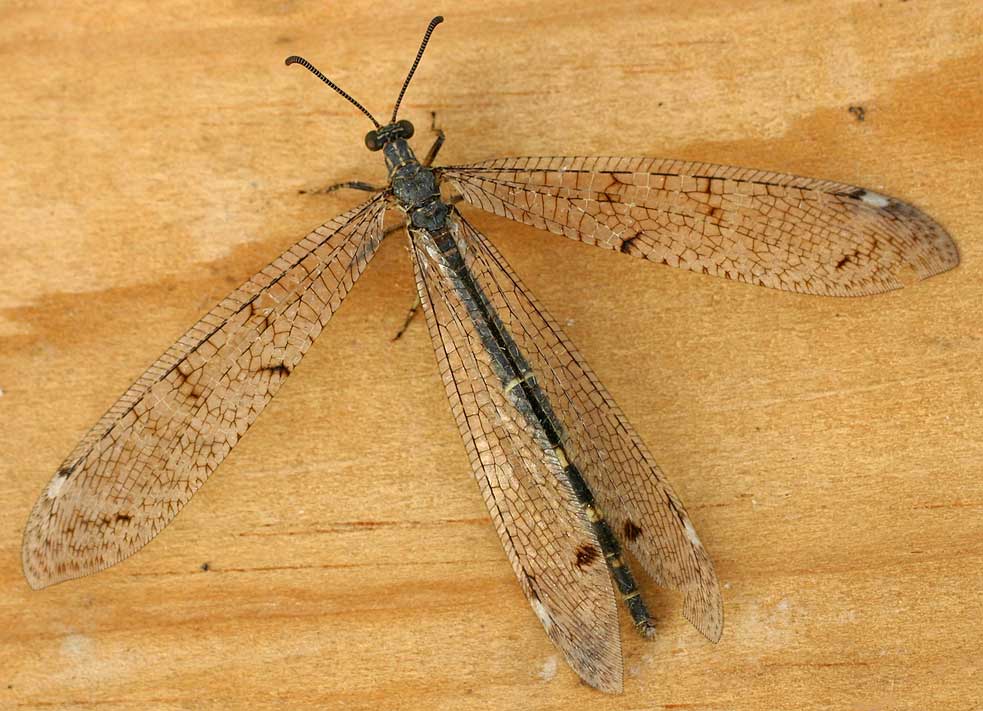
Adults superficially resemble small damselflies or dragonflies but differ in several ways: they have clubbed, curved antennae, a soft-bodied thorax, and two pairs of intricately veined wings held roof-like over the body when at rest. Larvae are robust, broad, and heavily sclerotized, with large mandibles used to seize prey.
Life cycle and behavior
Antlions undergo complete metamorphosis: egg, larva, pupa and adult. Many species’ larvae dig conical pits in dry, loose substrates and lie buried at the bottom waiting for ants or other small arthropods to tumble in. Some species are non–pit-builders and hunt actively. Pupation occurs in a silken cocoon; adults are mostly crepuscular or nocturnal and feed rarely, focusing on reproduction.
Ecological role and human relevance
Larval predation helps regulate populations of ants and other small insects, making antlions part of sandy and arid ecosystem food webs. Their pit-building behavior has attracted scientific interest in biomechanics and behavioral ecology. They are harmless to humans and sometimes appear in cultural folklore due to their unusual traps.
Variations and notable facts
- Not all antlion larvae build pits; hunting strategies vary by species.
- Adults are often short-lived compared to larvae, with some species spending years as larvae but only weeks as flying adults.
- Fossil relatives indicate the group has deep evolutionary roots among neuropterans.
Because they share habitats with lacewings and owlfly relatives, careful attention to antennae and wing venation helps identify antlions. For general information on the broader order to which they belong, see resources about Neuroptera.
Related articles
Author
AlegsaOnline.com Antlion (Myrmeleontidae): Natural History, Behavior, and Identification Leandro Alegsa
URL: https://en.alegsaonline.com/art/4700