
Springbok (Antidorcas marsupialis): description, behavior, and significance
The springbok is a medium-sized antelope of southern Africa known for leaping ‘pronking’, its striking coloration, and its cultural importance as South Africa’s national animal.
Springbok (Antidorcas marsupialis) is a medium-sized antelope native to southern Africa. Recognized for its pale brown and white coat and a distinctive dark stripe along each flank, the springbok has adapted to open grasslands, semi-desert and savanna habitats. It is often grouped with gazelles and other antelopes and is a familiar species across large parts of the region.
Image gallery
10 Images


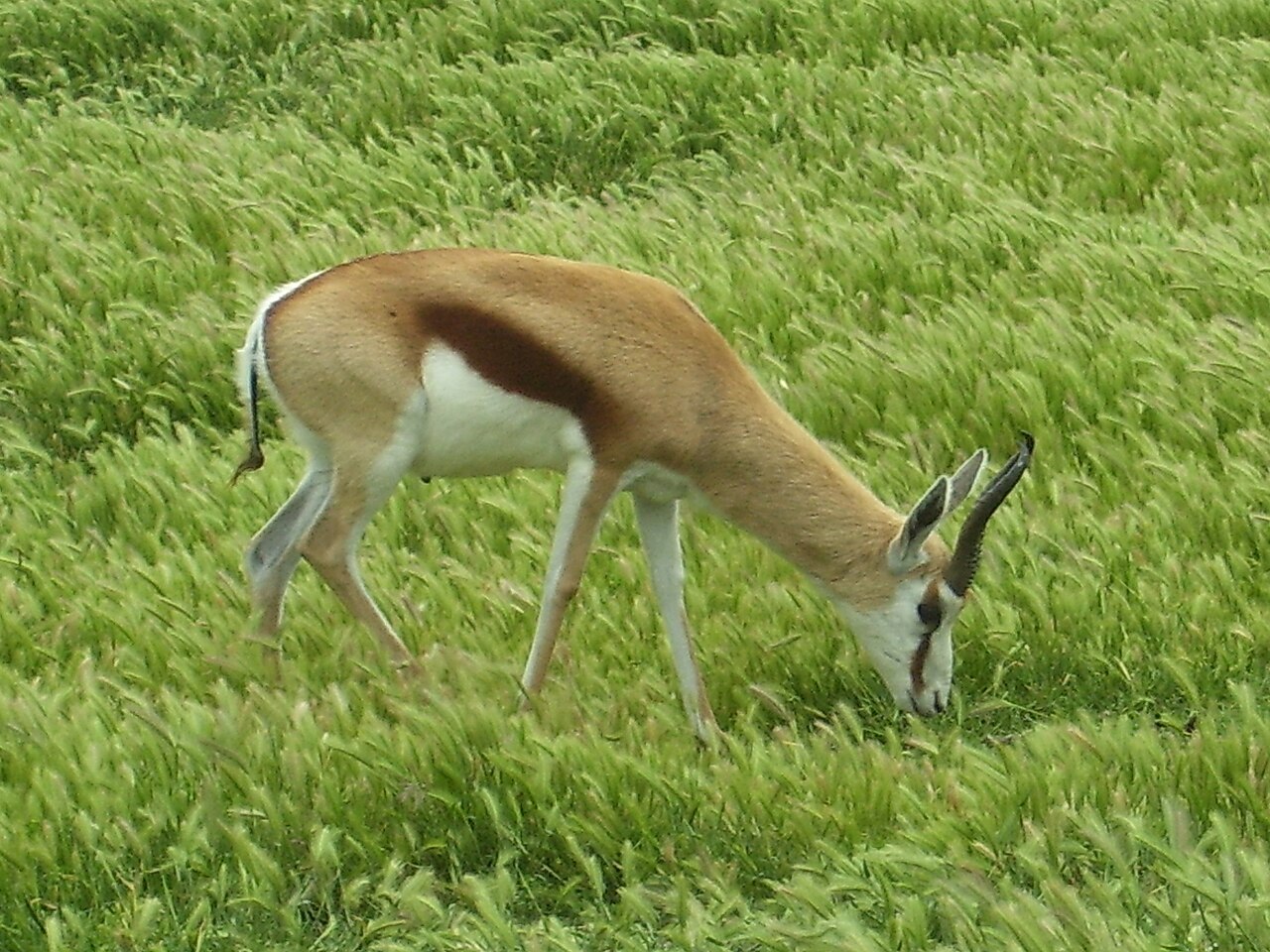


Physical characteristics
Adult springboks stand roughly three quarters of a metre at the shoulder and have a slim, graceful build suited to speed and agility. Both sexes carry lyre-shaped horns, though those of males tend to be thicker. Their coloration — a tan upper body, white underparts and a dark lateral band — provides camouflage on dry plains. When alarmed they perform a high, arched leap known as pronking, during which the back is stiff and all four feet leave the ground.
Behavior and ecology
Springboks are social animals that form herds ranging from small family groups to much larger aggregations during migrations or in favorable seasons. They are mixed feeders, eating grasses and browse depending on availability, and can obtain moisture from their diet, allowing them to survive in arid areas with little surface water. Their mobility and alertness help them evade predators such as large cats, wild dogs and hyenas.
Range, habitat and populations
Native to southwestern and southern Africa, springboks occur across open country where grazing is available. Populations have been resilient in many areas, and they are widely seen on protected lands and private ranches where conservation and sustainable use practices are in place. Their distribution and numbers vary with rainfall, vegetation and human land use.
Human interactions and significance
The springbok is the national animal of South Africa, and it features in cultural symbols, sporting emblems and conservation discussions. It has economic importance through eco-tourism and regulated hunting in some regions, and it plays a role in maintaining grassland ecosystems as a herbivore.
Distinctive traits and quick facts
- Scientific name: Antidorcas marsupialis.
- Often compared to a gazelle and is a member of the broader group of antelope.
- Famous for pronking — a high, stiff-legged leap used in alarm displays and courtship.
- Adapted to hot, dry environments and able to use scarce water sources.
For more detail on behavior, habitat management and conservation status, consult regional wildlife guides and conservation resources. Springboks remain an emblematic species of southern African plains and a subject of continued ecological and cultural interest.
Related articles
Author
AlegsaOnline.com Springbok (Antidorcas marsupialis): description, behavior, and significance Leandro Alegsa
URL: https://en.alegsaonline.com/art/92861
Sources
- iucnredlist.org : "Antidorcas marsupialis"
- species.wikimedia.org : Springbok