
Wildebeest (Gnu): overview, behavior, and conservation
Wildebeest (gnus) are two species of large African antelope known for mass migrations, grazing ecology, and importance to savanna food webs. This article surveys their biology, behavior, and conservation.
Overview
The wildebeest, commonly called the gnu, is a large hoofed mammal in the family Bovidae. There are two recognized species in the genus Connochaetes: the blue wildebeest and the black wildebeest. Wild populations are native to sub-Saharan Africa and are especially notable for forming extensive herds that move in search of fresh grazing and water. For general reference see wildebeest information.
Image gallery
10 Images




Appearance and biology
Wildebeest are robust grazers with a heavy front portion, a muscular neck, and a broad muzzle adapted to feed on short grasses. Both sexes typically bear curved horns that form a continuous arc across the forehead. Coat color and mane differ between the two species: one is greyer with darker facial markings and a shaggy mane, while the other has a darker overall tone and contrasting features. Basic life-cycle traits include seasonal breeding, a single calf per birth, and herd-based social structure. More anatomical details can be found at species resources.
Behavior, migration, and predators
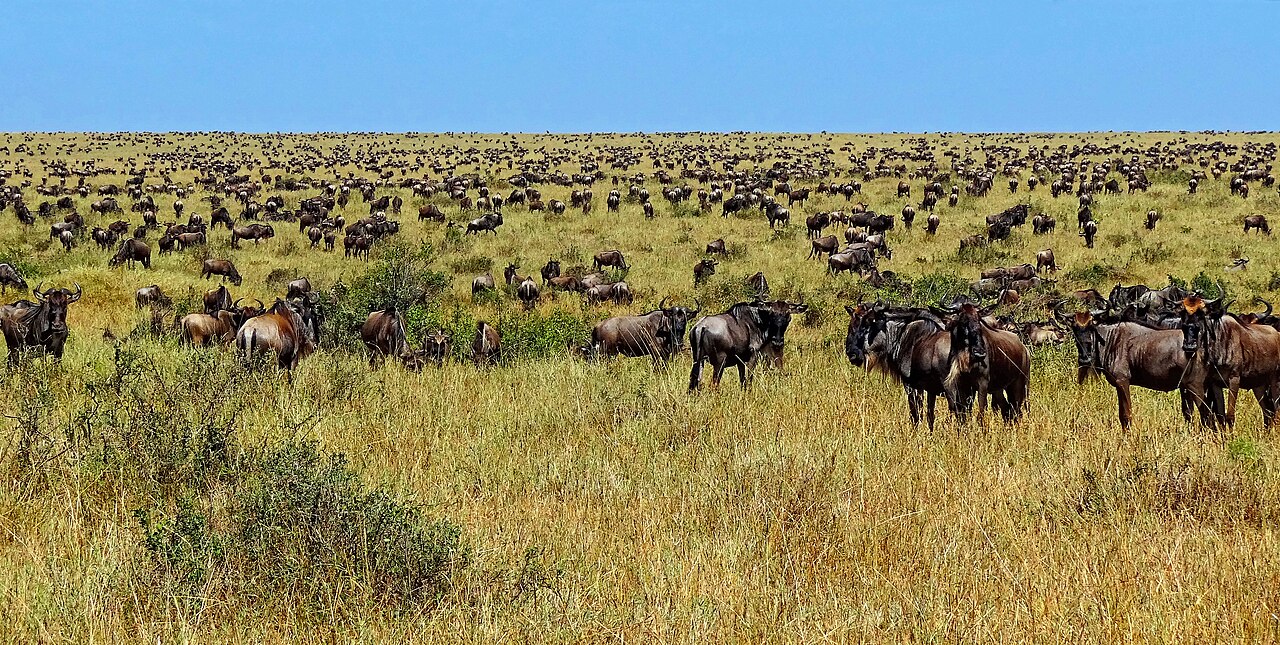
Many wildebeest populations are highly mobile. The most famous movements occur where large herds follow rains and emergent grass across plains, a phenomenon that shapes the savanna landscape. During these migrations they face numerous dangers: lions, hyenas, and crocodiles prey on individuals, and river crossings often cause heavy losses. Calving is frequently synchronized so that many young are born within a short period, reducing per-calf predation risk and allowing collective vigilance.
Ecological role and human interactions
As dominant grazers, wildebeest influence grass composition and nutrient cycling, helping maintain open grassland habitats used by many other species. Their migrations redistribute biomass and attract tourism in regions where wildlife viewing is an important economic activity. They also have a long history of being hunted by people, both historically for subsistence and more recently in regulated forms. For cultural and management perspectives see management and culture.
Conservation and notable facts
Conservation status varies by species and region. In general, wide-ranging populations remain robust, but local declines can result from habitat fragmentation, fencing, and competition with livestock. One of the two species experienced a severe decline in historical times and later recovered through protection and reintroduction programs, illustrating both vulnerability and resilience. For conservation updates and initiatives consult conservation sources.
- Two species: blue and black wildebeest.
- Herding and long-distance movement are central to their ecology.
- Key prey for large African carnivores; significant impacts during river crossings.
- Important to grassland ecosystems and wildlife tourism.
Wildebeest remain one of the most emblematic mammals of African savannas, their seasonal movements and sheer numbers shaping both ecological processes and human appreciation of wild landscapes.
Related articles
Author
AlegsaOnline.com Wildebeest (Gnu): overview, behavior, and conservation Leandro Alegsa
URL: https://en.alegsaonline.com/art/108078
Sources
- bartleby.com : The Columbia Encyclopedia