
Kudu: Greater and Lesser African Antelopes
Kudu are two species of African antelope, the greater and the lesser, recognized by striped coats and spiralled horns. This article covers identification, habitat, behavior, and conservation.
Overview
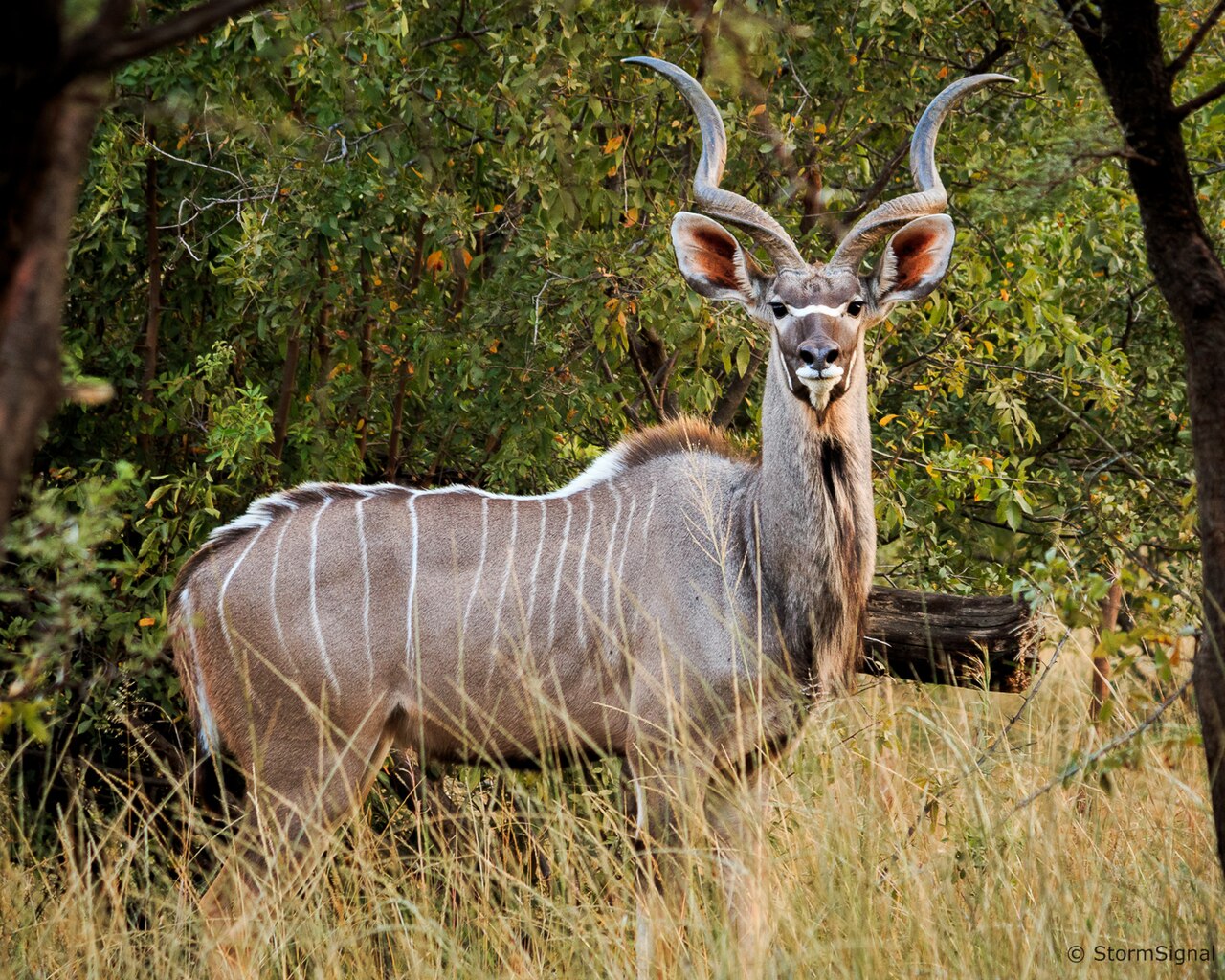
Kudu are medium-to-large African antelopes belonging to the genus Tragelaphus. There are two commonly recognized species: the greater kudu and the lesser kudu. They are best known for the males' impressive spiralled horns, the distinctive vertical white stripes on their flanks, and a preference for bushy or woodland environments where they browse for foliage.
Image gallery
7 Images




Appearance and species differences
Both species have a similar graceful build, but the greater kudu is substantially larger with longer horns and a more robust body. The lesser kudu is more compact, often with finer striping and a more reddish-brown coat. Horns are typically present only on males; they form two or more tight spirals and are a primary visual distinction when identifying sex and age.
Characteristics
- Diet: browsers that feed on leaves, shoots, herbs and occasional fruit.
- Behavior: crepuscular and secretive, they often remain hidden during the heat of the day.
- Social structure: small groups or solitary males; females and young may form loose herds.
- Predators: lions, leopards, African wild dogs and hyenas prey on kudu where ranges overlap.
Distribution and habitat
Greater kudu occur across parts of eastern and southern Africa, favoring thickets, woodlands and riverine areas. Lesser kudu inhabit dry bush and acacia scrub in eastern Africa, with notable populations in Kenya and Tanzania. Kudu in general are found throughout much of sub-Saharan Africa, with local concentrations varying by habitat quality and human impact. Populations in specific regions, such as isolated areas of Kenya, may face particular pressures.
Reproduction, uses and conservation
Females usually give birth to a single calf after a period of gestation. Kudu are valued for meat and, in some places, as trophy animals; this has led to regulated hunting alongside habitat protection. Major threats include habitat loss, fragmentation by fences and roads, and illegal hunting. Conservation measures include protected areas, community-based management and anti-poaching efforts to maintain viable populations.
Notable facts: kudu are excellent jumpers and can disappear quickly into dense cover despite their size. Their striking horns and elegant appearance make them one of the better-known African antelope species, often featured in wildlife guides and safari photography.
Questions and answers
Q: What kind of animal are kudu?
A: Kudu are a type of African antelope.
Q: How many varieties of kudu are there?
A: There are two varieties of kudu.
Q: What are the names of the two kudu varieties?
A: The two kudu varieties are the Lesser Kudu and the Greater Kudu.
Q: Where do Lesser Kudu live?
A: Lesser Kudu live in Eastern Africa, as well as Kenya and Tanzania.
Q: Where do Greater Kudu live?
A: Greater Kudu live in both Eastern and Southern Africa.
Q: Are kudu only found in specific regions of Africa?
A: Yes, kudu are found all over Africa, but their presence depends on the variety.
Q: What is the primary difference between Lesser and Greater Kudu?
A: The primary difference is where each variety lives, with Lesser Kudu found solely in Eastern Africa and Greater Kudu found in both Eastern and Southern Africa.
Related articles
Author
AlegsaOnline.com Kudu: Greater and Lesser African Antelopes Leandro Alegsa
URL: https://en.alegsaonline.com/art/54550