
Ecological niche: role, types, and significance in ecosystems
An ecological niche describes how a species fits into and uses its environment — its role, required resources, behaviors and interactions. Covers key concepts, history, types, examples and conservation relevance.
Overview
An ecological niche defines how an organism makes a living within its surroundings: the combination of physical space, resource use, behaviors and interactions that allow it to survive and reproduce. In short, a niche is not just a physical environment but the position a species occupies in an ecosystem and the ways it is adapted to persist there. Ecologists use the term to summarize habitat preferences, diet, activity patterns, and relationships with other organisms (biology).
Image gallery
10 Images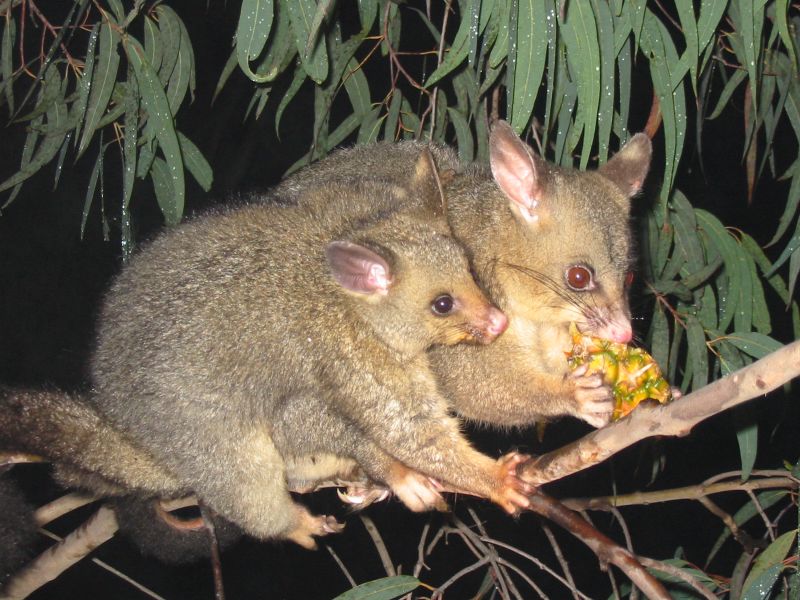





Key characteristics
A niche can be described by a set of biotic and abiotic factors: temperature and moisture tolerances, the timing of activity, the foods eaten, the microhabitats used, and interactions such as predation, competition and mutualism. Different lifestyles — for example, grazers, insectivores, scavengers and predators — represent distinct functional niches that sometimes coexist in the same place. Two species may appear similar but occupy separate niches by exploiting different resources or acting at different times.
History and development of the concept
The idea that organisms occupy roles in nature has long roots in natural history. Early naturalists introduced the word niche into biological usage, and later researchers formalized its meaning. Some influential contributions include the focus on habitat and distribution, the view of niche as a species' functional role, and the mathematical framing of a niche as a multidimensional space of environmental variables. Historic work emphasized how adaptations and competition shape where species live and how they obtain resources.
Types, distinctions and examples
Ecologists distinguish between the fundamental niche and the realized niche. The fundamental niche is the full range of conditions under which a species could persist absent competitors or predators; the realized niche is the portion it actually occupies when other species and interactions are present. Niche partitioning — the splitting of resources or times of use — reduces direct competition and allows multiple species to coexist. For example, the same predatory role ‘‘bird of prey that eats small mammals’’ can be filled in open grasslands by a kestrel and in an oak wood by a tawny owl, illustrating habitat-dependent niche realization.
Importance and applications
Understanding niches is central to ecology and conservation. Niches explain species distributions, community assembly, responses to environmental change, and the impacts of invasive species. Conservation planners use niche models to predict suitable habitat and to assess species' vulnerability to climate change. Managing ecosystems often requires knowledge of how species interact and which resources are limiting.
Notable facts and how ecologists study niches
- Research methods include observational studies, experiments that manipulate resources or competitors, and statistical or computational niche models.
- Niche theory helps explain patterns such as competitive exclusion (when overlap is too great), adaptive specialization, and coexistence via partitioning.
- Modern approaches consider evolutionary change, behavioral flexibility, and niche construction — how organisms modify their own niche and the niches of others.
For further reading and resources, see curated entries and introductions by practicing scientists and ecology organizations: ecology overview, habitat descriptions and case studies, and applied niche modeling tools available through specialist sites and textbooks.
Questions and answers
Q: What is an ecological niche?
A: An ecological niche is the part of the environment into which a species fits, and to which it is adapted. It describes how an organism makes a living in a place, and can be occupied by different species in different places even though they 'earn their living' in roughly the same way.
Q: Who was the first to use the term "niche" in biology?
A: The word niche was first used in biology by naturalist Roswell Johnson.
Q: Who was the first to offer the "exclusion principle"?
A: Joseph Grinnell was the first to offer the "exclusion principle" which states that only one species can occupy a particular niche at any one time.
Q: What branch of science studies interactions between living things and their environment?
A: Scientists who study interactions between living things and their environment are called ecologists, and their branch of science is called ecology.
Q: How would you define an ecological niche?
A: An ecological niche can be defined as a position or opportunity into which some organism fits well, where it is well suited to live.
Q: When did Joseph Grinnell use the term "niche" for research purposes?
A: Joseph Grinnell used the term "niche" for research purposes in 1917.
Q: What does the exclusion principle state?
A: The exclusion principle states that only one species can occupy a particular niche at any one time.
Related articles
Author
AlegsaOnline.com Ecological niche: role, types, and significance in ecosystems Leandro Alegsa
URL: https://en.alegsaonline.com/art/29943
Sources
- academia.edu : "The ecological niche: history and recent controversies"
- books.google.com : The Princeton guide to ecology