
Hoof: structure, types, care, and biological role
A hoof is the hardened, keratin-covered tip of a toe in ungulate mammals. This article explains hoof anatomy, types, evolution, functions, common health issues, and basic care practices.
A hoof is the specialized, weight-bearing outer covering at the tip of a toe in many large mammals. In everyday language it is often called an animal foot, but anatomically it is a sheath of modified skin and horn that protects soft tissues and helps animals move. Hooves are typical of ungulates — animals that walk on one or more toes — and are formed largely from keratin, the same protein that makes human fingernails and hair.
Image gallery
10 Images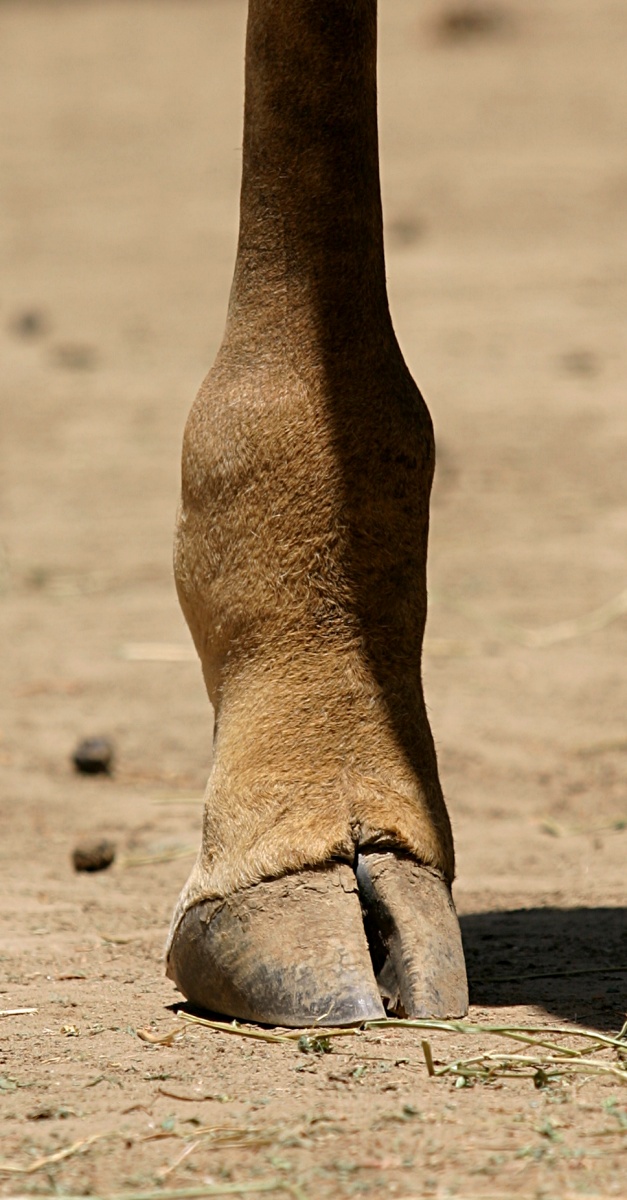


Structure and main types
Despite surface similarity, hooves vary in shape and internal structure. A typical hoof has a hard outer wall, a sole on the underside, and cushion-like internal tissues that absorb shock. In horses and other odd-toed mammals there is usually a single large hoof per limb; in even-toed species the toe may split into two or more cloven sections. Rhino feet show three toes with robust hooves, while camels and some other species have modified pads plus nail-like hoof structures.
Function and biomechanics
Hooves protect the distal limb and transmit forces between the ground and skeleton. Their shape, thickness and flexibility influence traction, weight distribution, and energy efficiency in walking or running. In many wild species natural wear balances growth; domestic animals may need trimming or protective shoes to prevent imbalance and pain.
Care, diseases and human use
Hoof care is important in agriculture and equestrian work. Routine maintenance includes trimming, cleaning, and, for some working horses, shoeing. Common problems include infections of the sole and soft tissues, inflammatory conditions such as laminitis, and cracks or overgrowth that impair gait. Veterinarians and farriers address these issues with trimming, corrective shoeing, hygiene and medical treatment.
Evolution and significance
Hooves evolved from multi-toed ancestral limbs as a specialization for efficient locomotion and weight support on open terrain. They enabled many mammals to run, migrate and exploit grassland ecosystems. Beyond their biological role, hooves have cultural and economic importance through livestock husbandry, riding, and historical uses for tools and ornamentation.
Quick reference
- Single-toed: horses, some extinct relatives.
- Cloven (two main toes): cattle, deer, goats, sheep, pigs.
- Multiple toes: rhinoceroses (three), camels (modified pads and nails).
- Material: primarily keratin; grows continuously and is worn by use.
Understanding hoof form and function helps in animal care, wildlife biology and veterinary medicine. For practical guidance on trimming or treatment consult an experienced farrier or veterinarian rather than relying solely on general information.
Related articles
Author
AlegsaOnline.com Hoof: structure, types, care, and biological role Leandro Alegsa
URL: https://en.alegsaonline.com/art/45032