
Anurognathus — small insectivorous pterosaur of the Late Jurassic
Anurognathus, a tiny short‑skulled pterosaur from the Solnhofen limestones, was an agile aerial insectivore. This article summarizes its anatomy, fossils, paleobiology, and scientific importance.
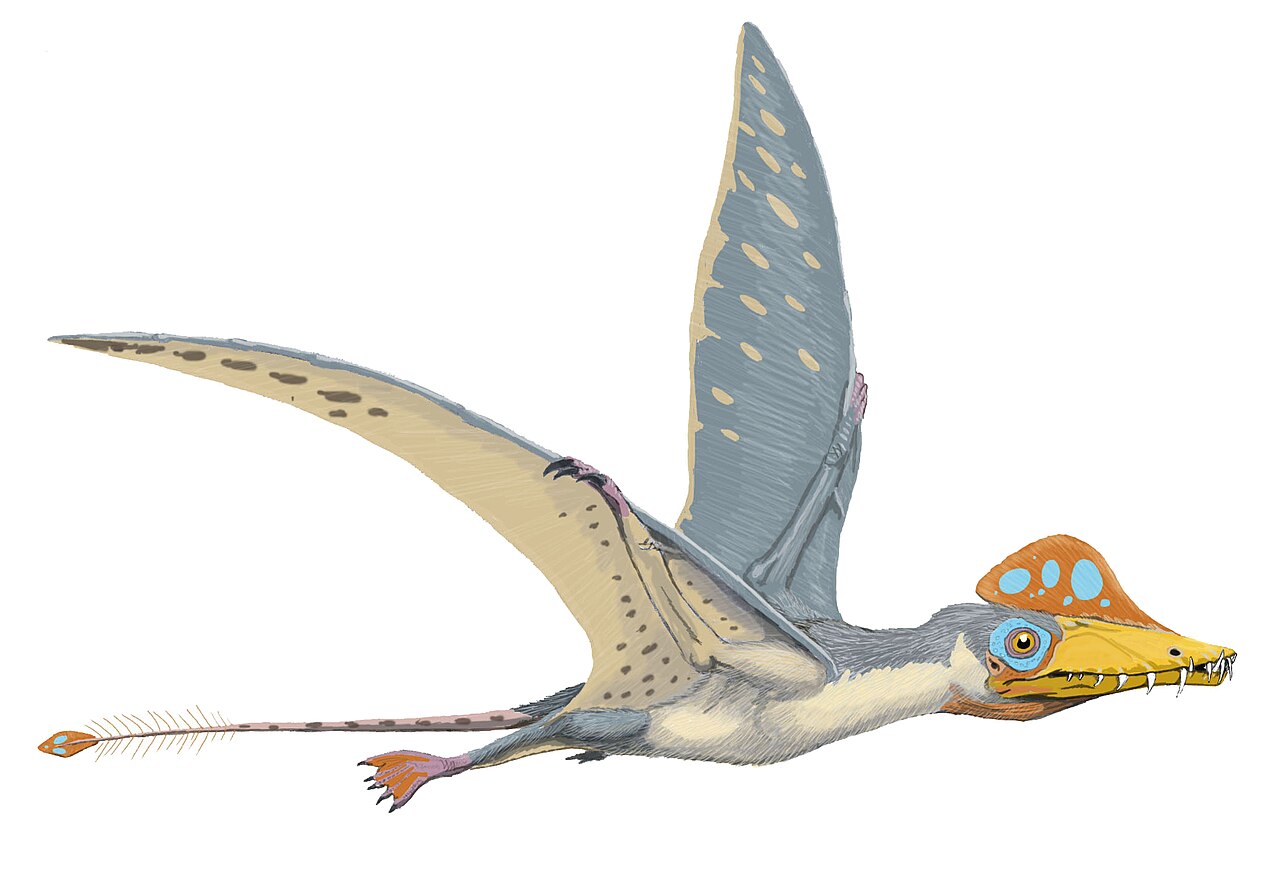
Anurognathus is a genus of small pterosaur known from the fine‑grained Solnhofen limestones of southern Germany and other Late Jurassic localities. The type species, commonly referred to as A. ammoni, is characterised by a very short and broad skull, numerous small conical teeth, compact body proportions and a relatively short tail for a long‑tailed pterosaur grade. Most estimates place adult wingspan in the range of about 30–50 cm, making it one of the smaller known pterosaurs. For general overviews see summary sources and for more technical descriptions consult specialist accounts.
Image gallery
10 Images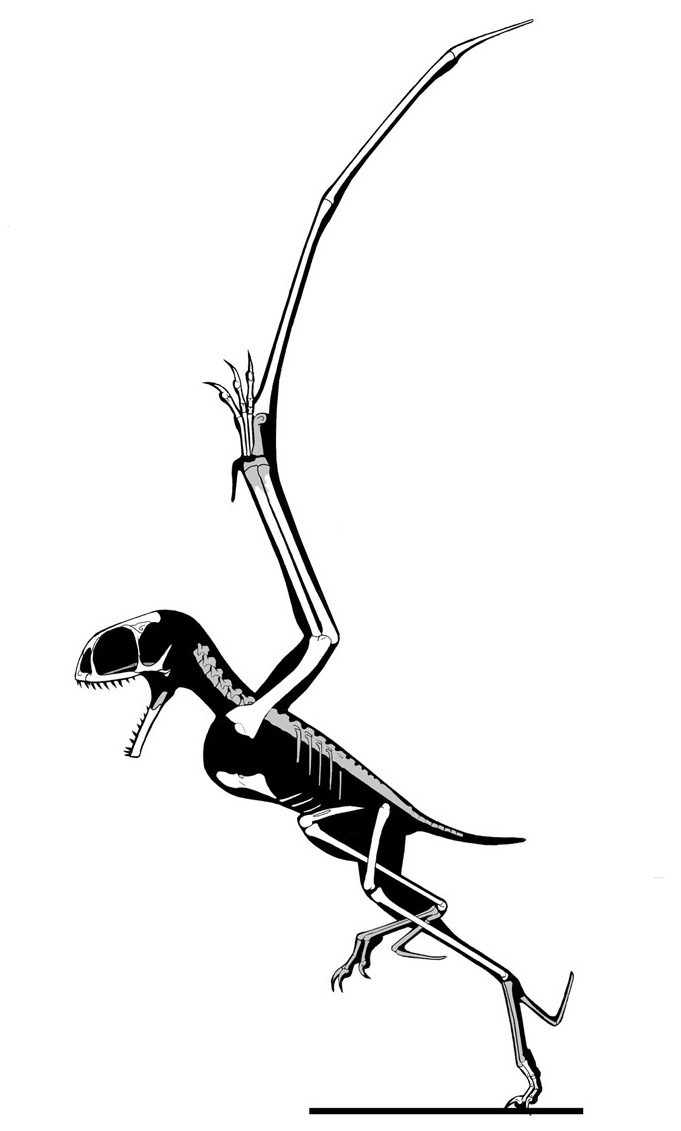




Anatomy and distinguishing features
Anurognathus shows a combination of features that point to aerial insectivory and highly manoeuvrable flight. The skull is short from front to back but broad, producing a wide gape: this would have been suitable for snapping up small, flying arthropods. The jaws hold numerous small, peg‑like teeth rather than the long, recurved teeth of many piscivorous pterosaurs. Limb proportions indicate a wing formed by a membrane attached to the elongated fourth finger; preserved soft‑tissue impressions in some slabs also reveal details of the wing membrane and its attachments.
- Skull: unusually short and wide compared with many contemporaneous pterosaurs, with large orbits relative to skull size.
- Teeth: many small, conical teeth adapted for seizing insects rather than tearing large prey.
- Tail: shorter than in many rhamphorhynchoid taxa, a trait interpreted as improving agility in the air.
- Soft tissues: impressions of flight membranes are preserved in some specimens, and ultraviolet studies have revealed additional soft‑tissue detail.
- Size: very small body mass consistent with an aerial insectivore lifestyle.
Fossils, preservation and discovery
Specimens come chiefly from the lithographic limestones of Solnhofen, a lagoonal environment that has yielded exceptionally preserved fossils, including delicate wing membranes and integumentary traces. The first known specimens were described from slabs that preserve both bones and soft tissues; later discoveries included additional slabs and counterslabs with further soft‑tissue detail. Some important slabs entered private collections before study, and ultraviolet light has been used on several specimens to reveal muscle and membrane impressions otherwise invisible under normal light. For context on the depositional setting see Late Jurassic environment and for biotic associations see Solnhofen fauna.
Paleobiology: diet, flight and behaviour
The anatomy of Anurognathus supports a view of an active aerial hawker of small insects. The wide mouth and many small teeth would allow quick snaps at erratically flying prey, while compact wings and shortened tail would favour rapid turning and agile manoeuvres close to vegetation or above water. Relatively large eye sockets in some specimens have led authors to suggest crepuscular or nocturnal activity as a possibility, although behaviour cannot be established with certainty. Comparisons with modern aerial insectivores (such as swifts and nightjars) are useful as functional analogues but should be treated as ecological, not phylogenetic, comparisons. For discussion of functional interpretations see analyses of flight and steering.
Phylogeny and classification
Anurognathus has traditionally been grouped with other short‑tailed, small pterosaurs in a broadly defined Rhamphorhynchoidea. However, that assemblage is now regarded as paraphyletic, and modern cladistic studies place the family Anurognathidae in varying positions near the base of more derived pterosaur lineages or as close relatives of early monofenestratan forms; exact relationships remain debated and depend on the dataset and methods used. Its mix of primitive and derived traits makes it important for understanding the early diversification of pterosaurs.
Scientific significance and continuing research
Anurognathus contributes to several key topics in pterosaur research: the range of ecological specialisations among small Mesozoic fliers, the evolution of wing shape and soft tissues, and the origins of manoeuvrable flight styles. Well‑preserved soft tissues in Solnhofen specimens provide rare direct evidence of wing outline and muscle placement, informing models of pterosaur aerodynamics. Ongoing studies using new imaging methods, comparative anatomy and biomechanical modelling continue to refine interpretations of its lifestyle and systematic position.
Because many aspects of Anurognathus biology and relationships are still under active study, descriptions are frequently updated as new specimens and methods appear. Readers seeking further detail can consult the linked resources above and specialized literature for the most recent analyses.
Questions and answers
Q: When did Anurognathus live?
A: Anurognathus lived 150 million years ago, in the Upper Jurassic period.
Q: What was the size of Anurognathus?
A: Anurognathus grew up to 35 cm wingspan and weighed 40 grams for a specimen with a 35 cm wingspan.
Q: What type of teeth did Anurognathus have and what was its diet?
A: Anurognathus had pin-like teeth for catching insects and its diet consisted of insects.
Q: Where was Anurognathus found?
A: Anurognathus was found in the Solnhofen limestone, the same place as Archaeopteryx.
Q: In what group did Anurognathus belong and what was its special adaptation?
A: Anurognathus belonged to the long-tailed pterosaur group Rhamphorhynchoidea, and its tail was comparatively short. This was an adaptation which made it more manoeuvrable in hunting.
Q: What did Döderlein compare the reduced tail of Anurognathus to?
A: Döderlein compared the reduced tail of Anurognathus to the pygostyle of modern birds.
Q: What did the second, smaller specimen of Anurognathus provide new information on?
A: The second, smaller specimen of Anurognathus provided new information on many points of the anatomy, such as the flight membrane and the muscles of the thigh and arm, and showed that the skull was very short and broad.
Related articles
Author
AlegsaOnline.com Anurognathus — small insectivorous pterosaur of the Late Jurassic Leandro Alegsa
URL: https://en.alegsaonline.com/art/4797