
St Thomas' Church, Strasbourg
Historic Protestant church in Strasbourg notable for its five-aisled hall plan, Silbermann organ played by Mozart, medieval art and tomb monuments; a focal point of the city's religious and musical life.
Overview
St Thomas' Church in Strasbourg is one of the city's principal Protestant places of worship and a landmark of Alsace. Its prominence grew after the political and confessional changes of the late 17th century, when the cathedral was returned to Catholic use and St Thomas became the main seat for Protestant services in the region. The building combines elements from several periods and remains important for its liturgical role, musical heritage and collection of medieval and early modern artworks.
Image gallery
10 Images






Architecture and layout
The church is notable for its five-aisled plan and for being built as a broad hall church, a type in which nave and aisles are of similar height. This design produced an open, unified interior well suited to Protestant worship after the Reformation. Construction began in the late 12th century and continued in phases; the present fabric shows Romanesque foundations with predominantly Gothic additions, including side-chapels and vaulting. Its fortress-like massing, which reflected medieval concerns for durability and fire resistance, helped the building survive episodes that had destroyed earlier structures on the site.
History and development
The site has been venerated since early medieval times, with evidence of a Christian presence here as early as the 6th century and a documented church and school in the 9th century. Successive buildings were damaged by lightning and fire in the Middle Ages, and a major campaign of rebuilding began around 1196. The congregation became Lutheran during the Reformation in the 16th century, and the church has been associated with Protestant education and training ever since. Nearby baroque buildings historically housed associated institutions such as a seminary and schools.
Music and the organs
St Thomas' is famous for its organ tradition. A large organ built by the Silbermann family in the 18th century is an important historical instrument; the young Wolfgang Amadeus Mozart is recorded to have played the instrument during his stay in Strasbourg in 1778. In the early 20th century a choir organ was designed with input from Albert Schweitzer, who was both an organist and an organ scholar; Schweitzer's ideas influenced the tonal conception of that instrument. The church has long been an active center for liturgical music, concerts and organ study.
Art, monuments and stained glass
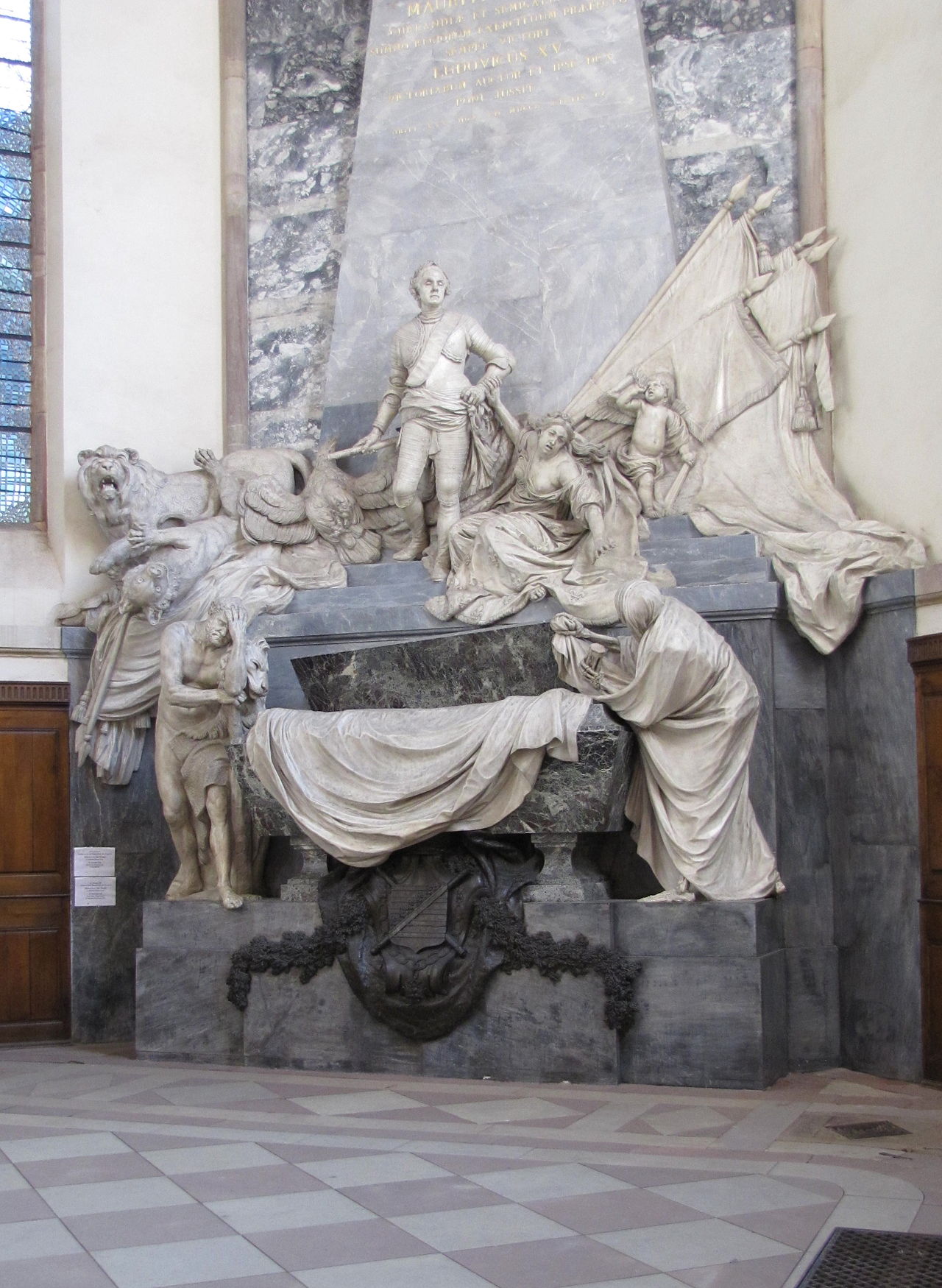
Inside the church are medieval stained-glass windows, though some glass was lost or damaged during the upheavals of the Reformation. A large Gothic fresco depicting Saint Michael survives and is regarded as one of the most significant murals of its type in the region. The interior also contains numerous tombs and funerary monuments ranging from Romanesque stones of the high Middle Ages to ornate Baroque memorials, including a prominent monument to Maurice of Saxony, reflecting the church's long role as a burial and commemorative site for local elites.
Uses and significance today
Today St Thomas' continues to serve a parish congregation and to host musical events, academic ceremonies and the work of nearby theological and educational institutions. Its layered history, artistic treasures and exceptional instruments attract both worshippers and visitors interested in medieval architecture, Reformation history and historic organ music. The building remains a major point of reference for the religious and cultural identity of Strasbourg.
Selected links and references
- St Thomas' Church — general overview
- Information on the church's Protestant tradition
- Cultural significance in Strasbourg
- Historic context and preservation
- Relation to Strasbourg Cathedral
- Catholic return to the cathedral (context)
- French occupation and its effects
- Dedication to Saint Thomas
- Early veneration on the site (6th century)
- Historical school associated with the church
- 9th-century foundations and evidence
- Medieval fires and lightning incidents
- Damage recorded in the year 1007
- Records of destruction in 1144
- Fortress-like construction details
- Campaign begun in 1196
- Conversion to Lutheran worship in the 16th century
- Seminary and theological training nearby
- Definition and role of a seminary
- Baroque buildings adjacent to the church
- Status among five-aisled churches in the region
- Explanation of a hall church
- Uniqueness in Alsace
- The church's organ tradition
- Silbermann organ (1741)
- The Silbermann family's importance
- Organ-building in the 18th century
- Mozart's connection to Strasbourg
- Mozart's stay and performances in 1778
- Mozart's correspondence context
- Albert Schweitzer and organ design
- Choir organ installed in 1906
- Gothic fresco of Saint Michael
- Notable tombs and monuments
- Romanesque funerary art (11th century)
- Maurice of Saxony — burial context
- Medieval stained glass in the windows
Related articles
Author
AlegsaOnline.com St Thomas' Church, Strasbourg Leandro Alegsa
URL: https://en.alegsaonline.com/art/86208