
Sainte-Chapelle: 13th-century Gothic reliquary chapel on Île de la Cité
Medieval royal chapel in Paris built for King Louis IX to house Passion relics; famed for its tall stained-glass windows and rayonnante Gothic design, restored in the 19th century.
Sainte-Chapelle is a medieval royal chapel on the Île de la Cité at the centre of Paris. Constructed between 1242 and 1248 during the reign of King Louis IX, it is a celebrated example of the rayonnante phase of Gothic architecture. Designed to serve as a reliquary and as a private chapel for the king, the building was intended to display some of the most important Christian relics of the period.
Image gallery
10 Images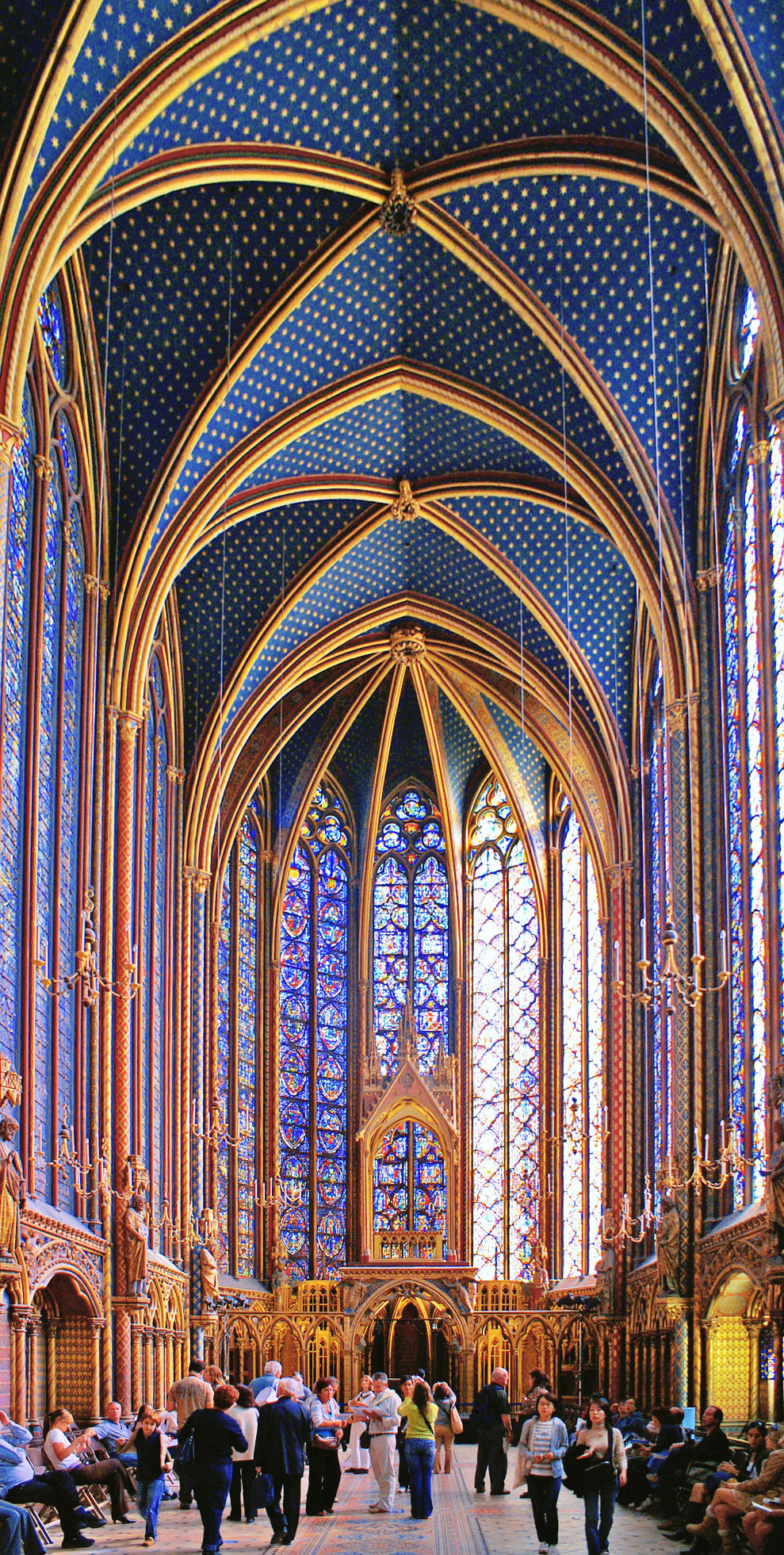


Architecture and interior
The structure is compact but highly vertical in appearance, organized on two main levels. The lower chapel served attendants and palace staff, while the upper chapel was reserved for the royal household and the precious relics. Thin structural supports, pointed arches and tracery reduce the appearance of solid wall and allow tall fields of glass to dominate the elevation. The original silhouette included a spire and sculptural program that emphasized verticality and light. The architect traditionally associated with the project is Pierre de Montereau.
Stained glass
The glasswork is the chapel's most renowned feature: a coherent program of biblical scenes that stretches from Creation to the Redemption. The upper chapel contains large, slender lancet windows grouped into bays; the panels are meant to be read left-to-right and from the bottom upward. The complete set of medieval glass covers several thousand square feet—often quoted as approximately 6,458 sq ft—and conservators estimate that about two-thirds of the glazing dates back to the 13th century. Vibrant hues, narrative cycles and ornamental borders combine to create an immersive, jewel-like interior when sunlight passes through the panes.
History and the relics
Sainte-Chapelle was commissioned to house relics of the Passion. In 1239 King Louis IX acquired what was believed to be the Crown of Thorns, a transfer that greatly enhanced the chapel's religious and political significance. Additional relics arriving from the Eastern Mediterranean—often associated in sources with Byzantium—were integrated into the royal collection. The chapel remained a focus of royal devotion until the upheavals of the late 18th century; elements of the interior and some furnishings suffered destruction during the events of the French Revolution. The relics were dispersed and some objects removed for safekeeping.
Major conservation and restoration work took place in the 19th century, beginning around 1846, when architects and craftsmen undertook repairs to structure, roof and stained glass. These interventions sought to stabilize the building and recover its medieval character for posterity.
Significance, use and visitors
While Sainte-Chapelle originally functioned as a royal chapel and reliquary, it now ranks among France's most visited monuments. Scholars and visitors admire it for its architectural economy—how structure is minimized to maximize light—and for the artistic unity of its glass program. The chapel illustrates the medieval interplay of piety, politics and display: housing relics was a means of asserting prestige and sanctity, and the interior was arranged to showcase those claims visually.
Notable facts
- Construction was rapid by medieval standards: the building was largely completed and consecrated in 1248.
- The upper chapel contains extraordinarily large areas of stained glass that form continuous narrative cycles.
- Many of the chapel's relics were brought to Paris after acquisitions from the Latin East and contacts with Byzantium.
- Restoration efforts in the mid-19th century helped recover the chapel after damage and dispersal during the French Revolution.
- The chapel stands today on the same island as other medieval and civic sites; its exact location is on the Île de la Cité in central Paris.
- For general reference on the building and its art see entries and resources under the chapel name Sainte-Chapelle.
Sainte-Chapelle remains a touchstone for studies of Gothic design, medieval devotion and the visual culture of relics. Its compact plan and extraordinary glass make it a unique surviving monument of thirteenth-century royal patronage and artistic ambition.
Questions and answers
Q: What is the Sainte-Chapelle and where is it located?
A: The Sainte-Chapelle is a Gothic chapel located on the Île de la Cité in the heart of Paris, France.
Q: Who designed the Sainte-Chapelle and when was it built?
A: The Sainte-Chapelle was designed by architect Pierre de Montereau and was built in six years, from 1242 to 1248.
Q: What was the purpose of building the Sainte-Chapelle?
A: The building was designed to house relics of the Passion, particularly the Crown of Thorns, which was acquired by King Louis IX from Emperor Baudouin II in 1239.
Q: How many stained glass windows does the Sainte-Chapelle have and what do they depict?
A: The Sainte-Chapelle has stained glass windows that depict the story of humankind from the Creation to the Redemption of the world through Jesus Christ. These windows contain 6,458 sq. ft of glass, with two thirds of the glass being original.
Q: What happened to the Sainte-Chapelle during the French Revolution?
A: During the French Revolution, the choir stalls and rood screen of the Sainte-Chapelle were destroyed, the spire was torn down, and the relics were sent elsewhere.
Q: When was the restoration of the Sainte-Chapelle undertaken?
A: The restoration of the Sainte-Chapelle was undertaken in 1846.
Q: What is the main feature of the Sainte-Chapelle?
A: The stained glass windows of the Sainte-Chapelle are its chief glory.
Related articles
Author
AlegsaOnline.com Sainte-Chapelle: 13th-century Gothic reliquary chapel on Île de la Cité Leandro Alegsa
URL: https://en.alegsaonline.com/art/86276
Sources
- cosylogis.com : Sainte-Chapelle: Paris Monument.