
Lightning (Atmospheric Electrical Discharge)
Lightning is a rapid, high-voltage electrical discharge in the atmosphere that forms from charge separation in clouds, producing bright flashes and thunder; it occurs within clouds, between clouds, and between cloud and ground.
Disambiguation: "Lightning" may refer to other topics. See the ice hockey team Tampa Bay Lightning or the World War II fighter P-38 Lightning. The following article describes the meteorological phenomenon of atmospheric electrical discharge.
Image gallery
10 Images

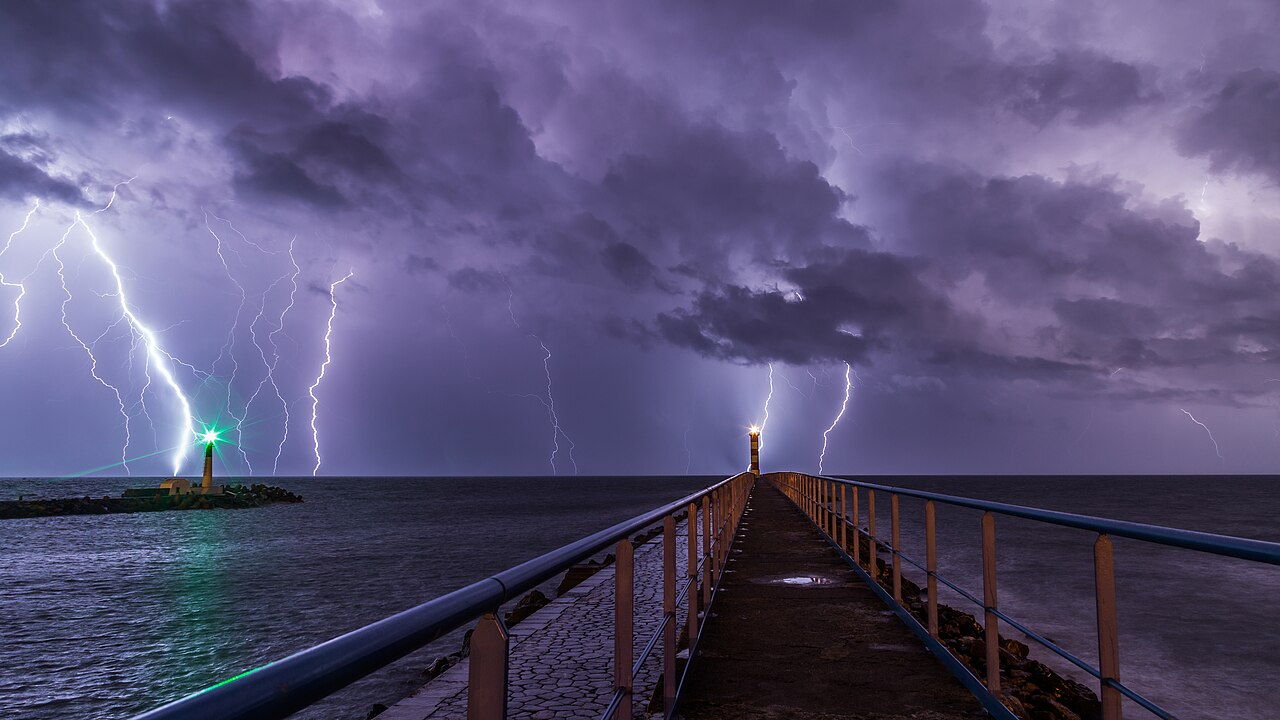
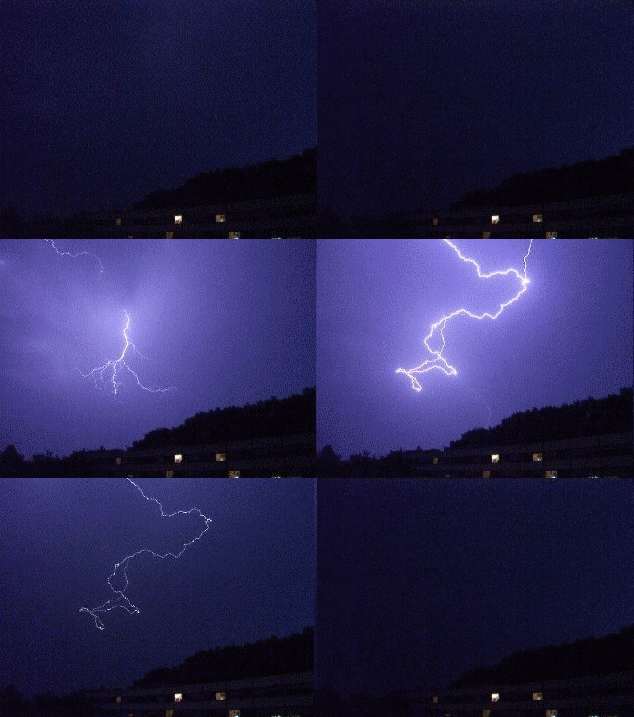




Overview
Lightning is a brief, intense electrical discharge that occurs in the atmosphere when electric charge is separated and then rapidly neutralized. It is most commonly associated with convective storms, but similar discharges can arise in volcanic plumes, heavy snow (thundersnow), and in large fire plumes. A lightning flash heats the surrounding air to very high temperatures in a fraction of a second; the sudden expansion of heated air produces the pressure wave we hear as thunder.
Formation and electric structure
Charge separation inside a storm cloud results from collisions among water droplets, ice crystals and graupel within turbulent updrafts. Typically, positive charge concentrates near the upper parts of a cloud while negative charge accumulates nearer the middle or base. When the local electric field becomes strong enough, ionized channels (leaders and streamers) form and allow rapid transfer of charge. Discharges can occur within a cloud (intracloud), between clouds (cloud-to-cloud), or between a cloud and the ground (cloud-to-ground).
Electrical characteristics
Individual lightning strokes occur on timescales of microseconds to fractions of a second and involve very high voltages and large currents. Repeated strokes and branching are common within a single flash. The physics of initiation and propagation involves ionization, electron avalanches, and the growth of conducting channels; for background on the particles involved, see electrons and basic electricity.
Types and notable behaviors
- Intracloud lightning: the most common type, often seen as sheet lightning.
- Cloud-to-cloud lightning: transfers charge across horizontal distances and can illuminate large portions of the sky.
- Cloud-to-ground lightning: the form most associated with strikes to objects and people on the surface.
- Upward lightning: initiated from tall structures or cloud tops and propagating upward into a storm.
Thunder and associated phenomena
Thunder is the acoustic effect caused by the rapid heating and expansion of air along a lightning channel. The character of thunder depends on the geometry and distance of the discharge; close, direct strikes produce sharp cracks, while distant flashes generate long rumbles. Lightning can also produce secondary effects such as large electromagnetic pulses, transient luminous events above storms, and chemical changes in the local atmosphere.
Frequency and distribution
Lightning frequency varies with climate, season and geography. Tropical and subtropical regions with frequent convective storms typically experience the highest strike rates, while other regions see fewer events. Lightning also occurs in rare circumstances such as ash plumes from volcanic eruptions and intense winter storms; cumulonimbus clouds are the classical producers of strong convective lightning activity, see cumulonimbus and general thunderstorm dynamics.
Hazards and safety
Lightning can start fires, damage structures and electrical systems, and cause serious injury or death. Risk-reduction measures include seeking shelter inside substantial buildings or enclosed metal vehicles, avoiding open terrain and isolated tall objects during storms, and staying away from conductive pathways. The design of tall or prominent structures often includes lightning protection to safely conduct charge to ground; a well-known example is the frequently struck Empire State Building.
Observation, research and replication
Researchers study lightning using field campaigns, remote sensing (radar and radio arrays), high-speed photography and laboratory experiments that reproduce aspects of high-voltage discharge. Laboratory devices such as the Tesla coil and the Van de Graaff generator are educational tools demonstrating high-voltage effects on a small scale. Field scientists also use instrumented towers and trigger techniques to observe upward lightning initiation and the detailed dynamics of leader development.
Statistics and public information
Global lightning activity is continuous: at any given moment, numerous flashes occur worldwide. Human impacts include direct strikes to people and property and indirect effects such as infrastructure outages and wildfire ignitions. Public safety agencies and meteorological services provide guidance during severe weather; useful background material may be found in general overviews of lightning, storm safety and atmospheric electricity.
Further reading
For accessible introductions to related concepts, consult entries on basic thunder, the influence of rain and precipitation on storms, and broader treatments of historic observations that helped shape early understanding of atmospheric electricity.
Questions and answers
Q: What is lightning?
A: Lightning is a very powerful electrical discharge made during a thunderstorm.
Q: What causes thunder during a thunderstorm?
A: The electric current from lightning makes the air very hot. The suddenly heated air expands very quickly, which causes thunder.
Q: Does lightning only happen between clouds?
A: No, sometimes (in the rain) lightning goes from cloud to ground.
Q: How many people are struck by lightning each year?
A: Around 2000 people are struck by lightning each year.
Q: How many lightning bolts strike the Earth every second?
A: About 50 to 100 lightning bolts strike the Earth every second.
Q: Which famous building has been hit by lightning as many as 500 times a year?
A: The Empire State Building has been hit by lightning as many as 500 times a year.
Q: How can people make and study lightning?
A: People can make and study lightning with a Tesla coil or a Van de Graaff Generator.
Related articles
Author
AlegsaOnline.com Lightning (Atmospheric Electrical Discharge) Leandro Alegsa
URL: https://en.alegsaonline.com/art/57957
Sources
- kids.britannica.com : kids.britannica.com/students/article/lightning/275474