
Stained glass: materials, techniques, history and contemporary uses
An accessible overview of stained glass: how coloured glass is made and assembled, its history, common materials and colours, artistic uses, and conservation concerns.
Overview
Stained glass refers to glass that has been coloured and often decorated to form pictorial or abstract designs, most familiarly in windows. The colour is usually introduced during manufacture by adding metallic salts or oxides to molten glass; alternately, pigments and stains can be applied and then fused by firing. The resulting pieces are assembled into a composition and supported by channels of lead and a rigid frame to create panels that admit light while forming imagery and pattern. For background on the base material see glass and on the colourants often called metallic salts.
Image gallery
4 Images


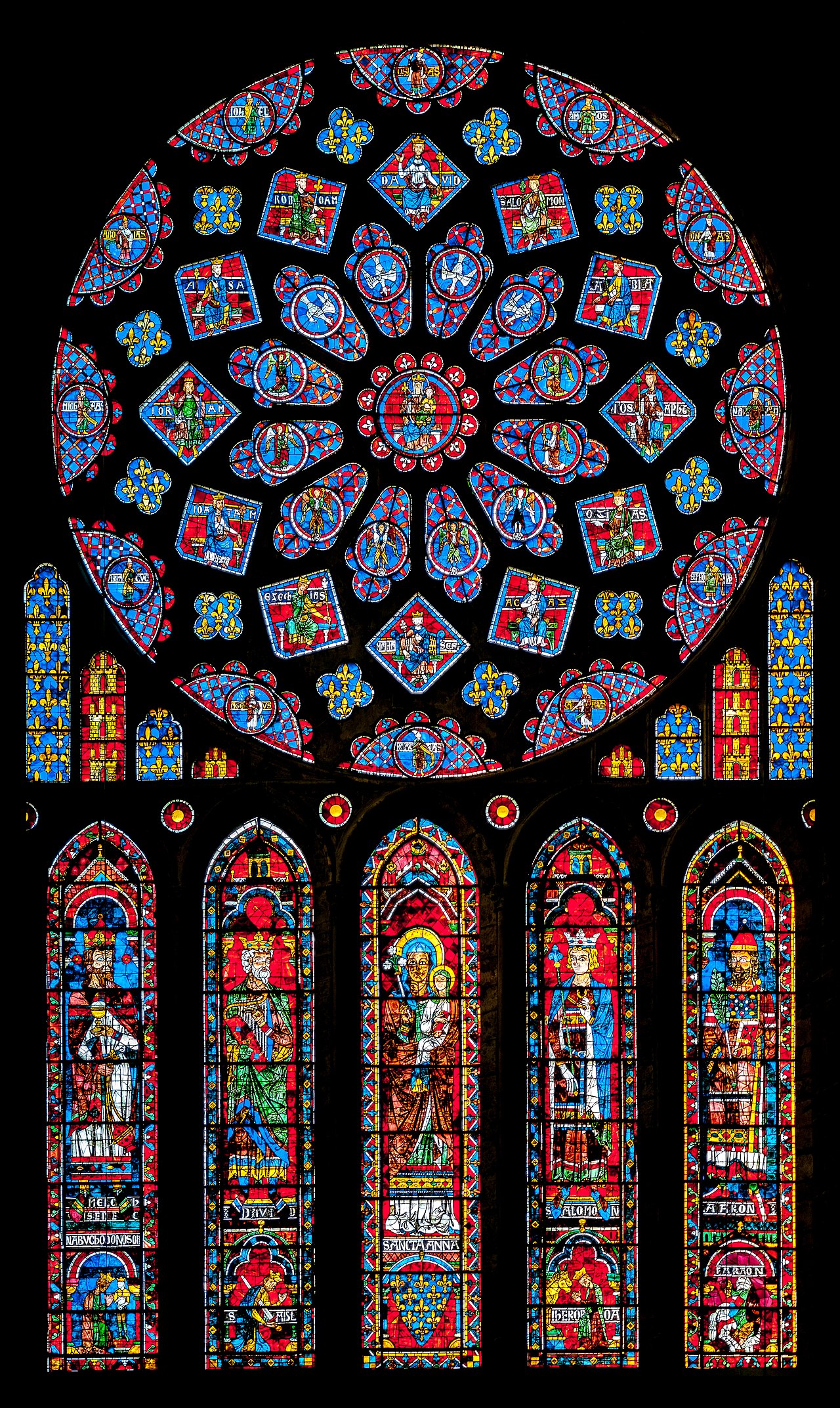
Materials and manufacturing
Traditional stained glass begins with coloured sheet glass made by mixing small amounts of metal compounds into silica melt. The separate pieces are cut to shape and joined with lead cames, a technique described in many craft manuals (lead). Painters add fine detail using vitreous paints and silver stain; the latter creates yellow tones by a surface reaction in the kiln (yellow stain). Where painted colours are fused permanently, the process is fired in a kiln (kiln-firing).
Common colourants
The palette of stained glass depends on metal additives. Typical examples include:
- Copper compounds produce greens and, under particular conditions, deep reds.
- Gold in extremely small quantities yields ruby red.
- Silver (often introduced as silver nitrate) can give warm yellows to reds.
- Cobalt produces intense blue.
- Manganese dioxide and iron(II) oxide create a range of greens and blue-greens.
- Chromium can be used for deep greens.

Design, assembly and types
Designers may work from cartoons (full-scale drawings) and translate those into glass shapes. The pieces are fitted together with lead cames and soldered at joints; once rigid, the panel is waterproofed and placed in a supporting structure. Two broad categories are traditional leaded stained glass, where the colour is integral to the glass, and painted or flashed glass, where details or surface colours are applied and fused onto a clear or differently coloured base.

History and cultural use
Stained glass has been prominent in religious architecture in Europe since the medieval period, serving both decorative and didactic functions; for its association with Christian iconography see Christian art. From the 19th century onward the medium was revived and adapted by artists and architects, and in the 20th century movements such as De Stijl explored abstraction in glass (De Stijl example and modern art in glass). Stained glass also appears in civic and domestic settings, and contemporary makers often call their work art glass (art glass).
Uses, conservation and notable facts
Beyond windows, stained glass is used in skylights, room dividers and decorative objects. Conservation is an active field: historic panels may suffer from lead fatigue, corrosion, and glass weathering; conservators stabilize, repair, or replicate panes. Notable non-traditional examples include dynamic figurative panels such as that at Dryden High School, often referenced as The Bald Eagle. For more technical or historical resources consult specialist publications and institutional collections (glass, firing techniques).
Stained glass remains a living craft and an expressive medium: its combination of light, colour and structural technique continues to attract artists, conservators, architects and collectors worldwide.
Questions and answers
Q: What is stained glass?
A: Stained glass is a type of coloured glass made by adding metallic salts when it is produced. It can also refer to windows in which the colours have been painted onto the glass and then fused to the glass in a kiln.
Q: How is stained glass used?
A: Stained glass is often used in Christian art, but other themes are not rare. It is still popular today and often called art glass, and it's commonly used in luxury homes and commercial buildings.
Q: What elements are added to stained glass to create colour?
A: Different elements are added to create different colours of stained glass, such as copper for dark red, gold for ruby red, silver for a range of reds to yellows, cobalt for brilliant blue, manganese dioxide for green, iron(II) oxide for blue-green, and chromium for dark green.
Q: What example of modern art in stained glass can be seen?
A: An example of modern art in stained glass can be seen with Theo van Doesburg's De Stijl abstraction from 1917.
Q: Are dynamic figures common in stained glasses?
A: Dynamic figures are unusual in stained glasses; however one example that exists is The Bald Eagle at Dryden High School USA.
Related articles
Author
AlegsaOnline.com Stained glass: materials, techniques, history and contemporary uses Leandro Alegsa
URL: https://en.alegsaonline.com/art/93266
Sources
- commons.wikimedia.org : Stained glass