
Westminster Cathedral (London) — Roman Catholic Metropolitan Cathedral
Westminster Cathedral is the mother church of Roman Catholics in England and Wales. Built in the Byzantine style by J. F. Bentley and opened in 1903, it is noted for its mosaics, choir and large organ.
Overview
Westminster Cathedral in London is the principal Roman Catholic church for England and Wales and the seat of the Archbishop of Westminster. Located near Victoria in the City of Westminster, it serves as the metropolitan cathedral for the Catholic community and a focal point for major liturgies, pilgrimages and civic occasions. Although its name and central location invite comparison, it is a distinct foundation from the older, Anglican Westminster Abbey.
Image gallery
10 Images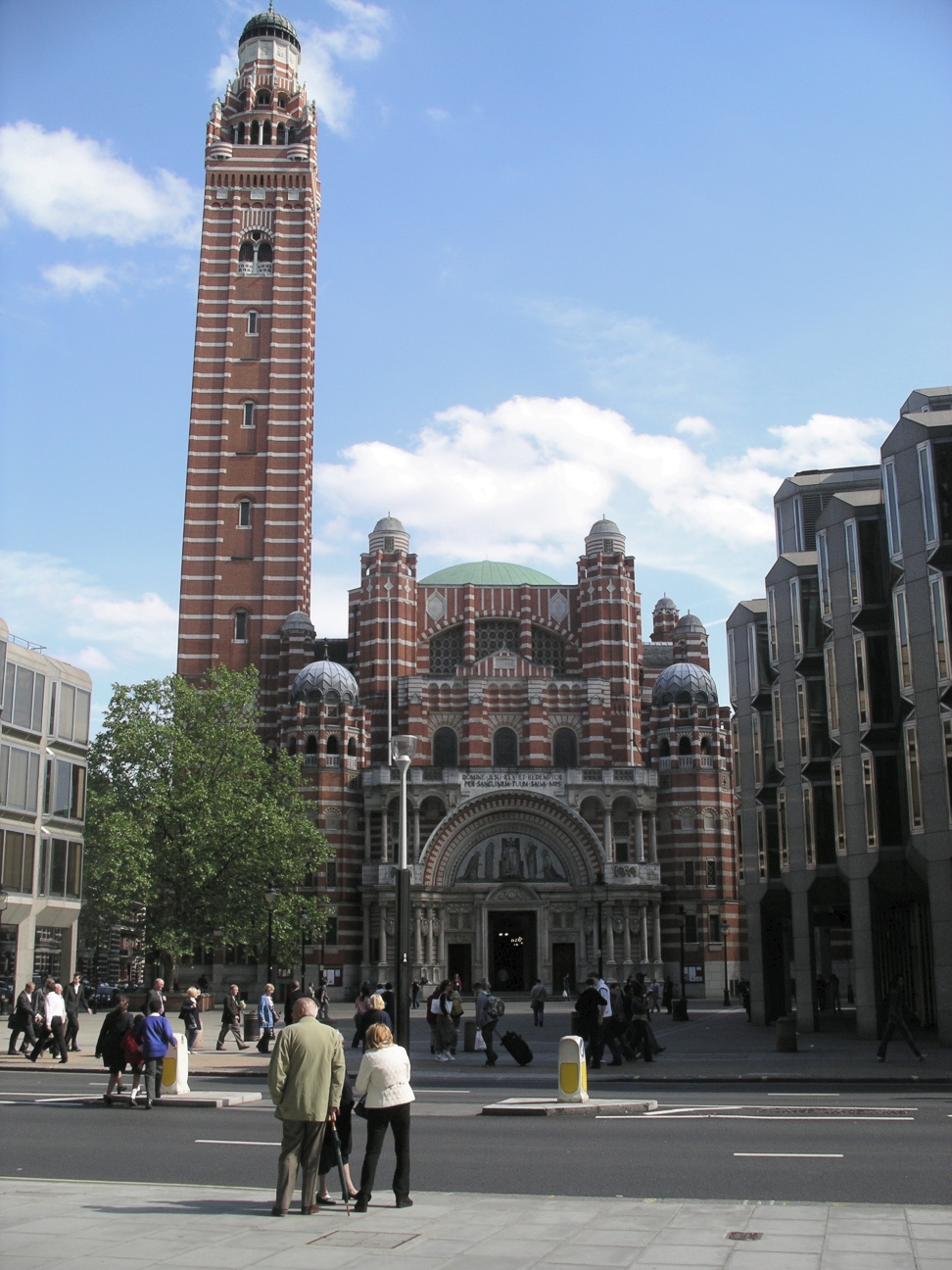



Architecture and interior
Designed by John Francis Bentley and consecrated in the early 20th century, Westminster Cathedral departs from the Gothic idiom commonly associated with English churches and instead adopts a form inspired by Byzantine models. The building is notable for a broad, uncluttered nave, an elevated sanctuary that improves sightlines to the altar, extensive use of marble and mosaic decoration, and a wealth of individually carved pillars. A large crucifix suspended above the chancel arch provides a dramatic focal point. The cathedra, or archiepiscopal throne, is a richly finished seat modelled on papal examples and set within a decorated apse.
Art, mosaics and the crypt
Mosaic work and polychrome marble are key visual elements throughout the cathedral. Workshops completed mosaic schemes in stages over the 20th century, enhancing the Byzantine character of the interior. The crypt beneath the main floor contains chapels, memorials and burial places for notable figures associated with the cathedral and with the wider Catholic community; it also functions as a space for smaller services and private devotion.
Music, choir and organ
Music has been central to Westminster Cathedral's identity. From its early years the cathedral established a choral tradition that emphasizes Gregorian chant and the polyphony of the Renaissance, while also commissioning and performing contemporary sacred works. The choir comprises adult singers and boy choristers; the boys traditionally attend a dedicated choir school and are often resident during term time. The cathedral organ, located in the west gallery, is a substantial instrument built in the early 20th century by a leading English firm; it has attracted composers and organists who have written repertoire in its honour.
History and notable events
Construction of the cathedral was completed in the opening years of the 20th century. Its foundation and completion marked a period of renewal for the Roman Catholic Church in Britain after the Catholic hierarchy was restored in the 19th century. Over the decades the cathedral has hosted important national and international events: papal visits, state and civic commemorations, and notable public liturgies. A visit by a reigning British monarch to a Catholic service held at the cathedral in the 1990s was widely reported as historically significant, reflecting changing relations between the Crown and Catholic worship in Britain.
Role and distinction
As the largest Roman Catholic church in England and Wales the cathedral functions not only as a place of worship but also as an administrative centre for the archdiocese, a destination for visitors interested in architecture and sacred art, and a living liturgical community where Mass and the daily sung office are maintained. It is commonly distinguished from Westminster Abbey by denomination, age, architectural style and liturgical function.
Further reading and resources
- Official cathedral overview
- Location and visitor information
- Status as a Roman Catholic cathedral
- About the Archbishop of Westminster
- The City of Westminster context
- Catholic churches in England and Wales
- Distinction from Westminster Abbey
- Nave and interior plan
- Sanctuary design and liturgical layout
- Altar and liturgical furnishings
- The archiepiscopal throne (cathedra)
- Marble and stonework details
- Mosaic programmes and artists
- Connections with Roman basilicas
- The crypt and memorials
- Choir history and music
- Mass schedules and liturgies
- Gregorian chant practice
- Renaissance polyphony in worship
- Composers associated with the cathedral
- Musical commissions and premieres
- The cathedral organ
- Organ builders and restorations
- Repertoire written for the organ
- Notable organ pieces
- Papal visits and international occasions
- Cardinals and senior clergy associated with the cathedral
- State and royal interactions
- Catholic liturgy in Britain
- Historical milestones and anniversaries
Note: This entry summarizes the cathedral's principal characteristics: architectural style, liturgical role, musical tradition and public significance. For detailed visitor information, concert listings, or current clerical appointments consult the cathedral's official resources and specialist studies.
Questions and answers
Q: What is Westminster Cathedral?
A: Westminster Cathedral is a Roman Catholic cathedral located in London, England. It is the mother church of the Roman Catholic community in England and Wales and the Metropolitan Church and Cathedral for the Archbishop of Westminster.
Q: When was it opened?
A: Westminster Cathedral was opened in 1903.
Q: What style of architecture does it have?
A: The cathedral was designed by John Francis Bentley and is in the style of Byzantine church architecture.
Q: What features does it have?
A: The nave of Westminster Cathedral is the widest of any church in England, while its sanctuary is higher than its nave so that the altar can be seen from any part of the nave. There are also beautiful marble pillars which are all carved differently, as well as a very large crucifix hanging from the chancel arch and an Archiepiscopal Throne or cathedra made out of marble and mosaic modelled on one found at St. John Lateran Basilica in Rome. In addition, there are monuments to famous people located in its crypt.
Q: What type of music does its choir sing?
A: The choir at Westminster Cathedral sings Gregorian chant and polyphony from the Renaissance period, as well as pieces written by composers such as Benjamin Britten and Ralph Vaughan Williams specifically for them. All boys who make up this choir board at nearby Westminster Cathedral Choir School.
Q: How big is its organ?
A: The organ at Westminster Cathedral is very large; it's situated above its entrance in what's known as a west gallery, having been built by Henry Willis III between 1922-1932 with Louis Vierne's "Carillon de Westminster" being composed for it dedicated to him afterwards.
Q: Who has visited this cathedral before?
A: Pope John Paul II celebrated Mass here on 28 May 1982 during his six-day visit to United Kingdom; Cardinal Basil Hume then invited HM The Queen here on 1995 - marking her first visit to a Catholic liturgy since 1688 when James II & VII was king
Related articles
Author
AlegsaOnline.com Westminster Cathedral (London) — Roman Catholic Metropolitan Cathedral Leandro Alegsa
URL: https://en.alegsaonline.com/art/107573