
Gregorian chant: history, musical features, and liturgical role
Monophonic sacred chant of the Western Church. Overview of its musical features, liturgical function, origins, notation, early polyphony, and modern revival.
Gregorian chant is the principal form of Latin plainchant associated with the Roman Catholic liturgy. It is monophonic — one unaccompanied melodic line sung in unison — and was developed to set scriptural and liturgical texts (psalms, prayers, antiphons) to music. Chant emphasizes the natural rhythms of the Latin language rather than strict metric pulse, producing a flexible, flowing delivery that supports worship and prayer.
Image gallery
8 Images
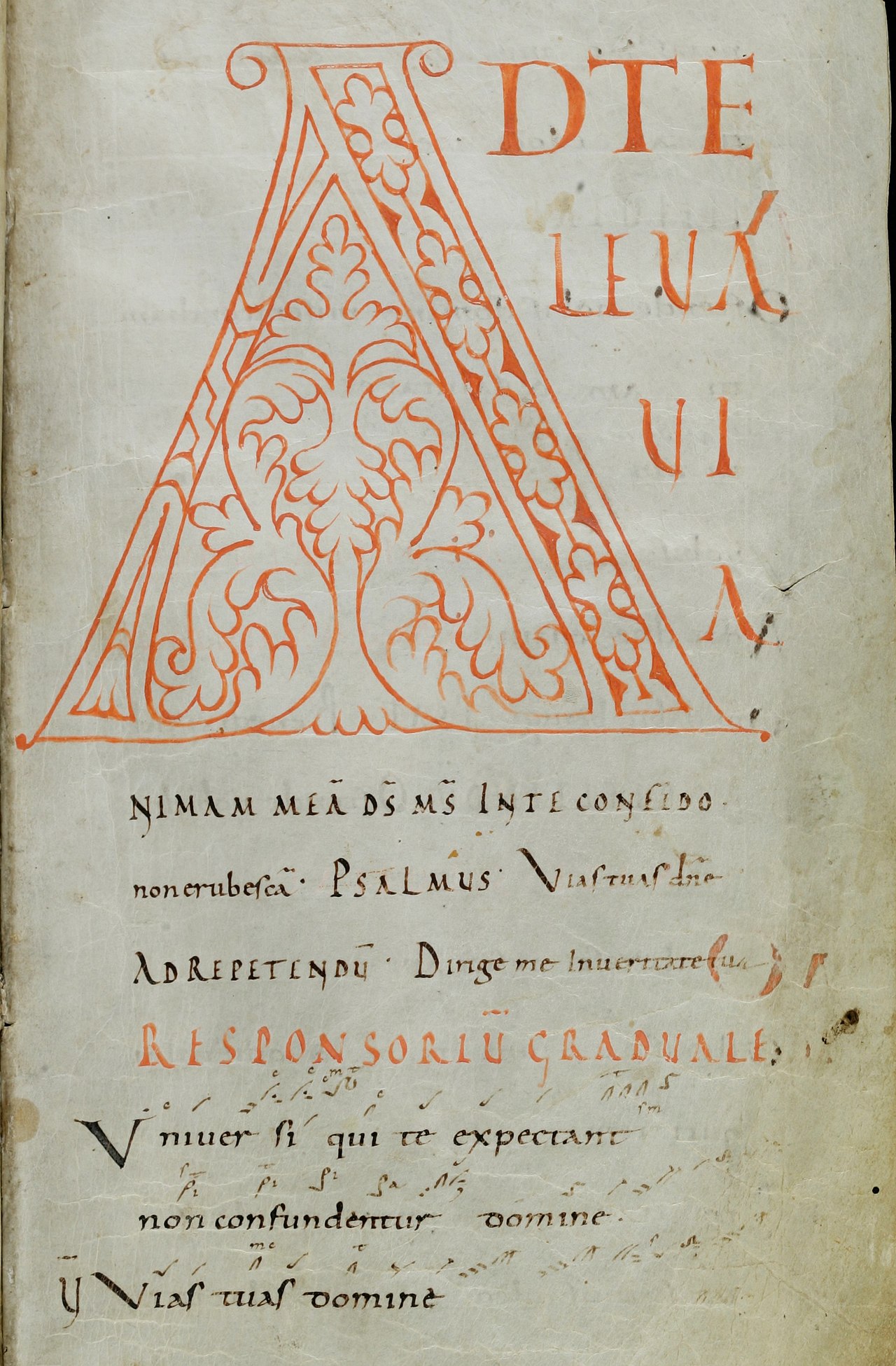


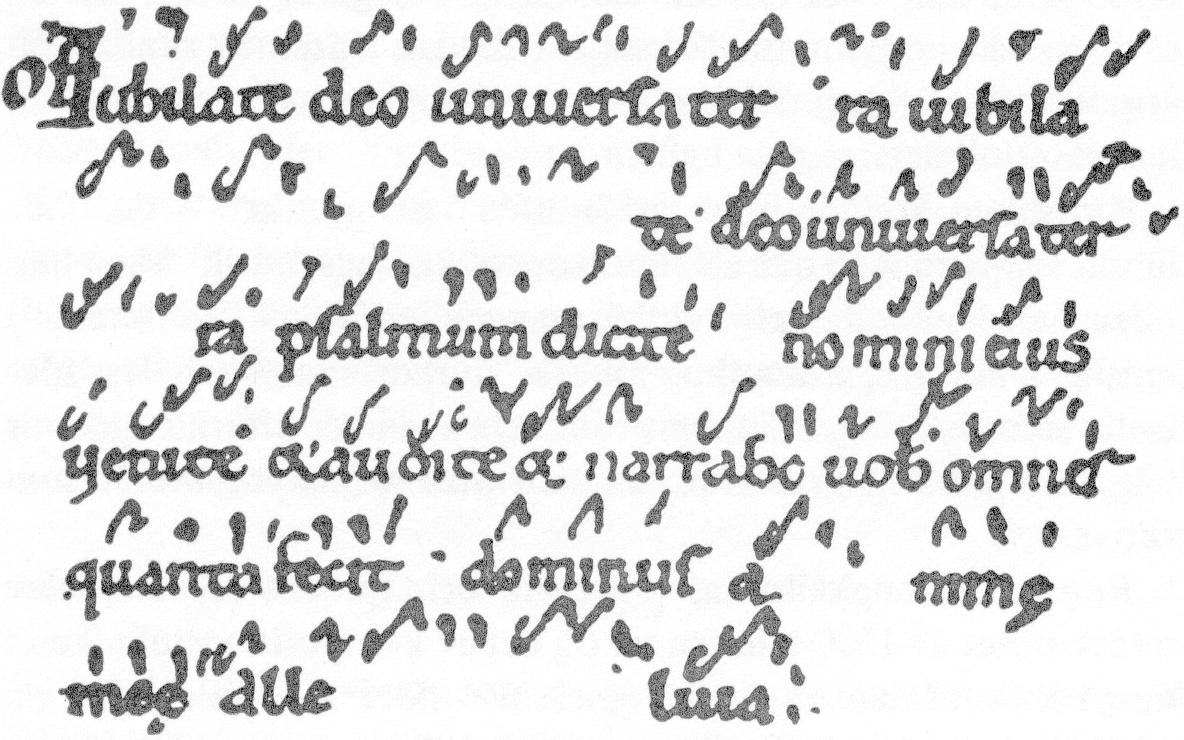

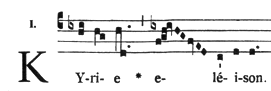
Musical characteristics
Several features distinguish Gregorian chant from later Western art music. The melodies use modal scales rather than the major/minor system familiar from later periods. Rhythmic flow is generally free, with syllabic, neumatic, and melismatic textures used depending on the text's needs: syllabic chants assign one note per syllable, neumatic groups a few notes to a syllable, and melismatic passages extend many notes on a single syllable.
- Monophony: single melodic line, usually unaccompanied.
- Modal organization: use of ancient church modes.
- Flexible rhythm: text-driven phrasing rather than strict meter.
- Notational history: early neumes grew into more precise staff notation.
History and development
Tradition long credited Pope Gregory I with organizing this repertory, but modern scholarship recognizes a gradual and diverse process of composition and transmission across many regions in the early medieval period. As notation evolved, neumatic signs developed into a staff-based system that allowed melodies to be recorded with greater accuracy, preserving a large repertory used in Mass and the Divine Office. In medieval centers of learning, chant served as a foundation for musical instruction and the later emergence of polyphony.
One of the earliest steps toward harmony was organum, a form in which an additional voice moves in parallel or contrary motion to the chant melody; these early polyphonic settings commonly employed intervals such as the fourth or fifth.
Uses, repertoire, and modern reception
Gregorian chant comprises many genres — antiphons, graduals, alleluias, responsories, hymns and chants for the canonical hours. Its primary function is liturgical: to articulate and adorn sacred texts within communal worship. Interest in chant was revived in the 19th century by scholarly and monastic efforts to restore older chant books, leading to modern critical editions and renewed performance practice among choirs and congregations.
Today Gregorian chant is studied for its aesthetic, historical and spiritual qualities. It remains a living tradition in some monastic communities and a subject of research for musicologists, hymnologists, and performers exploring the origins of Western music.
Questions and answers
Q: What is Gregorian chant?
A: Gregorian chant is a type of plainchant used mainly in the Roman Catholic Church.
Q: How is plainchant performed?
A: In plainchant, all people sing the same music in unison most of the time.
Q: What is organum?
A: Organum is a second part in plainchant that often uses the same melody but at an interval.
Q: What interval is often used in organum?
A: The interval of a fourth or a fifth is often used in organum.
Q: Is Gregorian chant exclusively used in Roman Catholic Church?
A: Yes, Gregorian chant is mainly used in the Roman Catholic Church.
Q: What makes Gregorian chant significant?
A: Gregorian chant is important because it has been used for over a thousand years in liturgical settings and is a part of the cultural heritage of Western music.
Q: Is Gregorian chant still used today?
A: Yes, Gregorian chant is still used today in some Roman Catholic churches and is appreciated worldwide for its beauty and history.
Related articles
Author
AlegsaOnline.com Gregorian chant: history, musical features, and liturgical role Leandro Alegsa
URL: https://en.alegsaonline.com/art/40817
Sources
- christusrex.org : The Constitution on the Sacred Liturgy, Second Vatican Council
- grovemusic.com : (subscription access)