
Whitehurst & Son sundial (1812)
A precision portable sundial made in Derby in 1812 by John Whitehurst’s nephew; converts apparent to mean time and is accurate to the minute. Now held by Derby Museum and Art Gallery.
Overview
The Whitehurst & Son sundial, manufactured in Derby in 1812 by a nephew of the noted instrument maker John Whitehurst, is a fine example of early 19th‑century English timekeeping craftsmanship. Unlike a simple sundial that only shows apparent solar time, this instrument incorporates a scale that allows the user to read local mean time as well as local apparent time, giving it unusually high practical accuracy for its date.
Image gallery
6 Images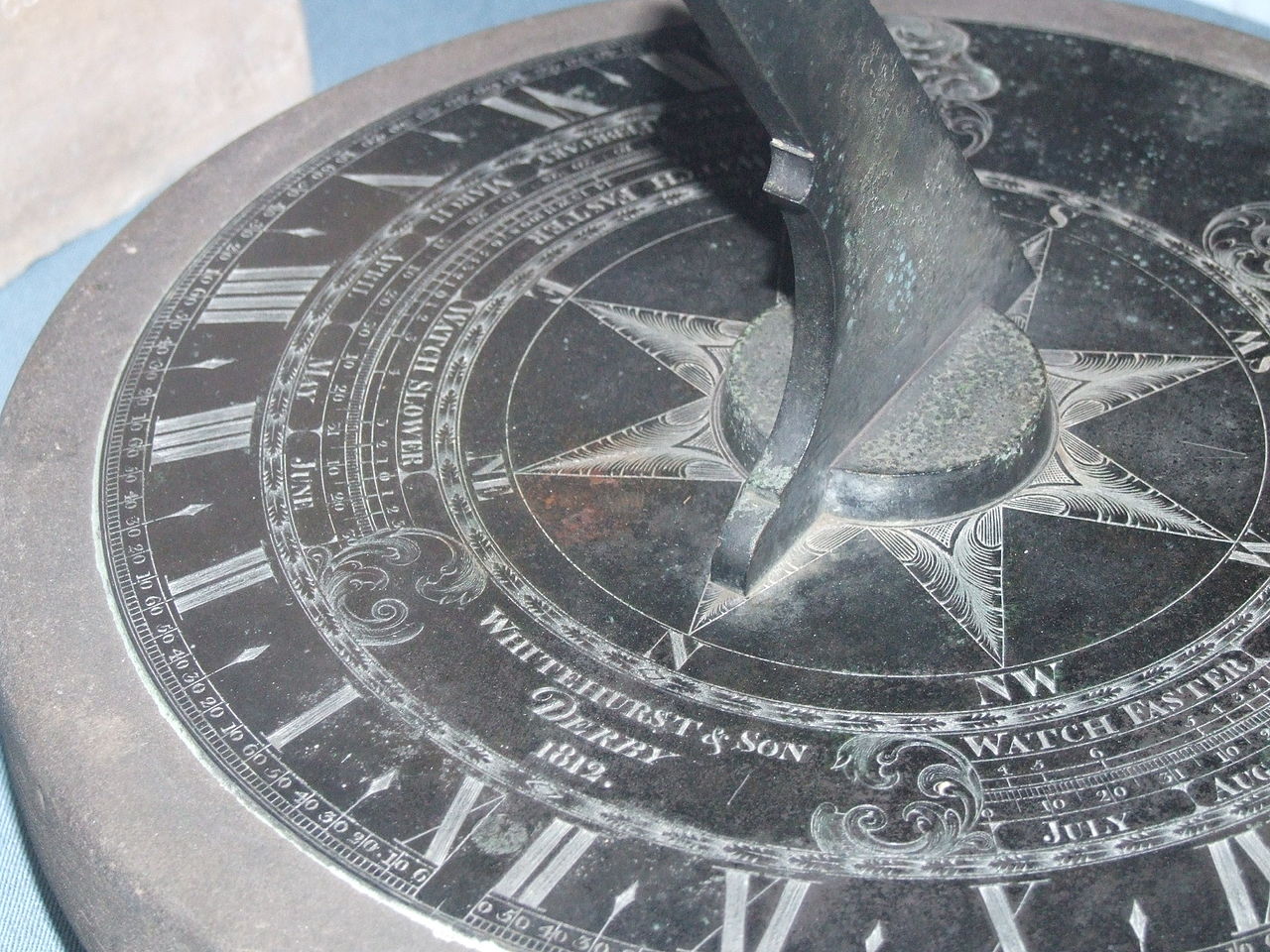



Design and characteristics
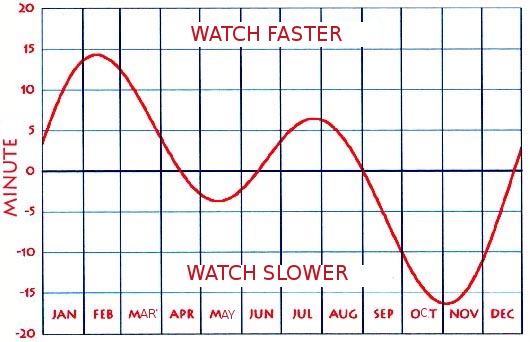
Precision sundials of this type typically combine several features to improve accuracy. This example is described as accurate to the nearest minute and therefore would include carefully engraved hour lines, a properly set gnomon and an additional calibrated scale or correction table. Instruments designed to present both apparent and mean time generally incorporate a way to apply the equation of time — the difference between true solar time and the averaged civil time.
How it was used
In the early 19th century, portable and domestic sundials served multiple roles:
- checking and regulating mechanical clocks and watches,
- providing local time for domestic, navigational or surveying purposes,
- demonstrating scientific understanding of solar motion and the equation of time.
Because national standard time zones were not yet widely adopted, accurate local instruments were important for calibrating local clocks and for scientific observations.
Historical context and significance
John Whitehurst (1713–1788) was an influential clockmaker and maker of scientific instruments in Derby; a sundial produced by his nephew carries forward that family reputation for precision. The 1812 date places this piece in a period of growing public interest in accurate timekeeping, before railway timetables and standard time radically changed how time was measured and shared.
Current location and accessibility
The sundial is part of the collection in Derby and may be consulted at the local museum and gallery. For more information about the town where it was made see Derby, and for details of the holding institution see the Derby Museum and Art Gallery entry at Derby Museum and Art Gallery.
Questions and answers
Q: When was the Whitehurst & Son sundial produced?
A: The Whitehurst & Son sundial was produced in 1812.
Q: Where was the Whitehurst & Son sundial produced?
A: The Whitehurst & Son sundial was produced in Derby.
Q: Who produced the Whitehurst & Son sundial?
A: The nephew of John Whitehurst produced the Whitehurst & Son sundial.
Q: Where is the Whitehurst & Son sundial located now?
A: The Whitehurst & Son sundial is now located in the Derby Museum and Art Gallery.
Q: What is special about the Whitehurst & Son sundial?
A: The Whitehurst & Son sundial is a precise sundial which tells not only local apparent time but also local mean time using a scale on it.
Q: How accurate is the Whitehurst & Son sundial?
A: The Whitehurst & Son sundial is accurate to the nearest minute.
Q: What type of instrument is the Whitehurst & Son sundial?
A: The Whitehurst & Son sundial is a sundial.
Related articles
Author
AlegsaOnline.com Whitehurst & Son sundial (1812) Leandro Alegsa
URL: https://en.alegsaonline.com/art/107874
Sources
- books.google.com : History of the County of Derby
- timeanddate.com : "Current local time in Derby"
- wwp.greenwichmeantime.com : "Railway Time"
- flickr.com : "Sundial by John Whitehurst & Sons, 1812"
- knight-gkla.co.uk : "Bridge Hill House, Belper, Derbyshire, UK"
- bamfords-auctions.co.uk : "Details of Lot 1913"
- tools.wmflabs.org : 52°55′24″N 1°28′46″W / 52.9233°N 1.4795°W / 52.9233; -1.4795
- commons.wikimedia.org : Whitehurst & Son