
Throne: seat of sovereign authority and ceremonial symbol
A throne is a ceremonial seat used by a sovereign or high dignitary and, by extension, a metonym for the office or institution of monarchy.
A throne is the formal seat used by a sovereign or high official during public and ritual occasions. In its most literal sense it is an official chair designed to express rank and legitimacy; in a broader sense the word is often used metonymically to mean the person or institution of the monarchy itself. The occupant is typically a monarch or other dignitary whose authority is exercised or displayed while seated.
Image gallery
10 Images




Design and physical characteristics
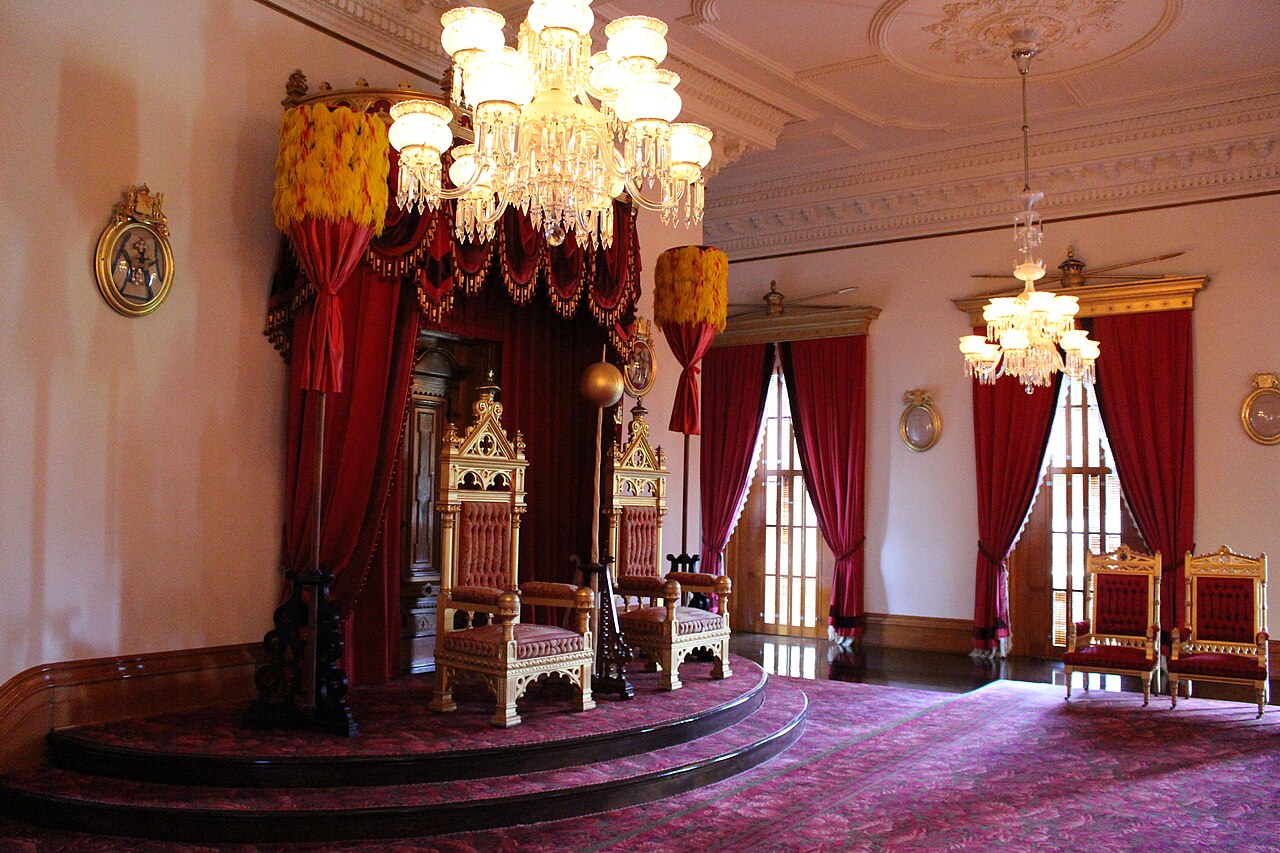
Thrones vary widely in size, materials and ornament. Common features include raised platforms (daises), decorative backrests, armrests, canopies or baldachins and footstools. They are frequently made from durable materials such as carved wood, stone or metal and are lavishly decorated with textiles, precious metals, gemstones and iconography—lions, eagles, crowns and religious symbols often appear to emphasize power and continuity.
History and cultural role
Seats of rulership appear in many ancient cultures where authority was given visible form. Across regions and eras, thrones functioned as focal points for ceremonies, from proclamations and judgments to coronations and audiences. Some traditions developed portable thrones or chair-like litters so rulers could be displayed during processions, while others enshrined a permanent state chair within a palace or temple.
Ceremony, law and symbolism
Thrones perform a ritual role: enthronement marks accession, and sitting on the throne can signify the exercise of judicial or executive power. The imagery of the throne recurs in official regalia, coinage, art and literature, where it represents legitimacy, continuity and the limits of authority. Phrases such as "ascend the throne" and "the seat of government" reflect this symbolic weight.
Notable examples and distinctions
Well-known historic examples include famous coronation chairs and richly decorated imperial thrones that have become symbols of dynastic or national identity. Distinctions exist between a throne as ceremonial furniture and similar seats like a bishop's cathedra or a judge's bench; each reflects a different source of authority. In modern usage the term may be literal, ceremonial or figurative, depending on context.
- Physical elements: dais, canopy, armrests, footstool.
- Functions: ceremony, justice, display of sovereignty.
- Variations: portable vs fixed, secular vs religious thrones.
For further reference on ceremonial furniture and royal traditions see related resources and museum collections that catalog historic thrones and coronation chairs.
Related articles
Author
AlegsaOnline.com Throne: seat of sovereign authority and ceremonial symbol Leandro Alegsa
URL: https://en.alegsaonline.com/art/99677