
Westminster Abbey: history, architecture, and national role
Westminster Abbey is a historic Gothic church in Westminster, London—site of coronations, royal ceremonies, burials of national figures, and a UNESCO World Heritage location.
Overview
Westminster Abbey stands at the heart of Westminster in London and is one of the United Kingdom's best known religious buildings. It combines the functions of a parish church, a collegiate foundation and a national shrine. The abbey is especially associated with the shrine of Edward the Confessor, and it has been the setting for the coronation of English and later British sovereigns for many centuries, a ceremonial tradition that continues to the present day (coronations).
Image gallery
10 Images



Origins and development
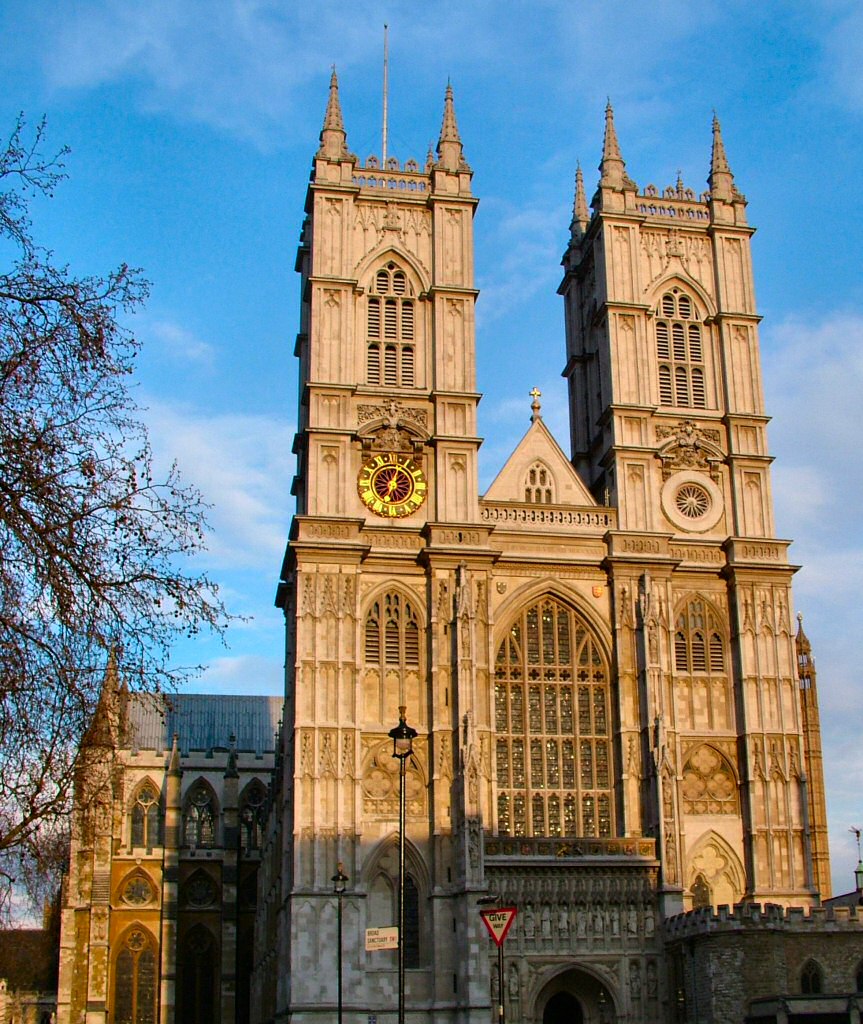
The site has roots in early medieval times. A Benedictine monastery existed here before the Norman Conquest, and the abbey familiar to visitors today began to take shape when King Henry III rebuilt it in the Gothic style starting in 1245. Over the following centuries the church was extended and altered: the Perpendicular Lady Chapel, the royal tombs, the west towers and interior fittings reflect a long sequence of patronage and architectural fashions. The building therefore records both medieval and later layers of English history.
Architecture and principal parts
The abbey's plan follows the traditional cruciform layout with a long nave, transepts and choir. Distinctive elements include the ancient Coronation Chair (which once housed the Stone of Scone), the high vaulted roofs, the ornate Henry VII Chapel at the east end, and the cloister and chapter house associated with conventual life. The mix of early English Gothic and later Perpendicular details gives the church a characteristic verticality and decorative richness.
Functions, ceremonies and national role
As a Royal Peculiar, Westminster Abbey is directly answerable to the sovereign rather than to a diocesan bishop. This unusual status has medieval origins and means the abbey performs national services—coronations, royal weddings and state funerals—alongside regular worship. Although it is not formally a cathedral, its scale and national responsibilities give it a cathedral-like standing. Recent public ceremonies held at the abbey include high-profile royal and national events that attract international attention.
Notable interments and memorials
The interior contains numerous tombs, monuments and memorials commemorating monarchs, poets, scientists and military figures. Among the most visited are the shrine of Edward the Confessor and the Tomb of the Unknown Warrior, a 20th-century grave representing those who died in the First World War. Poets', writers' and scientists' corner commemorates figures such as Geoffrey Chaucer, Isaac Newton and Charles Darwin, reflecting the abbey's role as a repository of national memory.
Conservation and world heritage
Together with the neighbouring parish church of St Margaret's and the nearby Palace of Westminster, the abbey forms part of a protected ensemble listed by UNESCO as a World Heritage site. That designation recognises both its outstanding architecture and its central place in British public life. The building is managed by a Dean and Chapter, supported by conservation specialists and the musical tradition of the choir and school, and it remains an active place of worship and national ceremony.
Further reading and visiting
- Guided tours and regular services are open to visitors; special events are advertised in advance.
- Research on the abbey's art, architecture and archives continues to reveal details of its long history.
- When planning a visit, consult official schedules and access information for current opening hours and any special restrictions.
Questions and answers
Q: What is Westminster Abbey?
A: Westminster Abbey is a large and famous Anglican church in Westminster, London.
Q: Who is buried at Westminster Abbey?
A: Westminster Abbey is the burial place of many kings and queens, including the shrine of Edward the Confessor.
Q: What is the significance of Westminster Abbey?
A: Westminster Abbey is the place where the coronations of Kings and Queens of England have been held since its construction.
Q: When was Westminster Abbey built?
A: The present structure of Westminster Abbey was started by Henry III in 1245.
Q: What is the status of Westminster Abbey?
A: The status of Westminster Abbey is that of a Royal Peculiar, which means it is a place of worship directly under the jurisdiction of the British monarch rather than under a bishop.
Q: Is Westminster Abbey a cathedral?
A: Technically speaking, Westminster Abbey is not a cathedral, though it is regarded as one in practice.
Q: What is included in the UNESCO World Heritage site which Westminster Abbey is a part of?
A: Westminster Abbey and its small parish church, St Margaret's, form a UNESCO World Heritage site, which also includes Westminster Palace.
Related articles
Author
AlegsaOnline.com Westminster Abbey: history, architecture, and national role Leandro Alegsa
URL: https://en.alegsaonline.com/art/107571
Sources
- list.english-heritage.org.uk : "The National Heritage List For England"
- whc.unesco.org : "Westminster Palace, Westminster Abbey and Saint Margaret's Church"
- westminster-abbey.org : "Coronations"
- archontology.org : "Henry III, Archonotology.org"
- www-hki.fitzmuseum.cam.ac.uk : Hamilton Kerr Institute
- nationalgallery.org.uk : "Westminster Retable: England's Oldest Altarpiece"
- nationalgallery.org.uk : accompanying press release