
Winchester Cathedral
Medieval Anglican cathedral in Winchester, Hampshire; seat of the Bishop of Winchester, famed for its long nave, layered architectural history, notable burials and the Winchester Bible.
Overview
Winchester Cathedral stands in the historic city of Winchester, Hampshire and serves as the seat of the Bishop of Winchester. Its location is identifiable by its traditional coordinates. The building is an active Anglican cathedral with origins in the medieval period and a long record of religious, civic and cultural use.
Image gallery
10 Images



Architecture and principal features
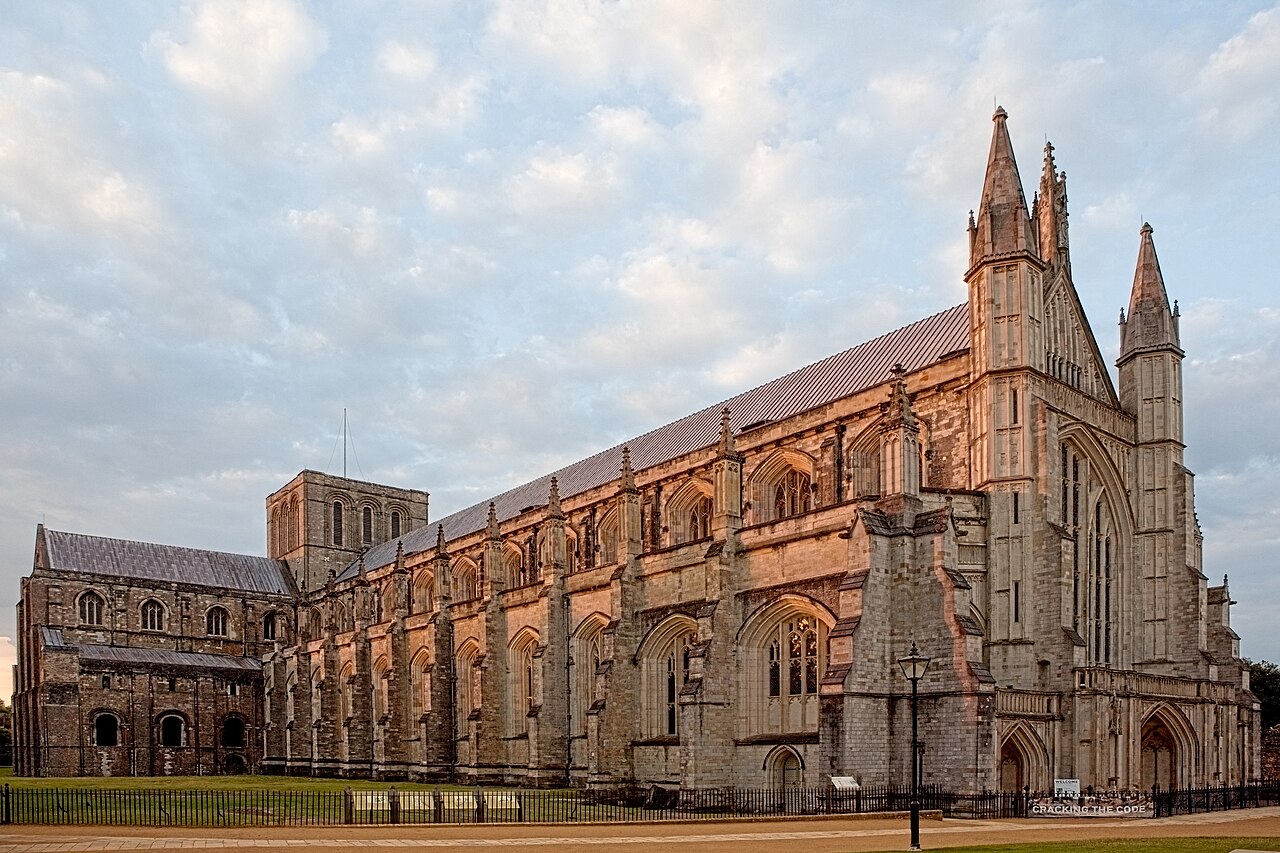
The cathedral is particularly notable for having the longest nave and the greatest overall length of any Gothic cathedral in Europe, a distinction often cited when discussing English medieval architecture (longest nave). The vault of the nave rises to about 78 feet, a height that contrasts with the much taller vaulting of some continental cathedrals such as Beauvais Cathedral in France. Visitors encounter a mixture of Norman and later Gothic work: a massive west front, an extensive choir, transepts and chapels, and surviving medieval masonry and fittings.
History and development
Built on a site of earlier Christian worship, the present cathedral evolved over several centuries. Its fabric reflects successive phases of construction, repair and alteration from Norman times through the later Middle Ages and beyond. Reformation, changing liturgies and periodic conservation campaigns have all left visible traces, while modern preservation efforts seek to balance public access with protection of fragile historic fabric.
Treasures, burials and collections
- The cathedral houses important medieval artifacts and manuscripts, most famously the illuminated Winchester Bible, a large Romanesque/Gothic manuscript.
- It is traditionally associated with the burial of King Alfred the Great and contains later tombs and memorials; among those interred or commemorated is the novelist Jane Austen.
- Other notable features include carved screens, ancient stonework and decorative medieval glass and sculpture.
Role and significance today
Winchester Cathedral remains a working place of worship and the center of diocesan life, while also functioning as a major heritage attraction. It hosts regular services, concerts, educational programs and exhibitions, and draws visitors interested in architecture, medieval history and English cultural heritage. Ongoing scholarship and conservation ensure the cathedral continues to be both used and studied.
Distinctions and visitor notes
Beyond its record for length, Winchester is often cited in discussions of English Gothic development and cathedral conservation. Visitors typically explore the nave, choir and crypt areas, view the cathedral's manuscripts and memorials, and learn about its layered history through displays and guided tours.
Questions and answers
Q: What are the coordinates of Winchester Cathedral?
A: The coordinates of Winchester Cathedral are 51°3′38″N, 1°18′47″W.
Q: What kind of church is Winchester Cathedral?
A: Winchester Cathedral is a mediaeval Anglican church.
Q: Who is the seat of the Bishop of Winchester?
A: Winchester Cathedral is the seat of the Bishop of Winchester.
Q: How does the overall length of Winchester Cathedral compare to that of other Gothic cathedrals in Europe?
A: Winchester Cathedral has the longest nave and overall length of any Gothic cathedral in Europe.
Q: How does the interior height of the nave vault at Winchester Cathedral compare to that of Beauvais Cathedral in France?
A: The interior height of the nave vault at Winchester Cathedral is about half that of Beauvais Cathedral in France.
Q: Where is Winchester Cathedral located?
A: Winchester Cathedral is located in Hampshire.
Q: What is the height of the nave vault in Winchester Cathedral?
A: The height of the nave vault in Winchester Cathedral is 78 feet.
Related articles
Author
AlegsaOnline.com Winchester Cathedral Leandro Alegsa
URL: https://en.alegsaonline.com/art/108456