
William J. Clinton Presidential Center and Park
A presidential library and riverfront park in Little Rock, Arkansas, preserving Bill Clinton's presidential records, exhibits, research facilities, public programs and a designated crypt space.
Overview
The William J. Clinton Presidential Center and Park is a combined presidential library, museum and public landscape on the Arkansas Riverfront in Little Rock. It commemorates the public life and presidency of Bill Clinton, preserves official records and artifacts, and offers exhibitions, educational programs and research resources. The institution participates in the nationwide Presidential Library system that collects and makes accessible presidential records and related materials.
Image gallery
10 Images




Collections and exhibitions
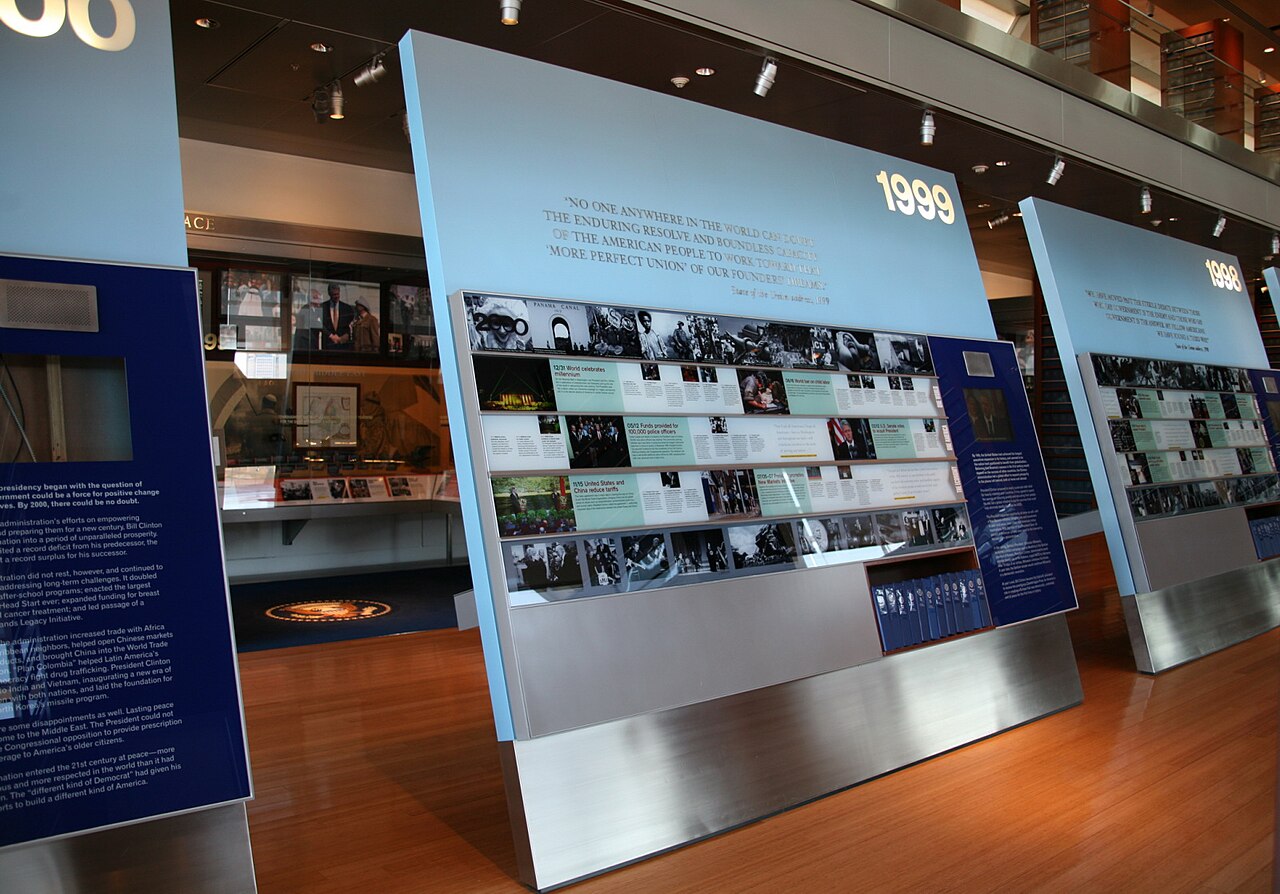
The center's archival holdings include documents, photographs, audiovisual materials and electronic records from the Clinton administration and related collections intended for long‑term preservation and study. Museum galleries present interpretive displays, multimedia presentations and object exhibits that explain domestic policy, foreign relations and the operations of the modern presidency. Exhibits are designed for a range of visitors, with rotating special exhibitions and public programs to highlight particular themes or anniversaries.
Archives, research and public programs
The research facilities provide a reading room where scholars and students can consult primary sources, oral histories and other materials for academic and public history research. Educational programming includes school visits, teacher resources, public lectures, workshops and civic engagement initiatives. The center collaborates with universities, cultural organizations and community partners to support research and learning.
Site, park and community role
In addition to archival and museum spaces, the campus incorporates parkland, promenades and civic spaces designed to connect the center with surrounding neighborhoods. Open lawns, walking paths and event areas host concerts, community gatherings and outdoor education. The integration of public park space with a cultural institution reflects a modern approach to making presidential centers active parts of urban life.
Design, development and stewardship
The project brought together archival professionals, museum planners and local stakeholders to balance preservation needs with public access and lifelong learning. The center is managed under national archival frameworks and operates programs for conservation, digital access and public history. It also contains administrative and meeting spaces used by affiliated nonprofit initiatives and partners.
Notable features and significance
- Research access: The reading room supports scholarship on recent American politics and policy.
- Public engagement: Exhibitions, lectures and school programs encourage civic education.
- Community space: The park and riverfront setting provide a civic venue for local events.
One distinctive design element sometimes noted in visitor information is a crypt space on the grounds where, by the occupant's decision, a president could be interred. The center opened to the public in the early 21st century and is often highlighted in directories of presidential libraries. For official visitor information, program schedules and research services consult the institution's official and partner pages, including archival resources and affiliated organizations listed on related institutional sites such as official pages.
The center serves multiple roles: it preserves historical records, interprets recent national history for the public, supports scholarly research and provides a riverfront public park for community use. These combined functions make it both a repository for presidential materials and an active civic landmark for Little Rock and the region.
Related articles
Author
AlegsaOnline.com William J. Clinton Presidential Center and Park Leandro Alegsa
URL: https://en.alegsaonline.com/art/108247
Sources
- news.xinhuanet.com : "Clinton presidential library opens in Arkansas"
- accessmylibrary.com : "Alsobrook Named Director of The Clinton Presidential Library"