
Choir (choral singing): types, structure, history and function
An overview of choirs: their organization, voice parts, historical development, rehearsal and performance practices, types (professional, amateur, church, community) and how they audition and operate.
Overview
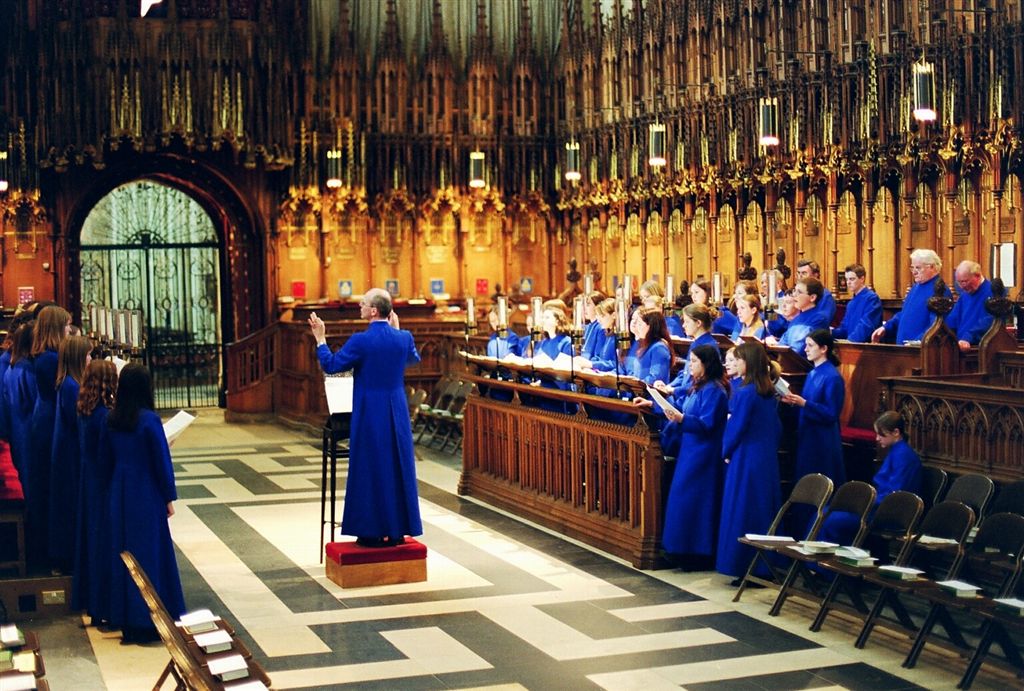
A choir is a group of singers who rehearse and perform together under a director. Choirs range from small vocal ensembles to large community choruses and perform in concert halls, schools, theaters and houses of worship. Some specialize in liturgical music, others in classical choral repertoire, contemporary works, folk songs or popular arrangements. A choir’s sound is created by blending individual voices and following the conductor’s guidance on pitch, rhythm, diction and expression.
Image gallery
10 Images



Structure and voice types
Most choirs organize singers by vocal range. The traditional four-part mixed choir divides voices into soprano, alto, tenor and bass (SATB). Other common arrangements include SSA, TTBB, and arrangements for equal voices such as women's or men's choirs. Larger ensembles may include sectional leaders, accompanists (often pianists or organists), and administrative officers.
- Soprano: highest female or child voices.
- Alto: lower female or high male voices (countertenors in some ensembles).
- Tenor: higher male voices.
- Bass: lowest male voices.
Choirs rehearse regularly to develop blend, intonation and interpretation. Rehearsal techniques include sectional practice (working with one voice part), full ensemble runs, and score study. Performances can be standalone concerts (concerts) or part of community and religious events (religious services).
Types and membership
Choirs may be professional, semi-professional, or amateur. Professional choirs employ singers who are paid for performances and recordings; many are associated with opera companies, orchestras or academic institutions (professional). Semi-professional groups pay some staff or soloists while relying on volunteer singers. Amateur choirs are often community-based or school ensembles and can be open to all or require selection (amateur, recreational).
Selection procedures vary. Some ensembles welcome anyone willing to sing; others ask candidates to audition to assess range, sight-reading and tonal quality. Auditions help match singers to parts and maintain ensemble standards without excluding enthusiastic participants.
History and cultural role
Choral singing has deep roots: communal singing appears across cultures and centuries, from religious choirs in churches, synagogues and mosques to secular civic and educational ensembles. Western choral traditions developed significantly during the Middle Ages and Renaissance with polyphony, and later expanded through the Baroque, Classical and Romantic eras. In modern times choirs continue to commission new works and preserve historical repertoire.
Uses, significance and contemporary practice
Beyond performance, choirs perform social and educational functions. Singing in a chorus can foster community, provide musical training, and support mental and emotional well‑being. Choirs participate in festivals, competitions and recordings, collaborate with instrumental ensembles, and often adapt repertoire for changing audiences and settings. Notable distinctions include liturgical choirs that serve worship needs, concert choirs focused on artistic programming, and community choirs emphasizing inclusion and participation.
Whether professional or recreational, choirs share a common goal: to blend individual voices into a unified musical expression that communicates repertoire, text and emotion to listeners.
Questions and answers
Q: What is a choir or choral group?
A: A choir or choral group is a collection of people who sing together.
Q: Do choirs typically rehearse together?
A: Yes, choirs typically rehearse together with a leader and perform concerts or sing during religious services.
Q: Are all choirs professional?
A: No, not all choirs are professional. Some choirs are professional (the singers are paid for their work in the choir), some choirs are semi-professional (the leaders are paid at a professional rate for their work with the choir but the singers are not), and some amateur or recreational choirs (the leaders are either not paid or offered an honorarium and the singers are not paid).
Q: Do all amateur or recreational choirs require auditions to join?
A: Not all amateur or recreational choirs require auditions to join; some invite anyone who is interested to sing with them. However, professional, semi-professional, and some amateur or recreational choirs do require interested people to audition and then select their members based on a set of audition criteria.
Q: How do they select members if they have an audition process?
A: Choir members will be selected based on a set of audition criteria that has been established by the choir director.
Q: Is there any compensation for singing in an amateur or recreational choir?
A: No, there is no compensation for singing in an amateur or recreational choir; however, the leaders may be offered an honorarium as payment for their work with the choir.
Q: Who leads rehearsals in most cases?
A: In most cases, rehearsals will be led by a leader such as a conductor, music director, vocal coach, etc.
Related articles
Author
AlegsaOnline.com Choir (choral singing): types, structure, history and function Leandro Alegsa
URL: https://en.alegsaonline.com/art/19940