
Fouga CM-170 Magister: French jet trainer and light-attack aircraft
The Fouga CM-170 Magister is a French two-seat twin‑jet trainer, widely exported and adapted for light-attack and aerobatic roles; it was flown by the Patrouille de France and many air arms worldwide.
Overview
The Fouga CM-170 Magister is a French-designed, twin‑jet, two‑seat aircraft developed in the early 1950s as a basic and intermediate training type. Intended to give student pilots the handling characteristics of a jet while remaining simple and economical to operate, the Magister found use not only as a trainer but also in light‑attack, reconnaissance and aerobatic roles. It was produced in France and also built under licence abroad, which aided its international adoption.
Image gallery
10 Images




Design and characteristics
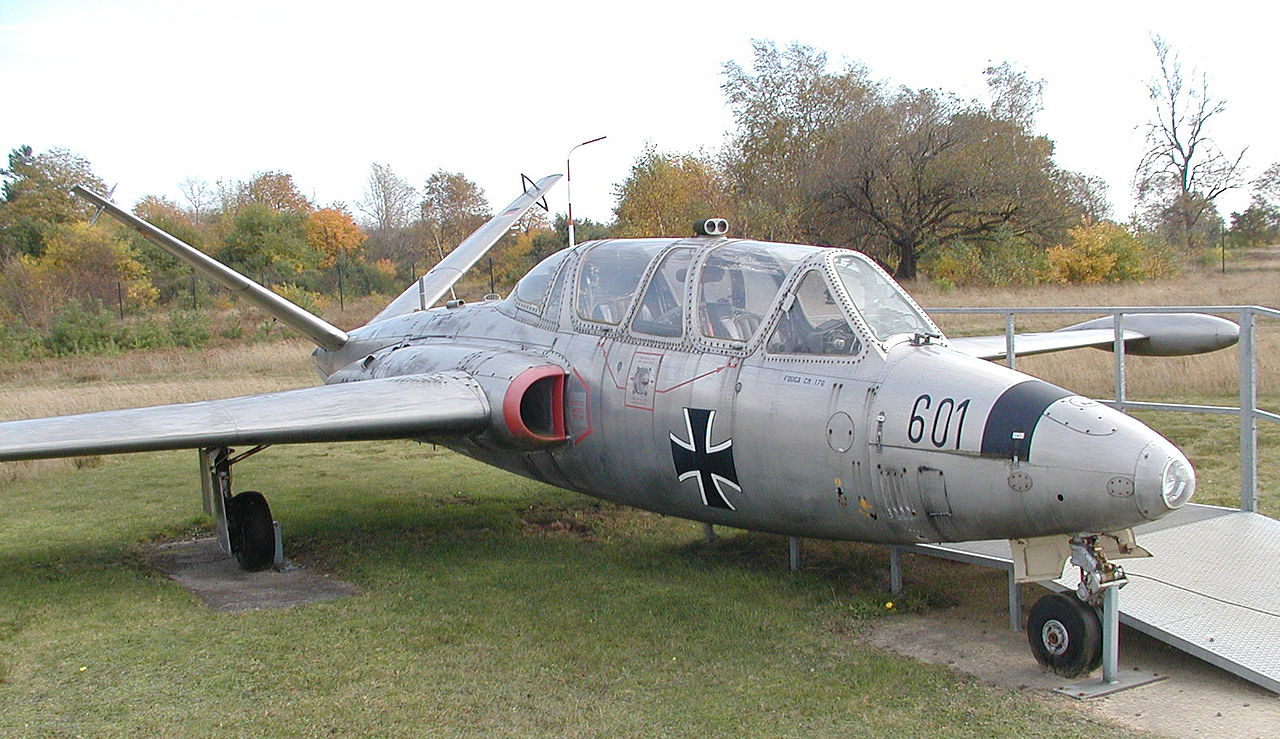
The Magister is recognised for its slender fuselage, straight wings and a distinctive V‑tail layout. Two compact turbojet engines are mounted in the rear fuselage, providing the modest power appropriate to its training mission. The cockpit seats two in tandem with dual controls and good external visibility for instruction. Its systems and maintenance requirements were deliberately straightforward, an advantage for smaller air forces seeking a jet‑powered trainer without the complexity of frontline fighters.
Development and variants
After its introduction the basic CM‑170 airframe was adapted for a number of roles. A navalised variant was produced for carrier operations, and several operators acquired Magisters modified with radios, hardpoints and simple reconnaissance equipment for secondary combat duties. The airframe proved flexible enough for these conversions without major redesign, which extended the aircraft's service life in some air arms.
Operational history
Beyond its primary role as a trainer, the Magister was used in light‑attack missions and for border patrol and surveillance in several conflict zones; some operators fitted weapons and stores on underwing attachments for ground‑attack tasks. It gained public prominence through display flying and aerobatics, most famously as the mount of the French national aerobatic team, the Patrouille de France, where it served for many years. The type was valued for benign handling characteristics that made it suitable for aerobatic teams as well as for routine pilot instruction.
Production and licensed manufacture
Production was not confined to France: the Magister was built under licence in a number of countries, which helped spread the type to a wide international market. Licensed manufacture took place in Belgium, Finland and Germany, enabling local support and modifications tailored to national requirements. This distributed production model contributed to the Magister's longevity in service across diverse climates and operating conditions.
Operators
Many nations and services used the Magister in a training and light combat capacity. The type was exported widely and appears on the rosters of numerous air arms and smaller operators. Representative users included:
- France
- Algeria
- Austria
- Bangladesh
- Belgium
- Brazil
- Cambodia
- Cameroon
- El Salvador
- Finland
- Gabon
- Germany
- Ireland
- Israel
- Lebanon
- Libya
- Morocco
- Nicaragua
- Rwanda
- Senegal
- Togo
- Uganda
- Other air forces and a number of irregular or short‑lived regimes, particularly in the post‑colonial period, also operated the type.
Use in display and preservation
Although largely superseded in front‑line training by more modern types, many Magisters survive in museums, private collections and with historic flight groups. A notable number remain airworthy and are seen at airshows and commemorative events. Their combination of classic lines and jet sound continues to attract enthusiasts and former students, and preserved examples help illustrate the transition from piston trainers to jet instruction in the post‑war era.
Legacy
The Fouga CM‑170 Magister is remembered as an influential early jet trainer that balanced handling, cost and maintainability. It introduced generations of pilots to jet handling, supported international pilot training programmes, and left a visible mark through aerobatic display teams. For those reasons it remains a subject of interest in aviation history and preservation circles.
Further reading and resources can be found through specialist publications and museum collections; example repositories and historical summaries are available from national aviation museums and dedicated preservation groups. For illustrated histories and operator lists, consult published monographs and established aviation archives via online and print resources such as reference sources and national collections.
Related articles
Author
AlegsaOnline.com Fouga CM-170 Magister: French jet trainer and light-attack aircraft Leandro Alegsa
URL: https://en.alegsaonline.com/art/35853