
Cambodia (Kingdom of Cambodia)
Cambodia is a Southeast Asian kingdom on the Indochinese peninsula, known for the Angkor temples, Khmer culture, a tropical landscape of Mekong and Tonle Sap, and a modern recovery from mid-20th-century conflict.
The Kingdom of Cambodia, commonly called Cambodia, is a country on the Indochinese peninsula of Southeast Asia. It borders Vietnam to the east and southeast, Laos to the north, and Thailand to the west and northwest, with a short coastline on the Gulf of Thailand. The capital and largest city is Phnom Penh. The nation is home to roughly about 16 million people and is a member of the Association of Southeast Asian Nations (ASEAN).
Image gallery
2 Images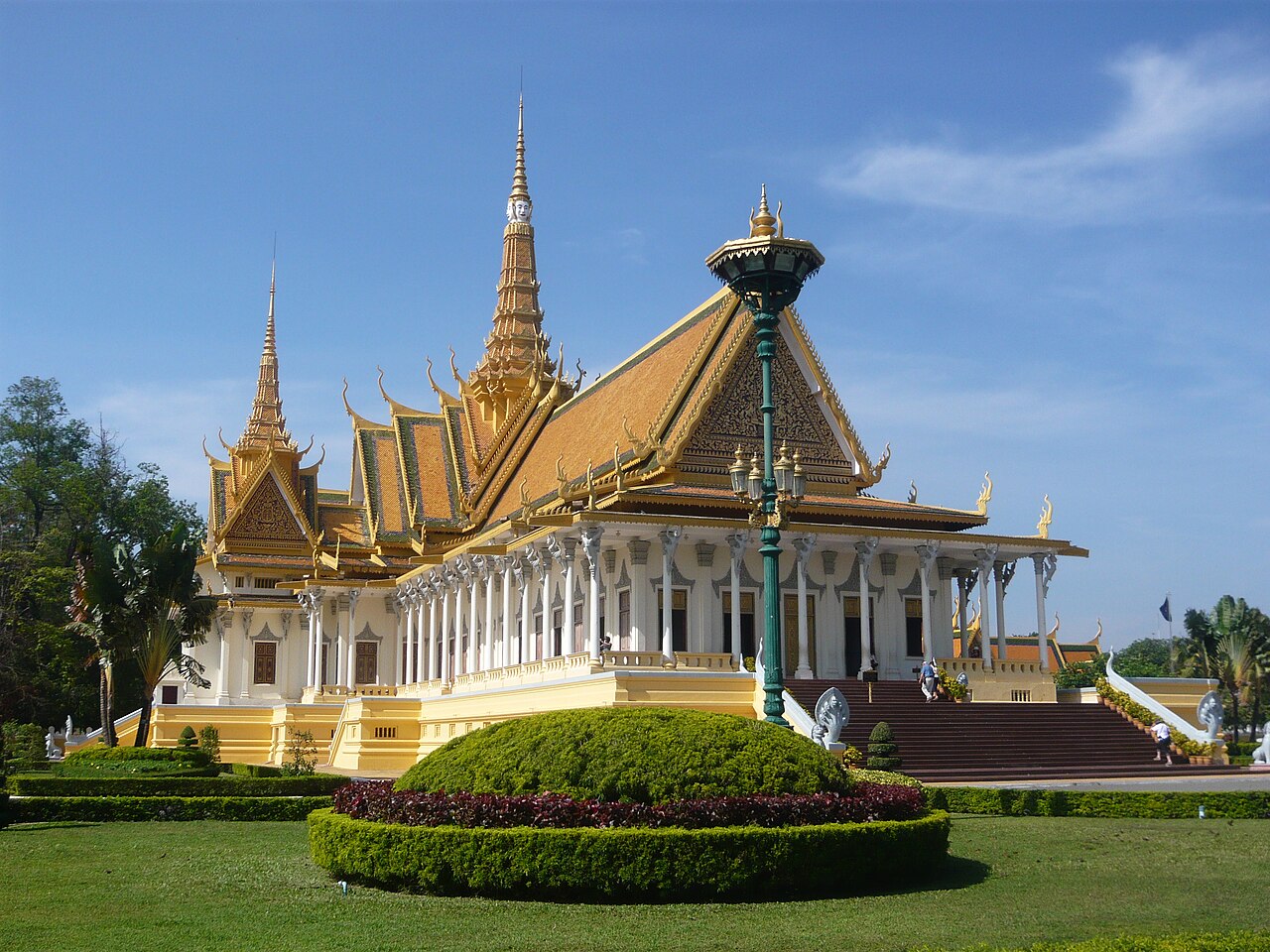
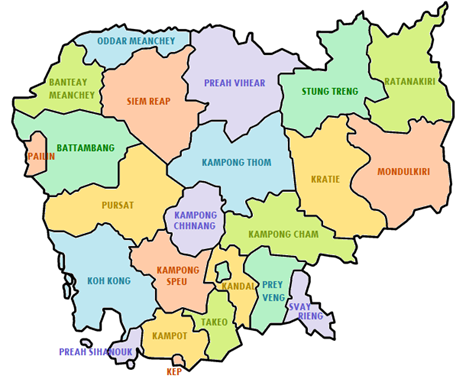
Geography and environment
Cambodia’s landscape centers on the floodplain of the Mekong River and the Tonlé Sap, a large seasonal lake whose flood pulse supports rich freshwater fisheries and agriculture. Lowland plains give way to forested plateaus and mountains in the north and east. The climate is tropical monsoon, with a distinct wet season and a dry season that shape farming cycles and river levels.
History and development
The region was the heartland of the Khmer Empire (9th–15th centuries), famed for monumental architecture such as Angkor Wat. Later centuries brought regional rivalries and French colonial rule until independence in 1953. Cambodia suffered upheaval in the mid-20th century, including war and the rise of the Khmer Rouge regime, followed by decades of reconstruction. Since the 1990s the country has pursued political stabilization and economic growth while confronting the legacy of conflict.
People, language and religion
The majority ethnic group are the Khmer, who speak the Khmer language (Khmer) which is the country’s official language and central to national identity. Buddhism, particularly the Theravada tradition, is the dominant religion and influences festivals, arts, and public life. Minority communities include Cham Muslims and Vietnamese and Chinese minorities. Official policies and education are conducted in Khmer language.
Economy, society and culture
Agriculture—especially wet‑season rice—remains important, alongside garment manufacturing, tourism (notably Angkor Wat and other heritage sites), and growing services. Challenges include rural poverty, land disputes, and the need for improved infrastructure and governance. Cambodian culture is expressed through classical dance, shadow puppetry, Buddhist ceremonies, and cuisine that blends rice, fish, herbs, and spices.
Notable facts
- Angkor Archaeological Park is a UNESCO World Heritage site and a major cultural symbol.
- Cambodia’s post‑war recovery has involved international aid, foreign investment, and gradual integration into regional economies.
- The country maintains diplomatic and economic ties with neighbors and global partners while navigating development priorities and historical memory.
For overviews, demographic data and travel or research resources, see national and regional references and the country’s official portals (government, tourism and statistical offices) and international organizations that track Southeast Asian development.
Southeast Asia overview • Vietnam • Laos • Thailand • Population data • Khmer people • Language policy • Khmer Rouge history
Questions and answers
Q: What is Cambodia?
A: Cambodia is a country located in Southeast Asia.
Q: What are some of the countries that surround Cambodia?
A: Vietnam, Laos, and Thailand are all countries that are near Cambodia.
Q: What is the estimated population of Cambodia?
A: About 13 million people live in Cambodia.
Q: What are the people of Cambodia called?
A: The people of Cambodia are called Cambodians or Kampuchea.
Q: What language is spoken in Cambodia?
A: Khmer is the official language of Cambodia.
Q: What has Cambodia recently emerged from?
A: Cambodia has recently emerged from a long civil war and the rule of the Khmer Rouge.
Q: What organization is Cambodia a part of?
A: Cambodia is a part of ASEAN, the Association of South East Asian Nations.
Related articles
Author
AlegsaOnline.com Cambodia (Kingdom of Cambodia) Leandro Alegsa
URL: https://en.alegsaonline.com/art/16251
Sources
- nytimes.com : "Pen Sovann, Cambodia's First Prime Minister After Khmer Rouge, Dies at 80"
- nis.gov.kh : "General Population Census of the Kingdom of Cambodia 2019"
- imf.org : "Cambodia"
- hdr.undp.org : "Income Gini coefficient"
- hdr.undp.org : "Human Development Report 2019"
- worldflags101.com : worldflags101.com/
- nis.gov.kh : "General Population Census of the Kingdom of Cambodia 2019: Provisional Population Totals"