
Vehicle Frame (Body‑on‑Frame) — Structure, Types, and Uses
The vehicle frame is the primary load‑carrying structure in many motor vehicles. This article explains frame roles, common designs, materials, history, and how frames compare with unibody construction.
Overview
The vehicle frame is the main structural element that supports the body, engine, suspension and drivetrain. In body‑on‑frame construction the body and running gear are mounted to a separate frame rather than being an integral single structure. The term "frame" is often used interchangeably with "chassis" in everyday language, though professionally the chassis can refer to the frame together with suspension, brakes and steering components. For more on terminology see structural element and chassis.
Image gallery
10 Images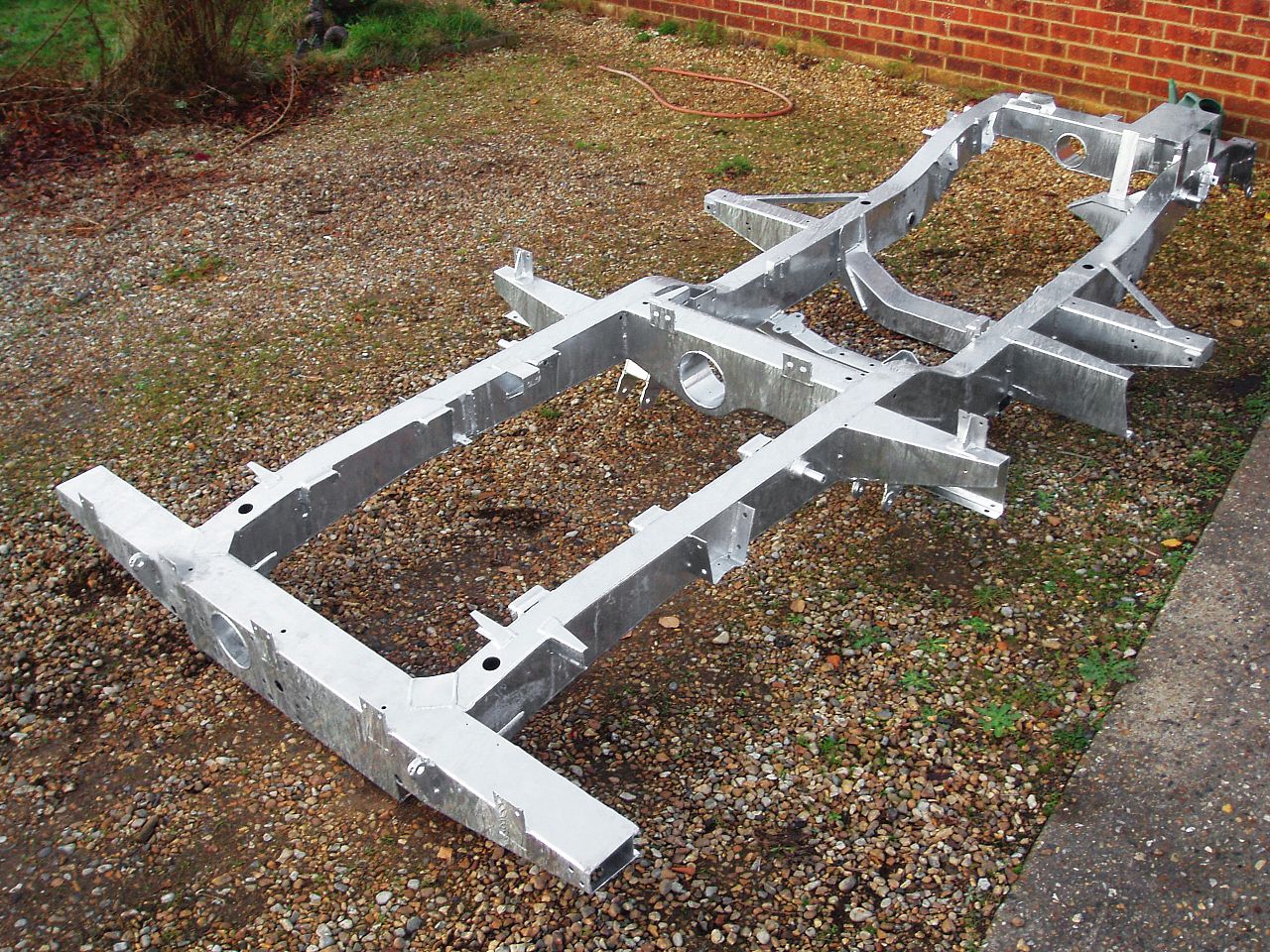


Design features and functions
A frame must resist bending, torsion and impacts while providing mounting points for all other vehicle systems. Typical functions include locating the axles, supporting payload and occupants, and absorbing crash energy in a controlled way. Attachment points for the body, engine mounts, suspension brackets and fuel or exhaust hangers are all integrated into the frame design. Frames also influence ride quality by isolating or transmitting vibrations between the road and the passenger compartment.
Common frame types
- Ladder frame: two longitudinal rails joined by crossmembers; simple and strong for heavy loads and trucks.
- Perimeter frame: a ladder that follows the vehicle sides, improving occupant space and crash protection.
- Box or boxed section: closed rectangular sections that increase rigidity compared with open C‑sections.
- Backbone frame: a central spine carrying the drivetrain, used on some sports cars and utility vehicles.
- Spaceframe: a network of interconnected tubes or beams forming a lightweight, rigid shell often used in race and specialty cars.
History and development
Early motor vehicles adopted frames derived from carriage and wagon practice. Through much of the 20th century the body‑on‑frame layout was standard for cars, trucks and buses. Gradually, most passenger cars transitioned to unibody (monocoque) construction, where the body and frame are integrated, offering weight savings and improved crash behavior. Nevertheless, body‑on‑frame designs remain common for heavy commercial vehicles, pickup trucks and many off‑road models because of their durability, ease of repair and towing capability.
Materials and manufacturing
Traditionally frames are made from stamped or rolled steel sections welded or bolted together. Modern variants may use high‑strength steel, aluminum alloys or composite reinforcements to reduce weight while maintaining strength. Manufacturing techniques include welding, riveting and adhesive bonding; some high‑end spaceframes use precision tube joining and bonding to achieve tight tolerances and light weight.
Uses, advantages and disadvantages
Advantages of a separate frame include straightforward vehicle assembly, ease of repair after collision, and the ability to accept heavy loads or modular bodies. Drawbacks include typically greater weight and reduced interior packaging efficiency compared with unibody designs. Designers choose a frame solution based on intended use: long service life and heavy payloads favor body‑on‑frame, while compactness and fuel efficiency favor unibody construction.
Notable facts: many modern trucks and buses still rely on framed chassis for their flexibility and robustness; specialty and performance applications sometimes adopt spaceframes to balance stiffness and weight. For further technical details, consult resources on vehicle structures and chassis engineering via technical references or industry guides linked from chassis overviews.
Related articles
Author
AlegsaOnline.com Vehicle Frame (Body‑on‑Frame) — Structure, Types, and Uses Leandro Alegsa
URL: https://en.alegsaonline.com/art/35981