
Louisiana Purchase (1803): U.S. acquisition of territory from France
The 1803 Louisiana Purchase doubled the United States by acquiring vast territory from France, securing the Mississippi and New Orleans, and setting the stage for exploration and westward expansion.
The Louisiana Purchase was a diplomatic and territorial transaction in 1803 in which the United States bought a vast region of North America from France. Negotiated during the presidency of Thomas Jefferson and concluded under the leadership of Napoleon Bonaparte in Paris, the agreement added roughly 828,000 square miles to the United States and approximately doubled its land area. The acquisition is widely regarded as one of the most significant land purchases in history because of its immediate strategic and economic benefits and its long-term influence on American expansion.
Image gallery
10 Images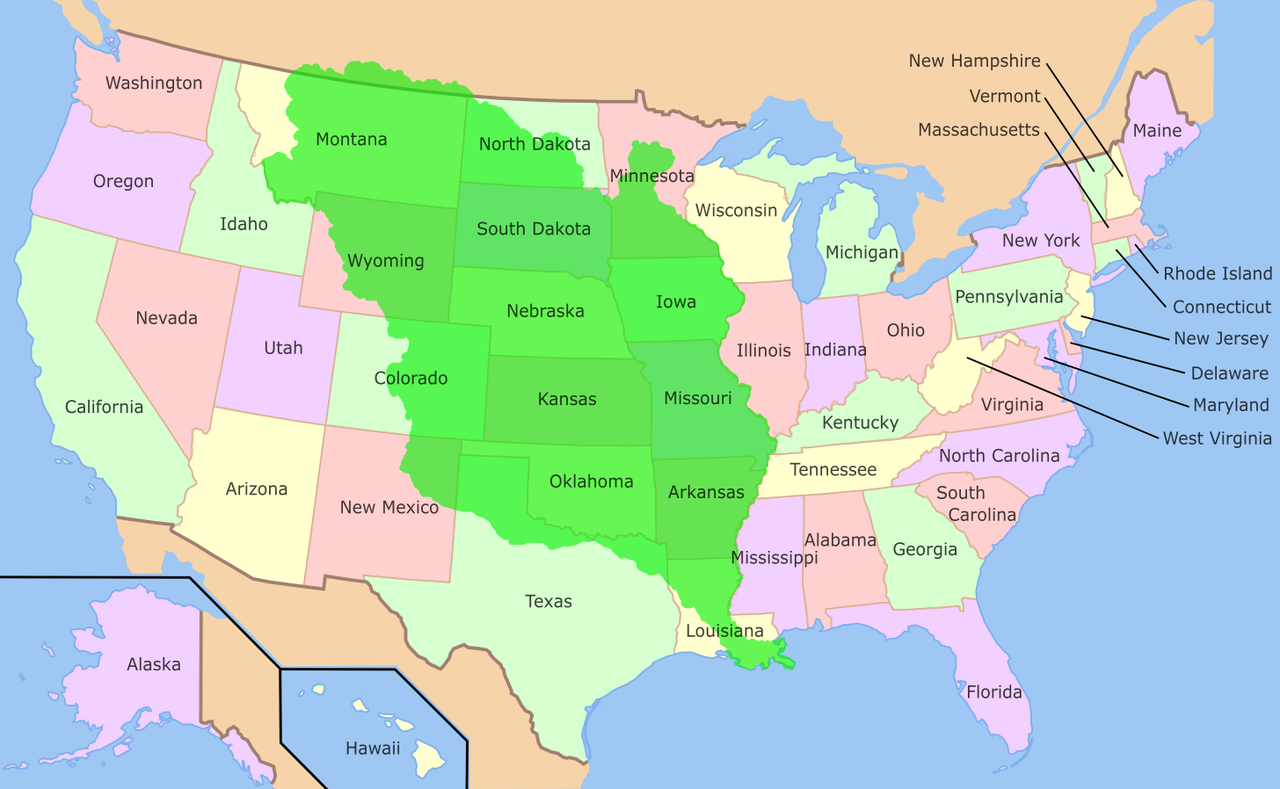




Negotiation, price and constitutional questions
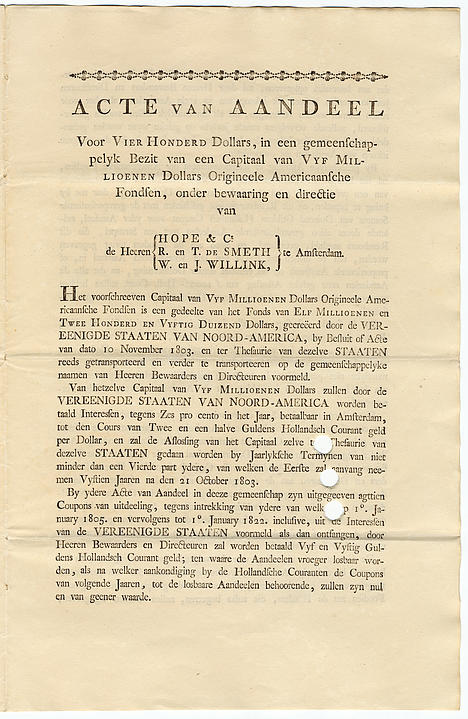
United States envoys arrived in Europe with authority to negotiate limited objectives—chiefly secure navigation of the Mississippi River and acquire the port of New Orleans. France unexpectedly offered the entire Louisiana territory for a purchase price commonly cited as $15 million. Jefferson, who had been cautious about broad executive powers, ultimately relied on the treaty-making power to complete the transaction and sought congressional authorization and funding for the purchase. The Senate ratified the treaty, and the federal government arranged financing through public bonds and the assumption of certain claims. The deal raised debate at the time over constitutional authority, federal power, and the fit between Jeffersonian principles and a large federal land acquisition.
Territory and immediate effects
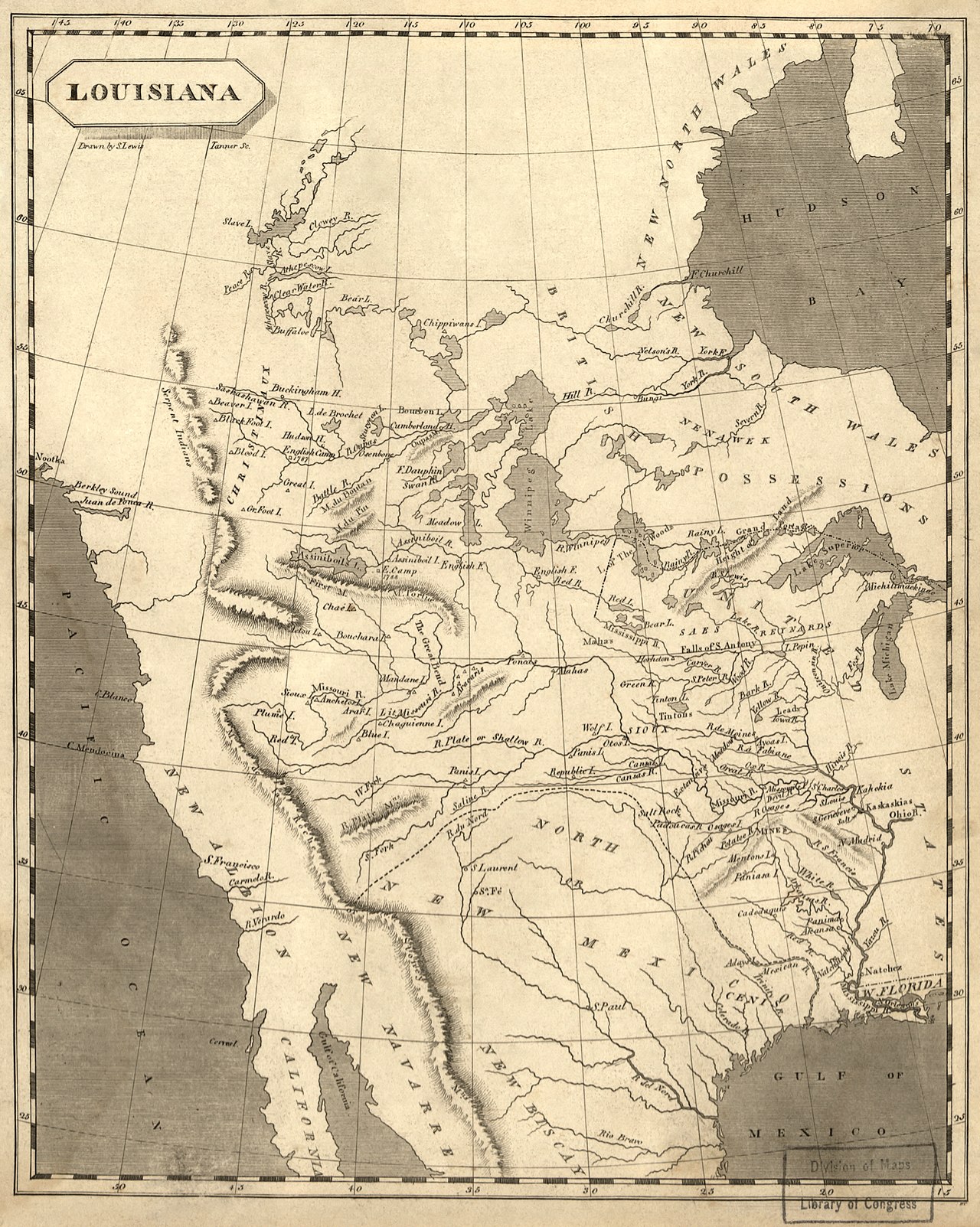
The area obtained extended from the Mississippi River to the Rocky Mountains and from the Gulf of Mexico to the Canadian border in places, encompassing land that now lies wholly or partially within many modern U.S. states. Control of New Orleans and the lower Mississippi, critical for agricultural commerce, removed a major European foothold on the continent and reduced the likelihood of renewed French military presence in North America. The acquisition also encouraged settlement, trade, and diplomatic engagement with various Native nations and European powers.
Exploration and scientific goals
Almost immediately after the treaty, the federal government sponsored an overland expedition led by Meriwether Lewis and William Clark (1804–1806). The Lewis and Clark expedition set out from the St. Louis area to map routes, catalogue plant and animal life, record geological and geographic observations, and establish relations with Indigenous peoples. Their journals, maps, and scientific collections helped Americans understand the interior of the continent and informed later migration and settlement.
Longer-term consequences and notable issues
The Louisiana Purchase accelerated westward expansion, reshaped the nation’s economy by increasing agricultural opportunity, and contributed to intensifying political debates over the extension of slavery into new territories. It also had profound effects on Indigenous communities whose lands and ways of life were soon pressured by incoming settlers and federal policies. Internationally, the sale influenced the balance of power in North America by reducing France’s direct role and complicating relations with Great Britain and Spain.
Further reading and resources
- Primary documents and treaty texts
- Biographical resources on Thomas Jefferson
- Context on Napoleonic France
- Contemporary accounts of the purchase price and financing
- History of New Orleans and its strategic importance
- Mississippi River commerce and navigation
- Overview of the Haitian Revolution and its effects
- Jeffersonian political philosophy and debates
- Maps and measurements of the acquired territory
- Modern state boundaries related to the purchase: Oklahoma
- Modern state boundaries related to the purchase: Nebraska
- Modern state boundaries related to the purchase: Kansas
- Modern state boundaries related to the purchase: Iowa
- Modern state boundaries related to the purchase: Missouri
- Territorial history of Louisiana
- Territorial history of Texas and border issues
- Territorial history of Minnesota
- Territorial history of Colorado
- Territorial history of New Mexico
- Territorial history of Wyoming
- Territorial history of Montana
- Territorial history of North Dakota
- Territorial history of South Dakota
- Notes on the northern fringe and Canadian border
- The Oregon Territory and related diplomacy
- Routes of the Missouri River and exploration journals
Questions and answers
Q: What was the Louisiana Purchase?
A: The Louisiana Purchase was a land purchase made by United States president, Thomas Jefferson, in 1803. He bought the Louisiana territory from France for 15 million USD (about $320,000,000 in 2020 dollars).
Q: How much money did Thomas Jefferson pay for the Louisiana Purchase?
A: Thomas Jefferson paid 15 million USD (about $320,000,000 in 2020 dollars) for the Louisiana Purchase.
Q: What power did Thomas Jefferson use to buy the land?
A: Thomas Jefferson used his constitutional power to sign treaties to buy the land. Nowhere in the constitution does it say that presidents have the power to buy land from other countries.
Q: Why did Napoleon Bonaparte sell the land?
A: Napoleon Bonaparte sold the land because he needed money for the Great French War and could not defend Louisiana.
Q: How much total money was paid for all of these agreements related to purchasing of Louisana Territory?
A: The total amount paid for all of these agreements related to purchasing of Louisana Territory was about 2.6 billion USD.
Q: Who explored this newly purchased area?
A: The Lewis and Clark expedition explored this newly purchased area starting from St. Louis and tracing along Missouri River route.
Related articles
Author
AlegsaOnline.com Louisiana Purchase (1803): U.S. acquisition of territory from France Leandro Alegsa
URL: https://en.alegsaonline.com/art/59472