
LZ 129 Hindenburg: the German passenger Zeppelin
LZ 129 Hindenburg was a large German passenger airship of the 1930s, famous for its transatlantic service and the 1937 Lakehurst disaster that ended the era of commercial rigid airships.
Overview
The LZ 129 Hindenburg was a German rigid airship built in the mid-1930s for transatlantic passenger and mail service. Constructed by the Zeppelin company, it was one of the largest aircraft of its era and carried passengers, crew and cargo between Europe and the Americas. The ship was named after the German president Paul von Hindenburg and represented the pinnacle of pre‑war lighter‑than‑air passenger transport.
Image gallery
10 Images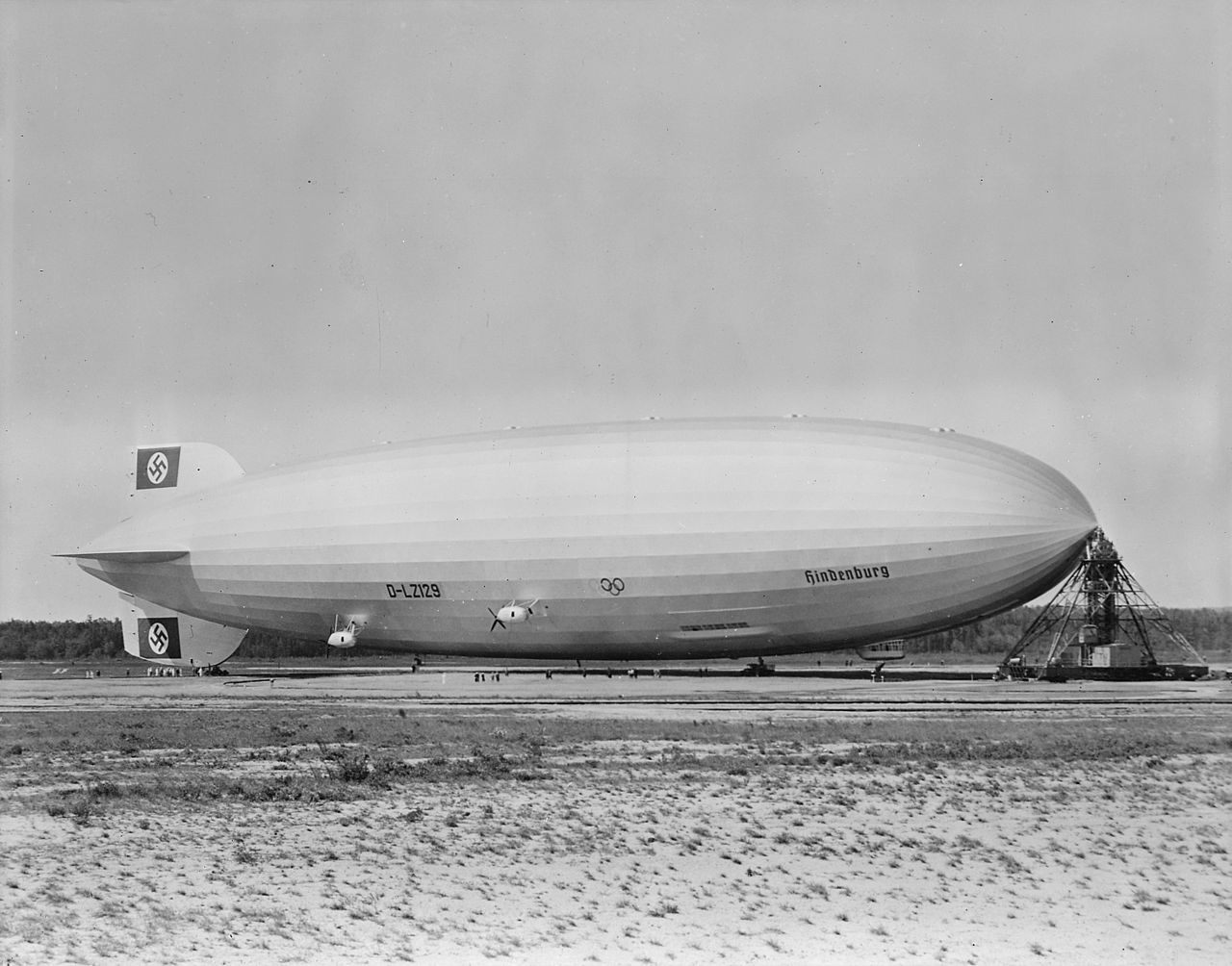







Design and characteristics
The Hindenburg was a rigid, framed airship of the class commonly known as a Zeppelin. Unlike non‑rigid blimps, its framework supported multiple gas cells inside a stream‑lined hull. It used a lifting gas to provide buoyancy and had accommodations for passengers as well as an onboard lounge and dining areas intended to offer transatlantic comfort. Built for long flights, the ship combined engineering intended for range, payload and relatively smooth travel across ocean routes.
Development and service
Commissioned by German interests in the 1930s, the Hindenburg was part of a program to establish regular intercontinental airship routes. It joined a small fleet that included sister ships such as the LZ 130 Graf Zeppelin. The airship served scheduled and special flights, carrying notable passengers and participating in public events; it appeared during the opening of the 1936 Summer Olympics in Berlin and was used by celebrities and athletes for transoceanic travel. It operated between Europe and the Americas, including services to the United States and South America.
The 1937 Lakehurst disaster and aftermath
On landing at Lakehurst, New Jersey, on May 6, 1937, the Hindenburg caught fire and was destroyed while attempting to dock. The rapid blaze killed many aboard and some on the ground, ending the airship's commercial career. Investigations and historians have discussed several possible causes, including ignition of its hydrogen lifting gas by static discharge or other accidental sources; alternative theories and speculation have also circulated. The disaster highlighted the dangers of hydrogen as a lifting gas and contributed to the rapid decline of scheduled passenger service by large rigid airships.
Legacy and significance
The Hindenburg disaster had far‑reaching effects on public confidence in lighter‑than‑air transport and accelerated the shift toward heavier‑than‑air aircraft for long‑distance passenger travel. It remains one of the most widely remembered aviation accidents of the 20th century and a cautionary example in engineering, operations and public safety. Its story is frequently cited in studies of aviation history, safety regulation and the social impact of high‑profile technological failures.
Notable facts
- The ship was built by the German Zeppelin company and often described simply as an airship or Zeppelin.
- It carried passengers such as the boxer Max Schmeling and was used for high‑profile transatlantic travel.
- Political and practical limits on helium exports from the United States influenced the choice of hydrogen as the lifting gas.
- The Hindenburg name itself recalled President Paul von Hindenburg and was intended to evoke national prestige.
- Its sister ship, the Graf Zeppelin, and other rigid airships represented the peak of a distinctive era in aviation history.
Taken together, the Hindenburg's technical ambition, public prominence and tragic end make it a defining episode in the transition from lighter‑than‑air to airplane‑based international travel.
Questions and answers
Q: What was the LZ 129 Hindenburg?
A: The LZ 129 Hindenburg was a large German airship built in 1936.
Q: Why was it named Hindenburg?
A: It was named in honor of the German field marshal and statesman Paul von Hindenburg.
Q: What are airships like the Hindenburg called?
A: Such airships are called Zeppelin.
Q: What was the size of the LZ 129 Hindenburg?
A: Along with another Zeppelin, LZ 130 Graf Zeppelin, it was the biggest airship in the world at the time it was built.
Q: What are some notable events that the LZ 129 Hindenburg was present at?
A: The boxer Max Schmeling flew on it back to Germany after defeating Joe Louis in the United States. It was also present during the opening ceremony of the 1936 Summer Olympics which were held in Berlin.
Q: Why did the Zeppelin company attract attention to the LZ 129 Hindenburg?
A: This attention was part of the Zeppelin company's plan to offer a fleet of their airships for trans-Atlantic service.
Q: Did the LZ 129 Hindenburg gain a lot of publicity?
A: Yes, the Zeppelin gained lots of publicity and became very famous.
Related articles
Author
AlegsaOnline.com LZ 129 Hindenburg: the German passenger Zeppelin Leandro Alegsa
URL: https://en.alegsaonline.com/art/60171