
Ancient Macedon: kingdom, dynasties and Hellenistic legacy
Ancient Macedon was a kingdom in northern Greece that rose from a regional monarchy to dominate the eastern Mediterranean under Philip II and Alexander, later ruled by Hellenistic dynasties and absorbed by Rome.
Overview
The kingdom commonly called Ancient Macedon (Macedonia) emerged on the northern Greek peninsula and played a central role in the transition from Classical to Hellenistic Greece. Beginning as a largely rural monarchy with close ties to neighboring Greek regions, it expanded in the fourth century BCE under strong kings who transformed Macedon into the dominant political and military power of the eastern Mediterranean.
Image gallery
10 Images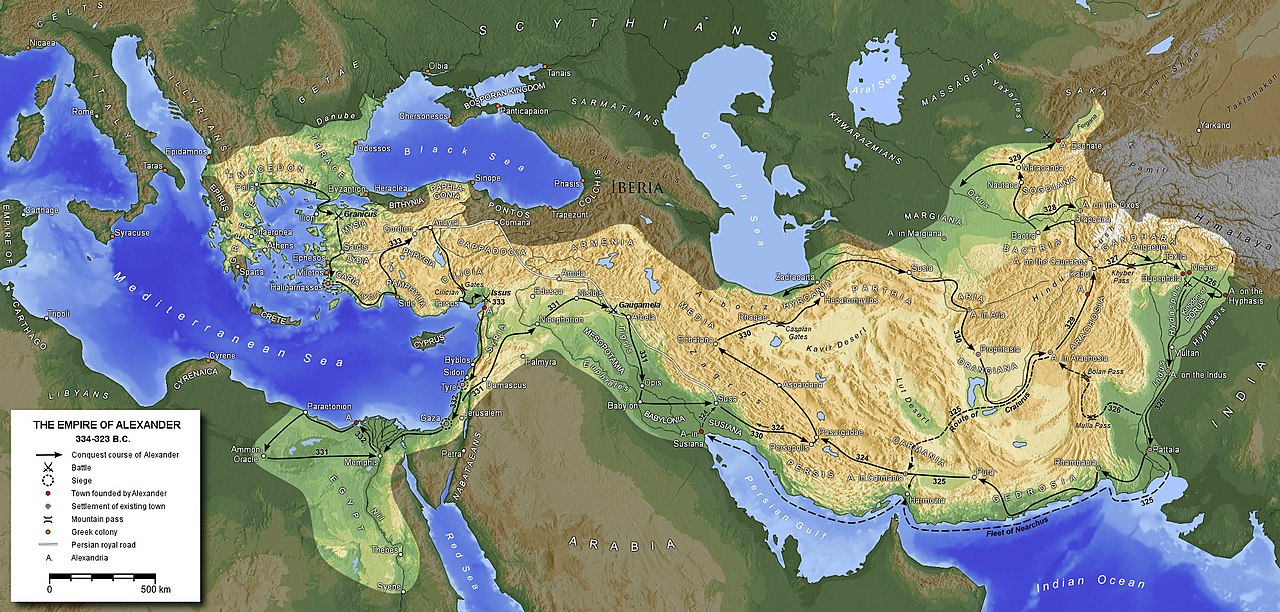


Geography and society
Macedon occupied the northeastern part of the Greek mainland, bounded historically by Thessaly to the south, the region of Thrace to the east and the inland territories that reached toward the Danube to the north. Its landscape included coastal plains, river valleys and mountainous uplands. Macedonian society was organized around a royal household and a warrior aristocracy; the kingdom controlled important agricultural resources and trade routes and maintained urban centers such as the royal capitals, which served as political and cultural hubs.
Political development and dynasties
The ruling house credited with establishing Macedon's early royal structure is the Argead dynasty. Under Argead rulers, most notably Philip II, the kingdom centralized authority, reformed its army, and expanded territorial control. After the conquests of Alexander the Great, the empire he built across the Near East fragmented. In the ensuing decades, Macedon itself was governed by different successor lines. Important dynastic phases include:
- Argead dynasty — founders and the house of Philip II and Alexander;
- Antipatrid transitional rulers — brief regimes after Alexander’s death;
- Antigonid dynasty — restored a Macedonian kingdom in the Hellenistic period and ruled until Roman conquest.
Military, culture and institutions
Macedonian military innovation had wide influence: Philip II developed a professional army centered on the deep phalanx formation and the long pike, which Alexander employed in his campaigns. Culturally, Macedon participated in the broader Greek world—sharing language elements, religious practices, artistic styles and athletic customs—while also maintaining regional traditions. Royal patronage supported artisans, coinage, and the founding or refoundation of cities that spread Hellenic institutions across newly conquered territories.
Expansion, decline and legacy
Under Alexander, Macedon became the launching point for an unprecedented eastward expansion that reshaped political and cultural life across the Balkans, Anatolia, Egypt and into the Persian heartlands. After Alexander’s death, his empire disintegrated into competing Hellenistic realms. Macedon itself remained an important state under the Antigonid kings until it fell to the rising power of the Roman Empire in the second century BCE. The Macedonian conquests disseminated Greek language, art, and institutions widely and paved the way for the Hellenistic age of cosmopolitan kingdoms and intercultural exchange.
Notable distinctions and historical significance
Macedon is distinct among Greek states for its monarchical system that combined tribal elements and centralized kingship, its strategic military reforms, and its role as the vehicle for Hellenization beyond the traditional bounds of the Greek city-states. It bridged Classical Greek traditions (Classical Greece) with the larger geocultural changes begun in the Archaic period and culminating in the Hellenistic era. Study of Macedon illuminates how a regional kingdom could reshape the ancient world and influence subsequent Roman and later European history.
For further reading on institutions, archaeology, and the sequence of rulers, consult specialized surveys and archaeological reports that trace Macedon's shifting frontiers and material culture.
Questions and answers
Q: Where was the ancient kingdom of Macedonia located?
A: The ancient kingdom of Macedonia was located on the northeastern part of the Greek peninsula, and bordered by Epirus to the west, Paeonia to the north, Thrace to the east and Thessaly to the south.
Q: What language did people in Ancient Macedonia speak?
A: People in Ancient Macedonia spoke Greek.
Q: Who established and initially ruled over Ancient Macedonia?
A: The royal Argead dynasty established and initially ruled over Ancient Macedonia.
Q: Who succeeded the Argead dynasty as rulers of Ancient Macedonia?
A: The Antipatrid and Antigonid dynasties succeeded the Argead dynasty as rulers of Ancient Macedonia.
Q: How long did Alexander's reign make it one of most powerful kingdoms in Near East?
A: Alexander's reign made it one of most powerful kingdoms in Near East for a few years.
Q: What happened after Alexander died?
A: After Alexander died, his empire fell apart and the Antigonid dynasty ruled Macedon as a small empire.
Q: Who eventually conquered Macedon centuries later?
A: The Roman Empire eventually conquered Macedon centuries later.
Tags
Related articles
Author
AlegsaOnline.com Ancient Macedon: kingdom, dynasties and Hellenistic legacy Leandro Alegsa
URL: https://en.alegsaonline.com/art/60301
Sources
- trentu.ca : Review by Konrad H. Kinzl (Trent University)