
Ancient Near East: Civilizations, Innovations, and Legacy
Survey of the Ancient Near East: its geography, principal cultures, major innovations, chronology from early urbanism through the Bronze and Iron Ages, and the region's long-term influence on later history.
Overview
The term Ancient Near East refers to a broad ensemble of societies that arose in the lands corresponding to the modern Middle East. It is a historiographical and archaeological category used to discuss developments from the first urban centers of southern Mesopotamia in the 4th millennium BCE through the transformations associated with the late 1st millennium BCE and the arrival of Macedonian rule. The label groups diverse languages, political forms and cultures—including Sumerian, Akkadian, Hittite, Hurrian, Canaanite, Aramaean, Elamite, Persian and Egyptian—under a framework of comparative study frequently employed in ancient history and Egyptology.
Image gallery
8 Images
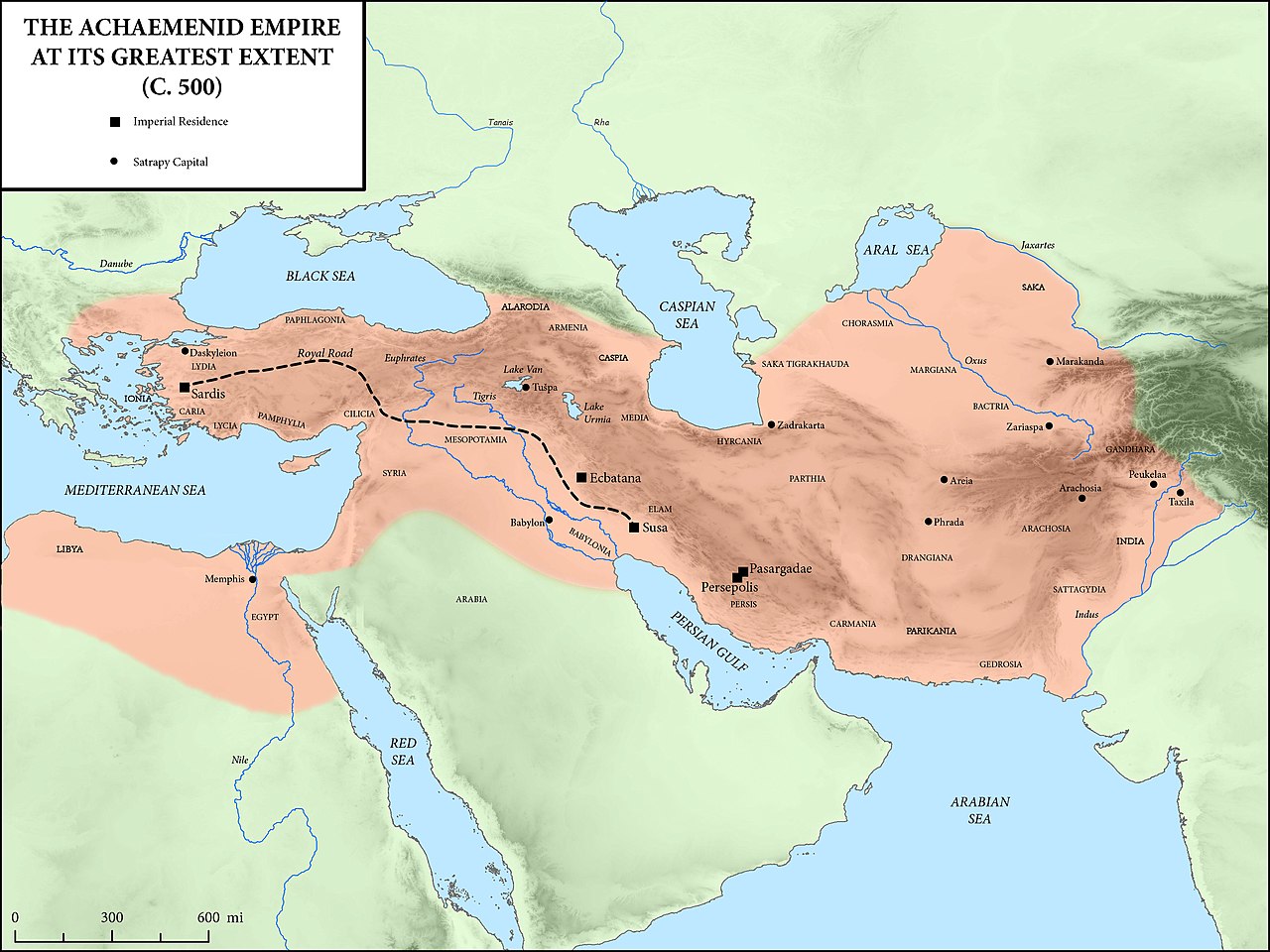


Geography and principal cultures
Geographically, the Ancient Near East encompassed river valleys, highlands and coastal zones. Core areas include Mesopotamia (the rivers and plains of modern Iraq and parts of Syria), the highlands of Persia (modern Iran), Anatolia (modern Turkey), the Levantine coast and interior (modern Lebanon, Israel, Palestine and Jordan), and the Nile valley of Ancient Egypt. Each area developed distinct institutions but also maintained intense networks of exchange, diplomacy and conflict.
Early urbanism is often associated with the rise of Sumer in southern Mesopotamia, where city-states produced dense settlements and complex administrations. In Anatolia the Hittite polity emerged as a major Bronze Age power; in the Levant a patchwork of city-states and small kingdoms linked maritime and inland trade; Egypt developed a long-lived pharaonic state on the Nile; while in the Persian plateau powerful kingdoms later coalesced into imperial structures.
Chronology and periodization
Scholars commonly divide the preclassical Near Eastern past into the Neolithic, Chalcolithic, Bronze and Iron Ages. Urbanization accelerated in the 4th and 3rd millennia BCE; the 2nd millennium BCE witnessed large territorial states and empires—Egyptian, Hittite, Mitanni, Assyrian and Babylonian among them—whose diplomacy and warfare are recorded in both texts and material remains. The end of the Late Bronze Age saw disruptions frequently termed the Late Bronze Age collapse, after which new powers and political arrangements emerged in the early Iron Age. The campaigns of Alexander the Great in the 4th century BCE mark a conventional horizon for the end of many independent Near Eastern monarchies and the start of Hellenistic influences.
Economy, technology and urban life
Economies in the Ancient Near East combined intensive agriculture with craft production and long-distance exchange. Irrigation agriculture supported surplus production and dense populations. Technological advances included the spread of the potter's wheel, the adoption of wheeled transport and the application of water- and grain-milling technologies such as the mill wheel. Metallurgy—especially bronze and later ironworking—underpinned tools and weapons, while craft specialization and urban workshops produced textiles, ceramics and luxury goods for both local use and export.
Markets and redistribution systems operated alongside palace and temple economies. Administrative innovations, often recorded in early writing, allowed rulers and institutions to manage labour, property and taxation.
Writing, law and administration
One of the region's most significant contributions was the early development of writing. Cuneiform script, first used for administrative recordkeeping in Mesopotamia, and Egyptian hieroglyphic writing served state, religious and literary functions. Written records include legal texts, economic accounts, royal inscriptions and literary compositions. The compilation of law codes and administrative practice created precedents for later legal traditions; famous legal formulations and royal decrees are known from Babylonian and Assyrian archives and were replicated in neighboring polities.
Society, religion and intellectual life
Societies were stratified, with rulers, priests, artisans, merchants, rural cultivators and enslaved labourers forming different occupational groups. Many polities featured a close relationship between political authority and religious institutions: temples functioned as economic centres as well as cult sites. Religion was typically polytheistic, with pantheons and myths that explained natural phenomena, legitimized kingship and structured ritual life. Observations of celestial phenomena laid foundations for early astronomy, while problem-solving in surveying, accounting and construction contributed to practical and theoretical mathematics.
Art, architecture and material culture
Artistic expression ranged from monumental architecture—palaces, temples and city walls—to finer luxury arts such as cylinder seals, carved reliefs, glazed ceramics and metalwork. Architectural forms and decorative motifs traveled along trade routes and through diplomatic exchange, so that stylistic influences appear across wide areas. Archaeological layers preserve both elite displays and ordinary domestic assemblages, providing a fuller picture of daily life.
Archaeology, texts and modern study
Our knowledge of the Ancient Near East derives from archaeological excavation, the study of inscriptions and the conservation of artifacts. Excavation techniques, stratigraphy and the decipherment of scripts have been central to reconstructing chronologies and social structures. Museums and academic collections hold large numbers of objects and archives, and contemporary research increasingly emphasizes local contexts, interdisciplinary methods and collaboration with communities in the region.
Because the region remains politically sensitive, archaeological work may be constrained by modern conflicts and heritage concerns; ethical stewardship and protection of antiquities are ongoing priorities for researchers and institutions.
Legacy and influence
The Ancient Near East is often described as a cradle of civilization because many features associated with later complex societies—urbanism, writing, codified law, bureaucratic administration and large-scale monumental building—appear there early. Legal, administrative and literary forms produced in the region influenced neighbouring cultures and, through successive empires, left a long-term imprint on the Mediterranean and Near Eastern worlds. Scholarship on these societies informs disciplines from history and archaeology to comparative religion and the history of science.
Further study and resources
Accessible introductions, archaeological syntheses and editions of primary texts offer entry points for non-specialists and students. Online and print resources treat topics such as ancient economies, urbanism, art history and epigraphy. For thematic and regional overviews see materials on early civilizations, the modern Middle East, the archaeology of Mesopotamia, studies of Egypt, the history of Persia and research on Anatolia. Scholarly treatments cover the Bronze and Bronze Age and Iron Age transitions, the roles of empires and law (imperial formations and legal traditions), and topics in social history such as slavery and class. For intellectual history and sciences see works on astronomy and mathematics in antiquity. Debates about the place of Egypt within Near Eastern studies, diplomatic records involving Alexander the Great, and the causes and consequences of the Late Bronze Age disruptions remain subjects of active research.
Introductory lectures and museum catalogues can supplement reading; authoritative academic surveys and peer-reviewed syntheses present the state of knowledge and current debates. For conceptually focused entries and curated collections consult specialized encyclopedias and university resources as starting points and follow bibliographies for in-depth study (history, Egyptology).
Related articles
Author
AlegsaOnline.com Ancient Near East: Civilizations, Innovations, and Legacy Leandro Alegsa
URL: https://en.alegsaonline.com/art/3851