
Archaeocyatha: Cambrian reef-building sponge-like organisms
Extinct, sponge-like marine organisms of the Early Cambrian that built some of the planet's earliest reefs; important for understanding early animal evolution and Cambrian palaeoecology.
Overview
Archaeocyatha (often called archaeocyaths) are an extinct group of sessile, cup-shaped marine organisms known primarily from Early Cambrian rocks. Fossils show rigid, porous skeletons that formed colonies or solitary individuals attached to the sea floor. They are well known for constructing some of the earliest reef-like structures in the fossil record and for their value as index fossils in Lower Cambrian biostratigraphy.
Image gallery
7 Images


Form and characteristics
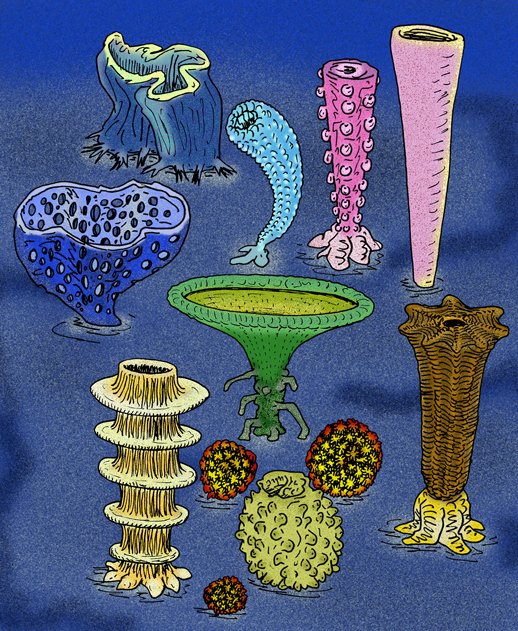
Typical archaeocyath bodies are conical or cylindrical cups with two porous walls separated by an internal space. Water circulation through these pores suggests a filter-feeding lifestyle broadly similar to modern sponges, though the exact physiology is interpreted with caution. Common morphological features include:
- an outer and inner wall with regular pores;
- a cavity or intervallum between walls;
- attachment structures or a basal plate anchoring them to hard or firm substrates.
Geological history and distribution
Archaeocyaths appear in Early Cambrian shallow marine carbonates and are globally distributed in suitable sedimentary facies. They rose to prominence as reef builders early in the Cambrian explosion and declined later in the period, becoming extinct before the end of the Cambrian. Their stratigraphic occurrence helps geologists correlate and date Early Cambrian sequences across different continents.
Ecological role and significance
As primary reef constructors in Early Cambrian seas, archaeocyaths created habitats that supported diverse communities of invertebrates. Their skeletal remains contributed to carbonate sediment accumulation and early reef framework development. For palaeontologists, archaeocyaths are important for reconstructing early marine ecosystems and for understanding how suspension feeders shaped benthic environments during a key interval of animal diversification.
Classification and scientific debate
The precise affinity of archaeocyaths has been debated: they have been treated as a distinct phylum, as a class within Porifera (sponges), or as sponge-like stem-group animals. Many researchers emphasize their sponge-like filter-feeding anatomy, while others highlight unique skeletal features that differentiate them from living sponge groups. For summaries of differing views see taxonomic treatments and discussions of their relationship to modern extinct sponges. Their unusual combination of characters makes archaeocyaths a continuing focus of research into early animal evolution.
Related articles
Author
AlegsaOnline.com Archaeocyatha: Cambrian reef-building sponge-like organisms Leandro Alegsa
URL: https://en.alegsaonline.com/art/5277