
Mathematics: concepts, branches, history, and applications
A clear introduction to mathematics: its central ideas, main branches, historical development, and practical uses across science, engineering, business and everyday life.
Mathematics is the systematic study of quantities, structures, space and change. It examines ideas such as numbers, shapes and patterns, and it supplies language and methods for describing and reasoning about phenomena in many fields. The English word derives from the ancient Greek term μάθημα, traditionally translated as science, knowledge or learning. In modern usage the discipline is often called "maths" in British Commonwealth countries and "math" in North America. Mathematics blends abstract theory with concrete procedures: it develops concepts, proposes axioms, and proves statements by logical argument.
Image gallery
10 Images


Core areas and what they study
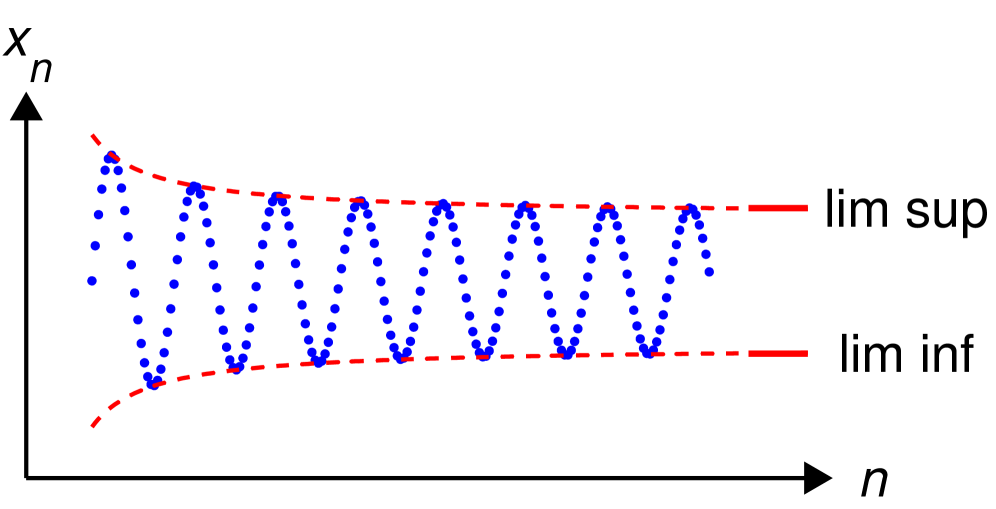
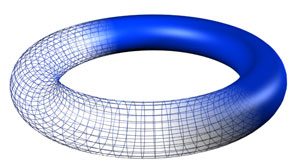
Mathematics is commonly divided into several interrelated branches. Elementary topics include arithmetic and number theory, which investigate properties of whole numbers and counting — for example the principles of counting and divisibility. Algebra concerns structure and operations on symbols; it formalizes patterns of relationship and transformation and appears under names such as linear algebra and group theory (algebra). Geometry explores position, form and size, spanning classical Euclidean geometry to modern differential and algebraic approaches (geometry). Analysis focuses on limits, continuity and rates of change and supplies the foundations of calculus (analysis).
History and development
The origins of mathematical thought reach into prehistoric counting and measurement, and civilizations such as ancient Mesopotamia, Egypt, India, China and Greece made important early contributions. Over centuries the subject expanded: medieval mathematicians preserved and extended classical ideas, and the scientific revolutions of the 16th–18th centuries saw analytic geometry and calculus emerge. During the 19th and 20th centuries mathematics became more abstract and axiomatic, giving rise to modern fields such as topology, abstract algebra and mathematical logic. Today the discipline continues to evolve through both pure theoretical work and interaction with computation and the sciences.
Applications and practical importance
Although some branches pursue ideas for their own sake, mathematics underpins many real-world activities. Business uses it in finance, statistics and operations research; science relies on mathematical models to test hypotheses and quantify observations; engineering applies mathematics for design, simulation and control; and fields such as construction and manufacturing depend on measurement, geometry and optimization. Further applications include computer science (algorithms and complexity), cryptography, data analysis, epidemiology and climate modeling.
Characteristics, methods and examples
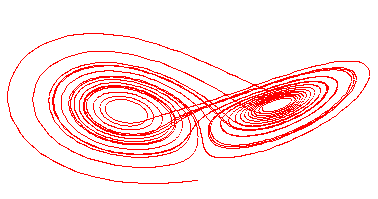
Several features distinguish mathematical work: precision in definitions, logical deduction, abstraction to general structures, and construction of proofs that establish results from agreed premises. Common methods include symbolic manipulation, diagrammatic reasoning, modelling, and numerical approximation. Examples range from simple arithmetic used in everyday commerce to sophisticated theories that classify geometric spaces or describe the behavior of dynamical systems. Mathematical notation condenses complex ideas into compact expressions, while proof provides a way to verify that statements follow unambiguously from assumptions.
Further notes and learning paths
Students typically progress from elementary arithmetic through algebra and geometry to calculus and beyond; specialized study can emphasize pure theory or applied techniques. Useful introductory topics include the basics of counting, elementary algebra, and primary geometry, after which one may explore probability, statistics, numerical methods and abstract structures. For more detailed overviews and resources consult subject surveys and educational materials available through academic institutions and public repositories: see general references indexed at Numbers overview, Shapes and geometry, Patterns and combinatorics, and surveys of history and applications at Classical origins and Science connections.
- Key concepts: structure, algebra, geometry, analysis.
- Common uses: business, engineering, construction, data science and technology.
- Learning path: arithmetic and counting → algebra and geometry → analysis and specialized fields.
Mathematics remains both a practical tool and an intellectual pursuit: its concepts shape the sciences, industry and technology while continuing to offer deep theoretical questions that stimulate research and education.
Questions and answers
Q: What is Mathematics?
A: Mathematics is the study of numbers, shapes and patterns. The word comes from the Greek μάθημα (máthema), meaning "science, knowledge, or learning".
Q: What are the main areas of mathematics?
A: The main areas of mathematics include numbers, structure (algebra), place (geometry) and change (analysis).
Q: How is mathematics used in the real world?
A: Applied math is useful for solving problems in the real world. People working in business, science, engineering, and construction use mathematics.
Q: Is there a shortened version of 'mathematics'?
A: Yes - it can be shortened to 'maths' in British Commonwealth countries or 'math' in North America.
Q: What does the word 'mathematics' mean?
A: The word 'mathematics' comes from the Greek μάθημα (máthema), meaning "science, knowledge, or learning".
Q: What type of problem-solving does applied math involve?
A: Applied math involves solving problems in the real world that people working in business, science, engineering and construction face.
Related articles
Author
AlegsaOnline.com Mathematics: concepts, branches, history, and applications Leandro Alegsa
URL: https://en.alegsaonline.com/art/62814
Sources
- slate.com : "Why Do Brits Say Maths and Americans Say Math?"
- worldcat.org : 1091-2339
- siam.org : "Thinking of a Career in Applied Mathematics? | SIAM"
- dartmouth.edu : "The Unreasonable Effectiveness of Mathematics in the Natural Sciences"
- undsci.berkeley.edu : "The science checklist applied: Mathematics"
- blogs.ams.org : "The Role of Generalization in the Advanced Mathematical Thinking"
- arxiv.org : "On proof and progress in mathematics"
- arxiv.org : math/9404236
- telegraph.co.uk : "The Fields Medal is the greatest prize in maths"
- worldcat.org : 0307-1235
- theguardian.com : "Abel Prize 2018: Robert Langlands wins for 'unified theory of maths'"