
Civilization: definition, features, development and significance
A balanced overview of civilization: what it is, core characteristics, historical development, causes of decline, and why civilizations matter in human history.
Civilization broadly denotes a complex human society characterized by settled communities, organized institutions, and the accumulation of shared knowledge and cultural achievements. The word derives from the Latin root civis, meaning a member of a town, and its usage emphasizes structured social life rather than the mere existence of people. Scholars use the term to refer to societies that develop sustained agriculture, durable settlements, specialized labor, and mechanisms for transmitting information across generations.
Image gallery
10 Images








Core characteristics
Most definitions highlight a set of interrelated features that distinguish a civilization from smaller or more mobile societies. These commonly include:
- Permanent settlements and urban centers: towns and cities that concentrate population, commerce, and administration.
- Surplus food production: agriculture or irrigation systems that support larger, non-food-producing populations.
- Social differentiation and institutions: distinct social roles, governing bodies, legal codes, and religious organizations.
- Writing or record keeping: systems for storing laws, transactions, histories, and technical knowledge.
- Complex material culture: architecture, crafts, trade networks, and specialized technologies.
Historical development
Archaeology and history trace the earliest clear examples of civilization to river valleys and fertile regions where agriculture developed independently: for example, ancient Mesopotamia, the Nile valley, the Indus basin, and parts of East Asia. Over long periods, incremental innovations — in farming, metallurgy, administration and writing — enabled populations to grow, cities to form, and states to emerge. Civilizations have repeatedly arisen, interacted, and transformed each other through trade, conquest, migration, and cultural exchange.
Institutions, culture and knowledge
Core institutions — such as centralized government, legal systems, religious hierarchies, and educational practices — help coordinate large populations and preserve complex skill sets. A written language or other durable record-keeping allows societies to accumulate knowledge beyond individual lifespans and to pass technical, legal and literary traditions forward. Art, architecture and ritual express group identity and power, while markets and long-distance trade spread ideas and goods between different cultural spheres.
Change, collapse and continuity
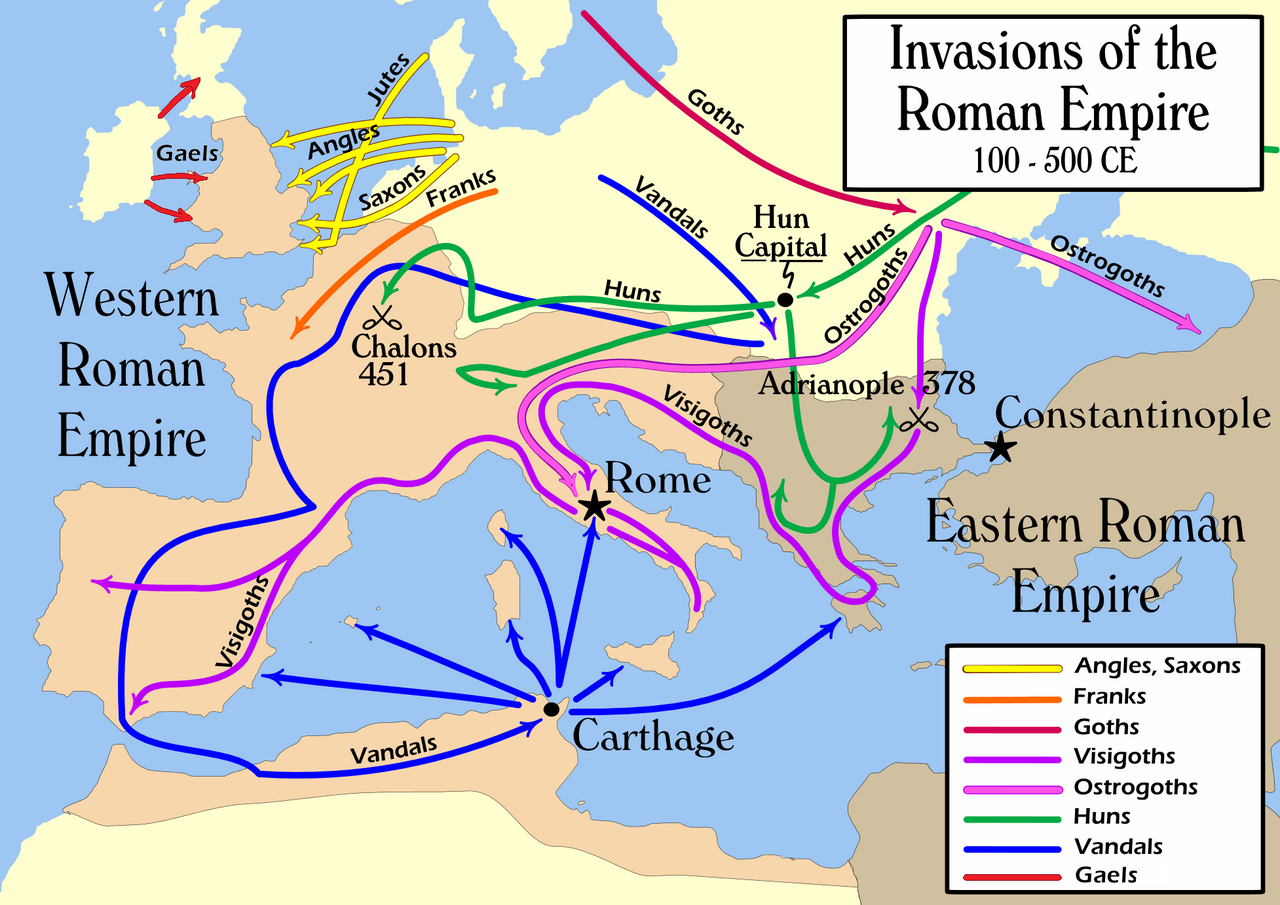
Civilizations are dynamic rather than permanent. They can evolve by assimilating others, fragment into smaller polities, or experience rapid decline under stressors such as environmental change, economic breakdown, warfare, disease, or political failure. ‘‘Collapse’’ is often complex: political institutions may vanish while many cultural practices persist or are incorporated into successor societies. Examples from the historical record illustrate both abrupt transitions and gradual transformations across centuries.
Importance and distinctions
Studying civilizations helps explain the long-term patterns of human organization, innovation, and inequality. The concept is analytical rather than value-laden: it describes complexity, not moral superiority. Historians and anthropologists distinguish between civilizational scale (large, interconnected states and empires) and local or tribal forms of social life, while also noting that small-scale societies can possess rich traditions and adaptive strategies that challenge simplistic hierarchies.
Further reading and sources
- Reference 1
- Reference 2
- Reference 3
- Reference 4
- Reference 5
- Reference 6
- Reference 7
- Reference 8
- Reference 9
- Reference 10
- Reference 11
- Reference 12
- Reference 13
- Reference 14
- Reference 15
- Reference 16
- Reference 17
- Reference 18
- Reference 19
- Reference 20
- Reference 21
- Reference 22
- Reference 23
- Reference 24
- Reference 25
Questions and answers
Q: What does the word 'civilization' mean?
A: Civilization refers to an advanced stage of organization, where laws, culture, a regular way of getting food and protecting people exist. It also involves speaking a common language and having a religion or belief system.
Q: What is the opposite of civilization?
A: The opposite of civilization is sometimes said to be entropy, barbarity, rudeness, or animal-like behavior.
Q: What are some examples of past civilizations?
A: Examples of past civilizations include the Roman Empire, Incas and Aztecs. These civilizations had large territories with complex cities and social structures as well as advanced agriculture which allowed for population growth.
Q: How did Latin remain relevant after the fall of Roman civilization?
A: Latin remained the preferred way of communication among educated people long after their civilization had vanished. Some scientists, scholars and others still use Latin in their everyday work even though Roman civilization fell apart more than 1,500 years ago.
Q: How long did the Roman Empire last?
A: The Roman Empire lasted almost 1000 years before it collapsed in the Dark Ages.
Q: How do civilizations end?
A: Civilizations can end by becoming part of another civilization or by reverting back to an earlier simpler way of life. For example Ancient Egypt was conquered by foreigners who changed the country so it became part of Persian Greek Roman and Islamic civilizations while Rome's collapse led to Medieval times when people became more civilized again.
Related articles
Author
AlegsaOnline.com Civilization: definition, features, development and significance Leandro Alegsa
URL: https://en.alegsaonline.com/art/20614