
Archaeobatrachia: primitive frogs and their biology
Archaeobatrachia is a traditional grouping of basal frogs that retain ancestral anatomical traits. Found in scattered regions, these lineages illuminate early anuran evolution and show diverse life histories.
Archaeobatrachia is a traditional assemblage of the most basal or "primitive" frogs within the order Anura. The label reflects that many of these lineages retain anatomical and life‑history features inferred to be close to those of early frogs. Modern genetic studies have shown that the assemblage is not a single natural lineage, so the term is now used mainly in comparative, historical and descriptive contexts rather than as a strict taxonomic unit.
Image gallery
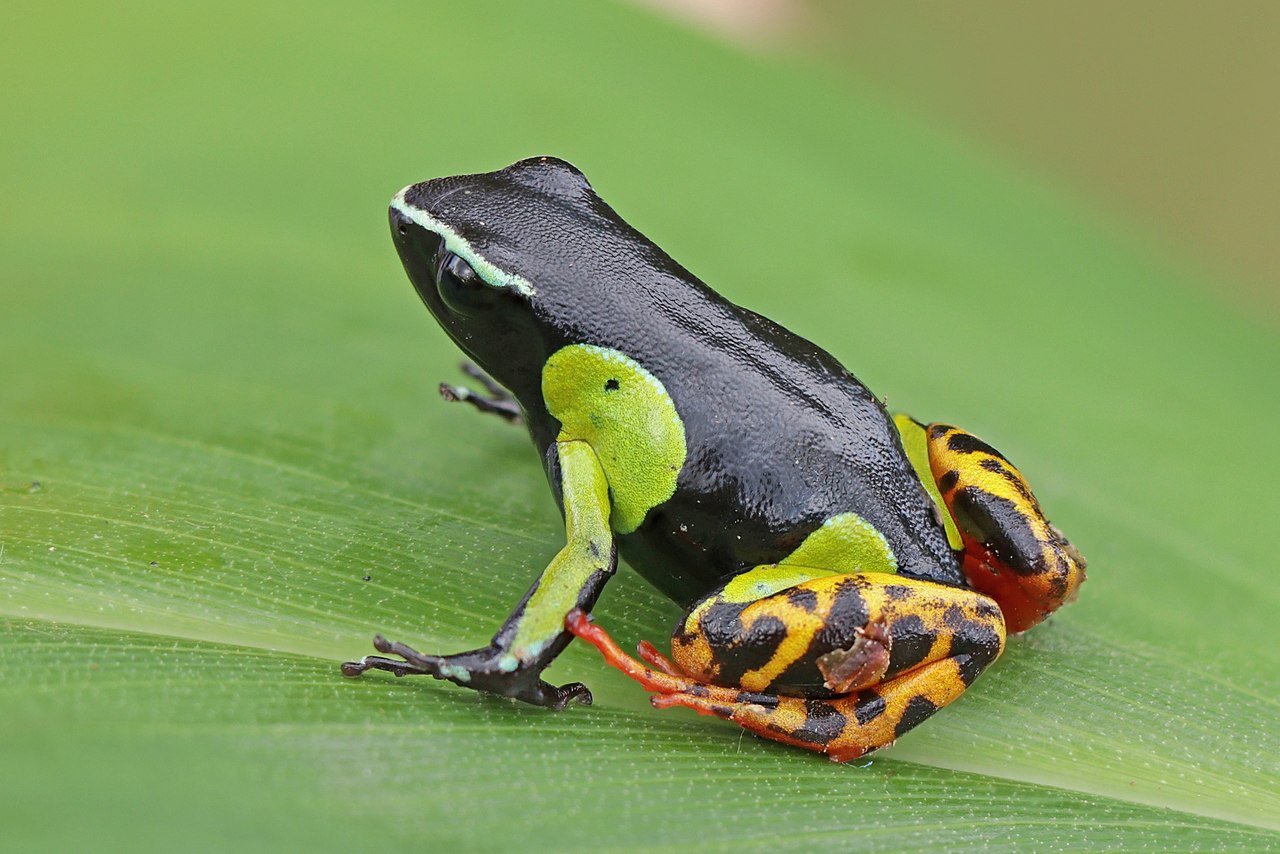
2 Images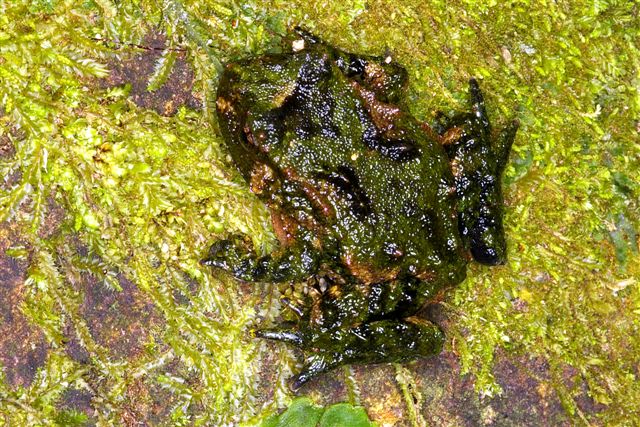
Key characteristics
Frogs historically placed in Archaeobatrachia share a combination of traits regarded as ancestral for anurans. These include aspects of the skull and vertebral column, elements of the pectoral girdle and, in some species, reduced or absent vocal sacs. Morphological variation among these frogs can be substantial: some retain primitive modes of walking and jumping, while others have evolved specialized structures.
Major families and notable biology
- Alytidae (midwife toads): males of some species carry egg strings on their hind limbs, an unusual form of parental care that protects developing eggs.
- Bombinatoridae (fire‑bellied toads): many show aposematic ventral coloration and a defensive posture that displays the bright belly to predators.
- Leiopelmatidae (New Zealand frogs): small, often terrestrial species that preserve primitive skeletal features and life histories.
- Ascaphidae (tailed frogs): found in cold, fast streams of the Pacific Northwest; they exhibit internal fertilization via a tail‑like copulatory organ, uncommon among frogs.
Distribution
Species traditionally associated with Archaeobatrachia occur in scattered, often relictual ranges. Populations are found across parts of Eurasia, in New Zealand, on islands such as the Philippines and in tropical areas including Borneo. The pattern of scattered distribution reflects long independent histories and past continental and climatic changes.
Evolutionary significance
Although the grouping is paraphyletic under current phylogenetic frameworks, these frogs remain important for understanding anuran origins. Comparative studies of their anatomy, development and genomes help reconstruct ancestral states and the sequence of innovations that led to modern frog diversity.
Conservation and research
Many species with primitive traits have small ranges, specific habitat requirements and limited dispersal ability, making them sensitive to habitat loss, pollution, introduced species and climate change. Conserving these lineages is valuable both for biodiversity and for maintaining living datasets used in evolutionary research. Continued field surveys, habitat protection and genetic studies are priorities to clarify relationships, document life histories and guide conservation efforts.
Questions and answers
Q: What is Archaeobatrachia?
A: Archaeobatrachia is a suborder of Anura consisting of various primitive frogs and toads.
Q: What does the name Archaeobatrachia literally suggest?
A: The name Archaeobatrachia literally suggests that these are the most primitive frogs.
Q: How many species of Archaeobatrachia show certain body features that are not found in other frogs and toads?
A: 28 species of Archaeobatrachia show certain body features that are not found in other frogs and toads.
Q: Where are Archaeobatrachia mostly found?
A: Archaeobatrachia are mostly found in Eurasia, New Zealand, the Philippines, and Borneo.
Q: Which family of frogs is found in the Pacific Northwest of the United States?
A: The family Ascaphidae is found in the Pacific Northwest of the United States.
Q: How many species are represented by the family Ascaphidae?
A: The family Ascaphidae is represented by two species.
Q: Are there any frogs or toads found outside of the areas mentioned?
A: The text does not mention if there are any frogs or toads found outside of the areas mentioned.
Related articles
Author
AlegsaOnline.com Archaeobatrachia: primitive frogs and their biology Leandro Alegsa
URL: https://en.alegsaonline.com/art/5275
Sources
- doi.org : 10.1016/j.gene.2005.07.034
- pubmed.ncbi.nlm.nih.gov : 16307849
- doi.org : 10.1080/10635150590905894
- pubmed.ncbi.nlm.nih.gov : 15805014
- doi.org : 10.1016/j.gene.2004.10.001
- pubmed.ncbi.nlm.nih.gov : 15588590
- journals.uchicago.edu : "Initial diversification of living amphibians predated the breakup of Pangaea"
- doi.org : 10.1086/429523
- pubmed.ncbi.nlm.nih.gov : 15795855