
Jordan: Overview of Geography, History, Government and Culture
Concise encyclopedia entry on the Hashemite Kingdom of Jordan covering geography, history, government, economy, society and notable features.
Overview
The Hashemite Kingdom of Jordan is a modern Arab state in southwest Asia that occupies a key position in the eastern Mediterranean region. It is commonly described as part of the Arab world and is located in southwest Asia, often identified with the Middle East. Jordan sits at the southern extent of the historical Levant and borders the northern edge of the Arabian Peninsula. Its strategic location links the Levant, the Arabian interior and the Red Sea trade routes.
Image gallery
10 Images



Geography and environment
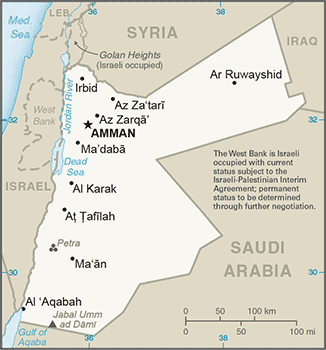
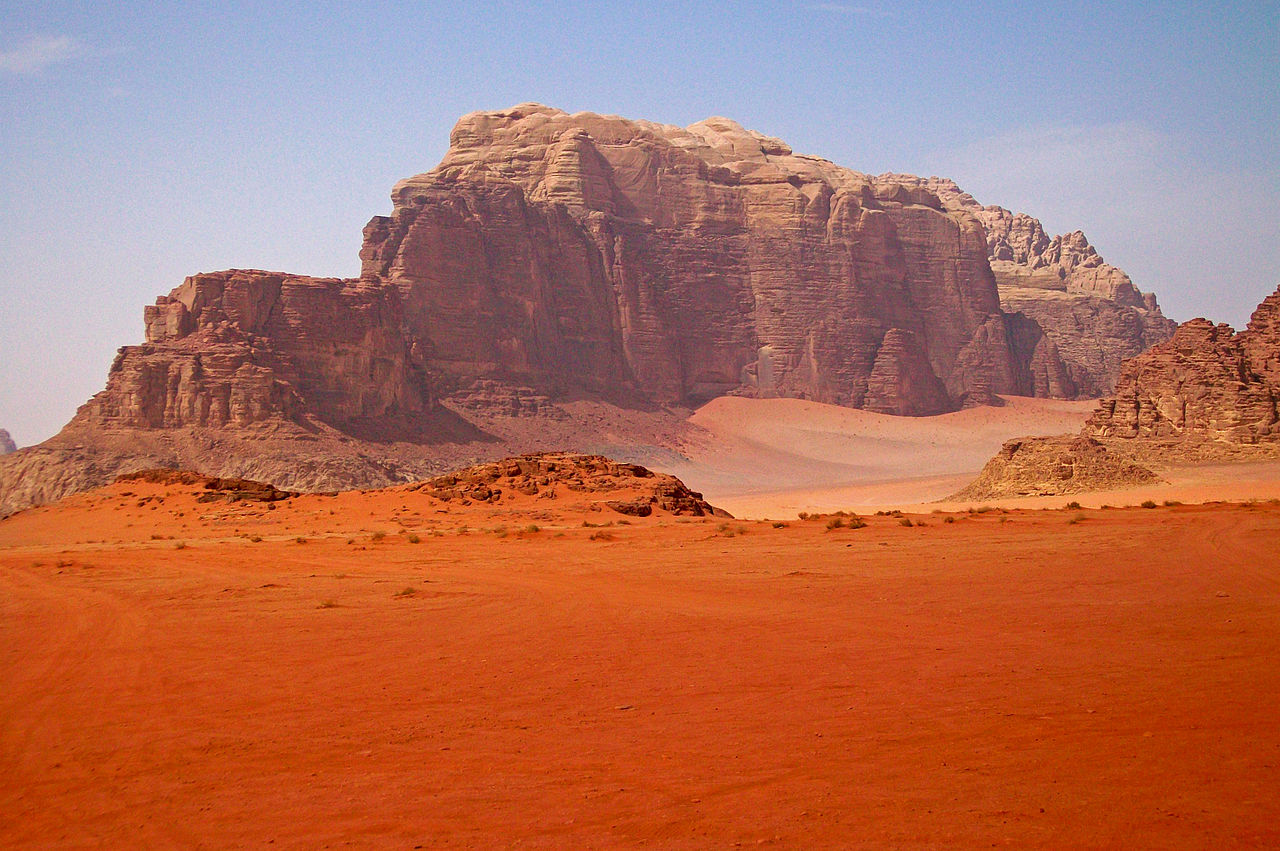
Jordan has a varied landscape that includes fertile highlands, arid steppe and desert plateaus. To the north and northwest the terrain rises into forested highlands; the Ajloun area is known for its hills and historical sites. In the south, the Shara (or Sharat) Mountains culminate near Umm al-Dami, the country's highest point. The western boundary is defined in part by the Jordan Valley and the lower reaches of the Jordan River, while the Dead Sea, the planet's lowest exposed land surface, marks the country's lowest elevation at the western edge of the Jordanian Rift basin.
Jordan has land frontiers with several neighbors: to the north is Syria, to the west lie Palestine and Israel, to the east is Iraq, and to the south and southeast is Saudi Arabia. On the southwest Jordan has a narrow maritime outlet to the Red Sea via the Gulf of Aqaba, where the port city of Aqaba serves as the kingdom's principal seaport.
History and government
Modern Jordan emerged after the First World War when Arab political realignments and British influence reshaped the eastern Mediterranean. In 1921 Prince Abdullah bin Al‑Hussein established the Emirate of Transjordan under British auspices, during the period of the British Mandate over parts of the former Ottoman territory, commonly referred to as Mandatory Palestine. The country later became the Hashemite Kingdom of Jordan and today is a constitutional monarchy.
The monarch plays a central role in executive and legislative affairs, appointing the prime minister and cabinet while also sharing authority with elected and appointed bodies. The national legislature combines an elected lower chamber and an appointed upper chamber, often described collectively as the legislative branch. An independent judiciary provides legal interpretation and adjudication.
Society, economy and culture
Amman is the capital and largest city, a political, economic and cultural hub where traditional and modern elements coexist; the city is often cited by name as Amman. Jordanian society is diverse: its population includes native Jordanians, long-established communities, and refugees and migrants from neighboring countries. The economy has limited natural resources and relies on services, tourism, phosphate mining and some light industry. Water scarcity, youth unemployment and poverty reduction remain national policy priorities.
International relations and significance
Jordan is an active member of regional and international bodies and often positions itself as a mediator in regional affairs. It helped to found the League of Arab States and is a member of the Organization of Islamic Cooperation. Historically aligned with Western partners, the kingdom also maintains practical ties with neighboring states and international organizations. Its stability and diplomatic role have earned it the reputation of a relative "oasis" of calm in a turbulent neighborhood.
Notable facts and distinctions
- Capital: Amman, a modern metropolis and administrative center.
- Only maritime outlet and port: Aqaba on the Gulf of Aqaba.
- Borders with: Syria, Palestine, Israel, Iraq, and Saudi Arabia.
- Geographic extremes: highest point near Umm al‑Dami and lowest point at the Dead Sea.
- Origins of the modern state trace to the post‑World War I era and the creation of Transjordan under British influence: see Britain and the era of Mandatory Palestine for context; the Hashemite dynasty began with Prince Abdullah.
Jordan's combination of historical sites, strategic geography and active diplomacy make it a country of enduring regional significance. For readers seeking introductory sources or travel orientation, the kingdom's capital, border regions and coastal access points are practical starting points for study or visitation.
Related articles
Author
AlegsaOnline.com Jordan: Overview of Geography, History, Government and Culture Leandro Alegsa
URL: https://en.alegsaonline.com/art/51079
Sources
- books.google.com : State-Religion Relationships and Human Rights Law: Towards a Right to Religiously Neutral Governance
- web.dos.gov.jo : "Population clock" · web.archive.org
- imf.org : "Jordan"
- data.worldbank.org : "Gini index"
- hdr.undp.org : "2015 Human Development Report Summary"
- books.google.com : Economic Impact on the U.S. of a U.S.-Jordan Free Trade Agreement, Inv. 332-418