
Monkeys: biology, classification, behavior and human connections
Monkeys are diverse primates found mainly in Africa, Asia and the Americas. This article summarizes their biology, taxonomy, habitat, behavior, cultural roles and conservation issues.
Overview
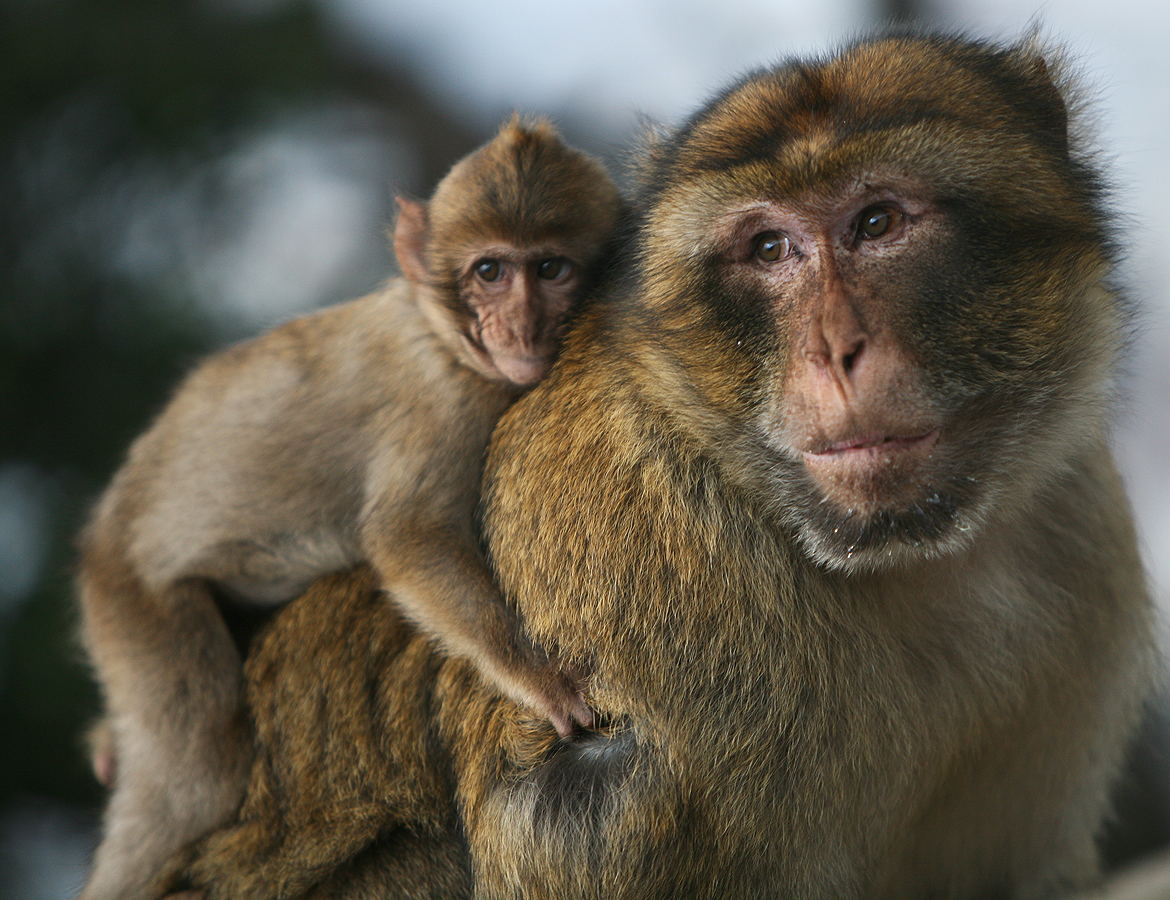
Monkeys are a broad, informal group of primates characterized by social behaviour, agile locomotion and in many species a visible tail. Most are arboreal or adapted to life among branches, though some spend substantial time on the ground. Monkeys belong to the infraorder that contains the higher primates, often called simians, and are part of the wider primate order. They display a wide range of sizes, diets and social systems, and are widely studied for their complex cognition and behaviour (intelligence).
Image gallery
10 Images


Classification and major groups
In common usage "monkey" covers two main evolutionary lineages. The Old World monkeys (family Cercopithecidae, commonly referenced as Old World monkeys) are native to Africa and Asia. The New World monkeys (often termed New World monkeys, including the platyrrhines) occur in Central and South America. Both groups belong to the simian infraorder alongside apes; modern apes are closely related to Old World monkeys, sharing a common ancestor rather than being direct descendants (apes and other catarrhines).
Physical characteristics
Monkeys range from very small species such as the pygmy marmoset to large species like the mandrill. Typical features include forward-facing eyes, grasping hands and nails instead of claws, and limbs suited for climbing or leaping. New World species often have prehensile tails that act as a true fifth limb, whereas Old World monkeys generally have non-prehensile tails or none in apes. Tail presence and form are important traits for distinguishing groups.
Habitat, distribution and diet
Monkeys occupy a variety of habitats from tropical rainforests to savannas and montane forests. New World monkeys are largely restricted to the Americas and are absent from the Old World: they are not native to Australia or New Guinea. Old World monkeys are mainly found across Africa and Asia. Diets are equally diverse: many species are primarily frugivorous, others eat leaves, seeds, insects or a mix of foods. Some species forage in groups and use complex vocal and visual communication to coordinate movements.
Behavior, social structure and examples
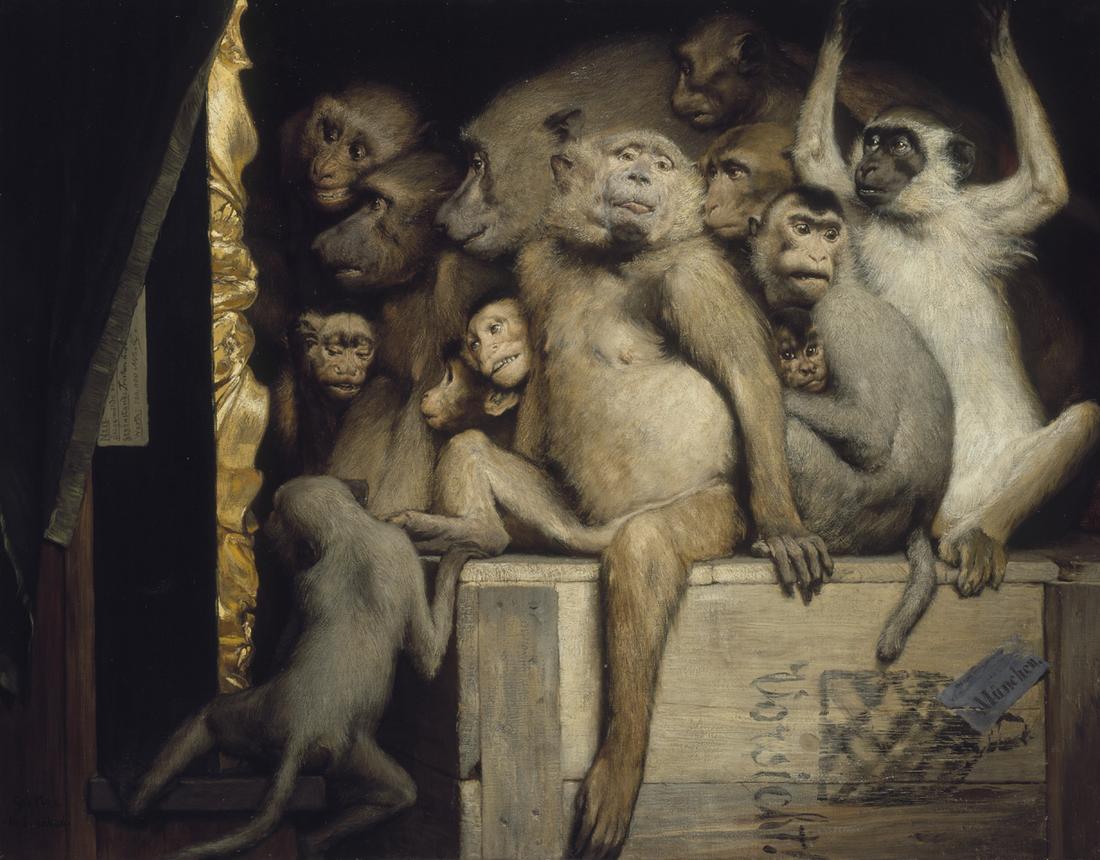
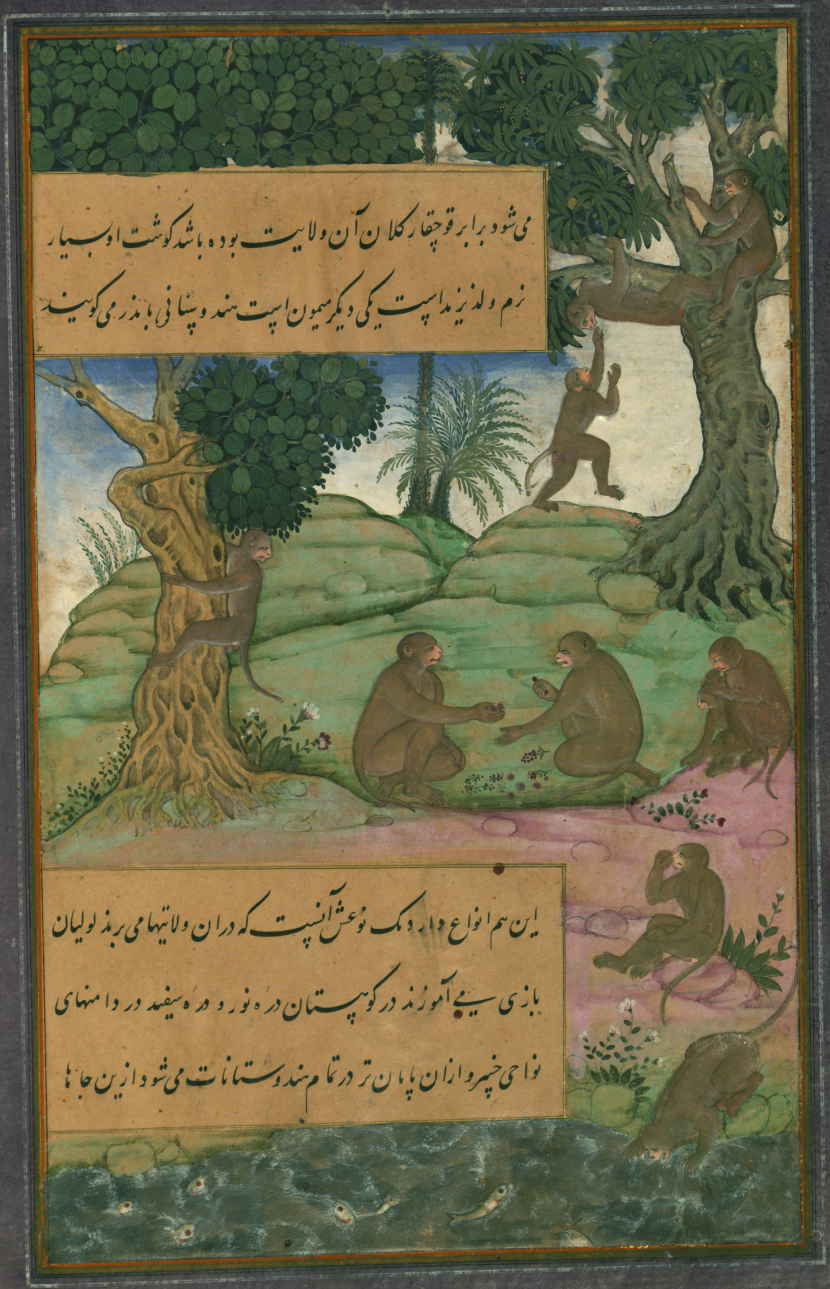
Monkeys are typically social and live in groups often called troops or tribes. Group size and organization vary widely between species; some form large, multi-male societies while others live in small family units. Examples include macaques, baboons, guenons and small-bodied monkeys such as marmosets. Many species climb and leap between trees, using long limbs and prehensile tails when present. Human beings (man) have long observed and depicted monkey behaviour in art, folklore and science.
Size extremes and notable species
- Smallest: the pygmy marmoset, native to rainforest canopies in countries such as Brazil, Colombia and Ecuador, measures only a few centimetres of body length and weighs a few hundred grams.
- Largest commonly called monkeys: species such as the mandrill can approach a metre in body length and several dozen kilograms in weight.
History, names and human uses
The English word "monkey" may trace back to medieval European tales: one suggested origin is the name Moneke in the Roman de Renart. Throughout history monkeys have appeared in religious symbolism, art and folklore. They are also used in research and sometimes kept as pets, which raises welfare and ecological concerns. In parts of the world monkeys are hunted for food—known as bushmeat—and certain practices, such as eating primate brain tissue, have been documented in regions of Africa and Asia (monkey brains).
Conservation and notable concerns
Many monkey species face threats from habitat destruction, fragmentation, hunting and capture for the wildlife trade. Conservation status varies: some species remain common and adaptable, while others are endangered or critically endangered. Conservation actions include habitat protection, legal trade controls, captive-breeding programs and community-based initiatives. Understanding species differences and distributions—from New World groups in South America to Old World forms across Africa and Asia—is essential for targeted conservation planning.
Quick reference
- Groups: Old World (Cercopithecidae) and New World (Platyrrhini/Ceboidea).
- Typical habitats: forests, woodlands and some savannas; absent from Australia and New Guinea.
- Notable species: pygmy marmoset, mandrill, macaques, baboons.
For further reading consult specialist primatology texts and reputable online resources on primate biology and conservation (arboreal behaviour, simians, comparative primate anatomy and the human relationship to non-human primates).
Questions and answers
Q: What is a group of monkeys called?
A: A group of monkeys is called a "troop" or a "tribe" of monkeys.
Q: Where do Old World Monkeys live?
A: Old World Monkeys mainly live in Africa and Asia.
Q: What are the two distinct groups of primates referred to as?
A: The two distinct groups of primates are referred to as Old World Monkeys and New World Monkeys.
Q: Are all monkeys arboreal (tree-dwelling)?
A: Yes, all monkeys are tree-dwelling (arboreal) simians.
Q: What type of tail do some monkeys have that helps them swing from trees?
A: Some monkeys have prehensile tails that can wrap tightly around branches, almost like a "fifth limb", which helps them swing from trees.
Q: What is the smallest known monkey?
A: The smallest known monkey is the pygmy marmoset, which is between 14 centimetres (5.5 in) and 16 centimetres (6.3 in) in size (without the tail), weighing about 120 grams. It lives in the treetops of rainforests in Brazil, Colombia and Ecuador.
Q: What is the largest known monkey?
A: The largest known monkey is the mandrill, which can grow to about 1 metre (3 ft 3 in) in size and weigh up to 35 kilograms (77 lb).
Related articles
Author
AlegsaOnline.com Monkeys: biology, classification, behavior and human connections Leandro Alegsa
URL: https://en.alegsaonline.com/art/66076
Sources
- alltheworldsprimates.org : "Primate Evolution: John Fleagle and Chris Gilbert"
- kids.britannica.com : "Monkey"
- books.google.com : The ancestor's tale: a pilgrimage to the dawn of evolution
- animalcorner.co.uk : "Monkeys at Animal Corner"
- animal.discovery.com : "Monkey : Facts, Pictures, Video : Animal Planet"
- etymonline.com : "Online Etymology Dictionary"
- sciencedaily.com : "Primate Bushmeat : Populations Exposed To Simian Immunodeficiency Viruses"
- today.msnbc.msn.com : "7 foods for the fearless eater - foodwine - TODAYshow.com"