
Arboreal: living in trees — definition, adaptations, and significance
Arboreal describes organisms adapted to live and move in trees. This article explains characteristics, common examples, evolutionary history, ecological roles, and distinctions from related lifestyles.
Arboreal is an adjective used in biology to describe organisms that spend a substantial part of their lives in trees. In its broad sense it applies to many taxa of animals and some plants that exploit vertical forest structure for feeding, nesting, shelter, or travel. The word helps distinguish tree-dwelling species from ground-dwelling or fully aquatic ones and is useful when discussing habitat, behavior, and morphological specializations.
Image gallery
5 Images


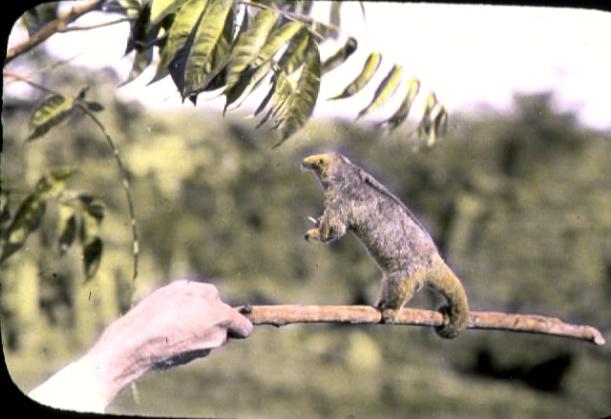
Characteristics and adaptations
Arboreal species share a suite of physical and behavioral traits that facilitate life above ground. Common adaptations include grasping limbs or digits, curved claws or adhesive pads for traction, flexible joints, a low center of gravity, and in some lineages a prehensile tail or elongated limbs for swinging. Arboreal locomotion can take many forms — steady climbing, leaping between branches, brachiation (arm-swinging), gliding with skin membranes, or slow deliberate movement across limbs.
- Typical adaptations: grasping hands/feet, claws or pads, joint mobility, gripping tails.
- Modes of movement: climbing, leaping, brachiation, gliding, clinging.
- Ecological niches: canopy foraging, understory nesting, trunk foraging.
Examples and diversity
Arboreal lifestyles have evolved independently in many groups. Mammals such as primates, squirrels, sloths, and some marsupials are well known, while many birds, arboreal reptiles (geckos, arboreal snakes), amphibians (tree frogs), and numerous arthropods live primarily in trees. Each group shows different anatomical solutions to similar challenges: for instance, primates often evolve opposable thumbs and stereoscopic vision, while gliding mammals develop membranes between limbs.
History and evolutionary notes
Fossil evidence suggests that tree-dwelling habits are ancient. Some of the earliest inferred arboreal vertebrates include late Paleozoic and early Mesozoic forms. For example, the synapsid Suminia is interpreted by many researchers as showing adaptations consistent with climbing from the late Permian period. Such occurrences indicate that arboreal niches were being explored tens to hundreds of millions of years ago as forests (woodland ecosystems) diversified.
Ecological importance and distinctions
Arboreal organisms play key roles in forest ecosystems: they mediate seed dispersal and pollination, serve as prey and predators within vertical food webs, and contribute to nutrient cycling. The arboreal lifestyle should be distinguished from related terms: 'scansorial' describes animals that are good climbers but not exclusively tree-dwelling, while 'fossorial' refers to burrowing and 'terrestrial' to ground life. Studies of arboreal adaptations help explain convergent evolution and how form follows function in different lineages.
For further reading on definitions and ecological context, see general resources on terminology, animal biology (biology overviews), species accounts (animal profiles), arboreal plants and structure (tree biology), forest ecology (forest studies), adaptations (functional adaptations), early arboreal fossils (Suminia), and geological context (Permian era).
Related articles
Author
AlegsaOnline.com Arboreal: living in trees — definition, adaptations, and significance Leandro Alegsa
URL: https://en.alegsaonline.com/art/5233
Sources
- dx.doi.org : DOI:10.1098/rspb.2009.0911