
Intelligence: concepts, measurement, and applications
Overview of intelligence as cognitive ability: definitions, components, history, measurement, debates about heredity and environment, applications, and important distinctions in theory and testing.
Overview
Intelligence is a broad term for mental abilities that enable understanding, problem solving, learning and adaptation. The word traces to Latin roots meaning to choose or discern; in modern usage it covers capacities such as reasoning, abstract thought and the ability to learn from experience. Different traditions emphasize different aspects: some treat intelligence as a single trait or property of the mind, while others see it as a set of interacting skills. For introductory definitions and perspectives, see definitions and discussions of abstract thought.
Image gallery
4 Images


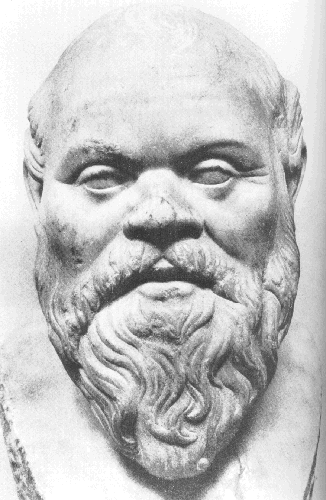
Core characteristics and components
Typical descriptions list several interrelated components: working memory that holds information temporarily, reasoning that manipulates ideas, learning mechanisms that store solutions, and perceptual skills that make sense of sensory data. Neuroscientific viewpoints often link these functions to brain structures and networks; for example, cortical regions are frequently studied in relation to higher cognitive abilities. For views treating intelligence as a trait, see trait perspectives, and for mind- or brain-centered accounts see mind and brain synopses, including cortical processing explanations.
Learning is a central feature: when a solution to a problem is stored, similar challenges can be handled more quickly later. Many accounts emphasize that intelligence depends on both the capacity to find solutions and the ability to retain them. For a concise treatment of learning processes, consult learning resources.
Measurement, tests and common formats
Researchers and practitioners measure cognitive abilities with structured tests. Typical items assess spatial reasoning (rotated figures and pattern completion), verbal comprehension, numeric sequences and abstract problem solving under time constraints. Standard test batteries often combine timed tasks in perception and manipulation with language and arithmetic items. Examples of item types and testing approaches are summarized at assessment overviews, spatial tasks, rotated-shape problems illustrations, and shape recognition examples. Numerical reasoning and sequence prediction are common math-related items guides, such as predicting the next number in a row practice. Language and comprehension sections appear in many batteries language tests, and testing reports often describe scoring methods and the calculation of an approximate Intelligence Quotient scoring explanation including the concept of IQ IQ basics.
Origins, development and debates
Scholars debate how much intelligence reflects inherited factors versus environmental influences. The interaction between genes and upbringing, education and experience is complex and widely discussed. For summaries of the heredity and environment debate see nature–nurture reviews, genetic perspectives genetics, and environmental studies environment. Observers also study how intelligent behavior can be learned through repeated responses to stimuli and reinforcement behavioral learning and how such learning appears across species and situations organism studies and in response to triggers or cues stimulus-response experiments.
Theory, history and notable frameworks
Historical and contemporary theories range from unitary models (a general factor or 'g') to plural models such as multiple intelligences or distinctions between fluid and crystallized intelligence. Researchers and scientists continue to refine these models as methods and data evolve. For classic and modern theoretical surveys see scientific reviews and treatments of learning-based models learning applied to cognitive development.
Applications, limitations and social considerations
Understanding intelligence has practical aims: designing education, improving training, selecting candidates for roles, and informing policy. However, tests have limits and must be interpreted carefully: cultural differences, test design, and the particular abilities measured affect results. Intelligence research also informs artificial intelligence, where computational systems emulate some human problem-solving abilities. For discussion of applied uses and cautionary guidance consult resources on social implications and testing practice further reading and methodological notes research guidance.
- Summary: Intelligence covers problem solving, learning and adaptation rather than a single observable trait.
- Measurement: Varied tests target spatial, verbal and numeric skills; scores provide approximations, not definitive labels.
- Debates: Nature versus nurture, definitions of intelligence, and test fairness remain active topics of inquiry.
Questions and answers
Q: What is intelligence?
A: Intelligence refers to certain mental powers, such as the ability to solve problems and remember solutions. It is often thought of as a property or characteristic of the mind, but it can also be seen as the working of the brain, especially the cerebral cortex.
Q: Where does the idea of intelligence come from?
A: The idea of intelligence comes from a Latin word - intelligo - which means "to choose between different options".
Q: How can intelligence be measured?
A: Intelligence can be measured by giving tests that involve solving many problems in a short time. These tests may involve seeing things, telling what a rotated shape would look like, mathematics or understanding language. After taking such a test, an approximation of one's Intelligence Quotient (IQ) will be calculated.
Q: Is intelligent behaviour learned or innate?
A: There is disagreement about whether intelligent behaviour is learned when an organism reacts enough to a stimulus or if it is innate and influenced by genetics and environment.
Q: What type of problems are used in intelligence tests?
A: Intelligence tests typically involve solving many problems in a very short time. These problems may include seeing things, telling what a rotated shape would look like, mathematics or understanding language.
Q: What does IQ stand for?
A: IQ stands for Intelligence Quotient which is an approximation given after taking an intelligence test that measures one's mental abilities and problem-solving skills.
Related articles
Author
AlegsaOnline.com Intelligence: concepts, measurement, and applications Leandro Alegsa
URL: https://en.alegsaonline.com/art/47554
Sources
- doi.org : 10.1016/j.tplants.2005.07.005
- pubmed.ncbi.nlm.nih.gov : 16054860
- doi.org : 10.1038/415841a
- pubmed.ncbi.nlm.nih.gov : 11859344
- doi.org : 10.1046/j.1365-313X.2003.01872.x
- pubmed.ncbi.nlm.nih.gov : 14535888
- doi.org : 10.1016/j.bioelechem.2009.03.005
- pubmed.ncbi.nlm.nih.gov : 19356999
- ui.adsabs.harvard.edu : 2009NW.....96.1373R
- doi.org : 10.1007/s00114-009-0591-0
- pubmed.ncbi.nlm.nih.gov : 19680619