
Moor frog (Rana arvalis)
Overview of the moor frog (Rana arvalis): identification, range, habitat, life cycle, breeding colour change, threats and conservation measures across its Eurasian range.
The moor frog (Rana arvalis) is a small, slender true frog with a broad distribution across much of northern and central Europe into western Asia. It is known by several regional common names such as Wolterstorff's frog, Swedish swamp frog, Siberian frog and Altai swamp frog. For a concise species overview see species summary, and for general background on frogs consult general frog resources.
Image gallery
10 Images




Description and distinguishing features
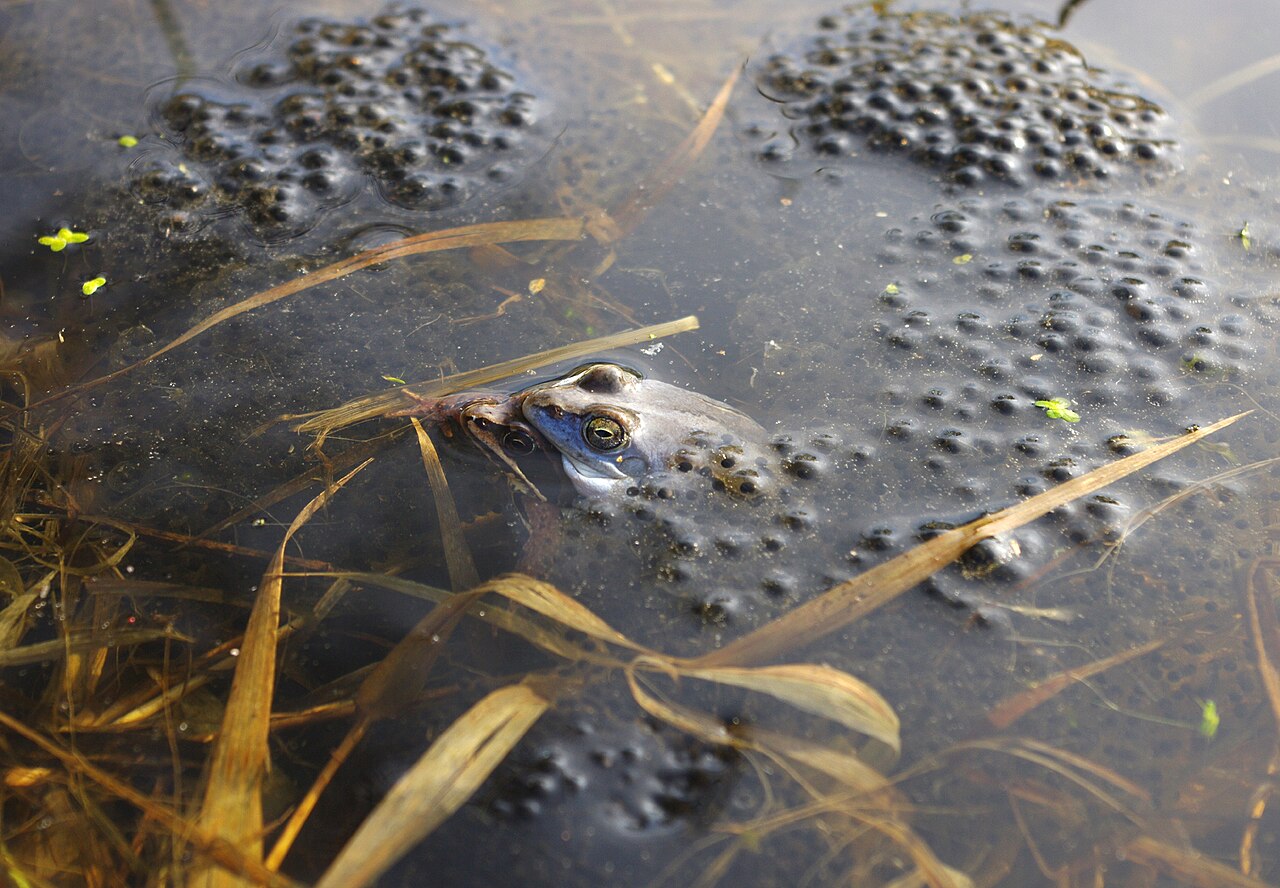
Moor frogs tend to be slim and relatively small compared with some pond frogs, with a dorsum that ranges from reddish-brown to grey-brown. Patterning can be variable: some individuals show darker spots or a dorsal line while others are more uniformly coloured. Sexual dimorphism is limited, although breeding males are often smaller and display temporary changes linked to reproduction. One notable and well-studied trait in many populations is the temporary blue or slate-blue coloration of males during the peak of the spring breeding season; this rapid colour change is brief and linked to courtship and social signalling and is thought to involve shifts in pigment-cell activity and hormonal state.
Distribution, habitat and adaptations
Rana arvalis occupies a wide range of wetland habitats across Eurasia, from lowland marshes and wet meadows to the margins of ponds, slow streams and flooded ditches, and its range extends into northern latitudes and some parts of Siberia. The species is adapted to seasonal climates: in cold regions it overwinters in sheltered terrestrial sites or submerged at pond bottoms and times breeding to early spring thaw periods when temporary pools are available. Local populations may show behavioural and physiological differences that reflect adaptation to local temperature and hydroperiods.
Behaviour, diet and life cycle
Moor frogs are semi-aquatic and primarily insectivorous, feeding on small invertebrates such as insects and spiders. Breeding typically occurs in spring when adults congregate in shallow water to spawn. Eggs are laid in strings or clumps attached to vegetation and hatch into aquatic tadpoles, which develop in the breeding pools before metamorphosing into terrestrial juveniles. Development rate depends strongly on temperature and water permanence; tadpoles in temporary pools often grow quickly to metamorphose before pools dry.
Taxonomy and common names
The moor frog belongs to the family Ranidae, the true frogs. Taxonomic summaries and synonymy are covered in standard references and databases; for authoritative lists see taxonomic resources. Common names vary regionally and reflect the species' wide distribution.
Conservation, threats and human interaction
Population trends vary regionally. Many populations remain locally common, but declines have been recorded where wetlands have been drained, fragmented or degraded. Pollution, pesticide exposure and acidification of breeding pools are recurring threats, and shifts in climate that alter the timing of thaw and pool persistence can affect reproductive success. Conservation measures that benefit the moor frog include protecting and restoring shallow wetland habitats, maintaining networks of breeding ponds and implementing mitigation such as amphibian-friendly road crossings and buffer zones. For regional assessments and research data consult regional surveys, aggregated scientific databases and conservation resources.
- Key points: broad Eurasian range; semi-aquatic insectivore; males often show temporary blue breeding colouration.
- Breeding: spring breeding in shallow pools; eggs hatch into tadpoles that metamorphose to terrestrial juveniles.
- Threats and actions: habitat loss, pollution and changing hydrology; conservation focuses on wetland protection and monitoring.
Related articles
Author
AlegsaOnline.com Moor frog (Rana arvalis) Leandro Alegsa
URL: https://en.alegsaonline.com/art/66554